


Listen to the article
U.S. Military Escalates Strikes Against Iran-Backed Militias in Iraq
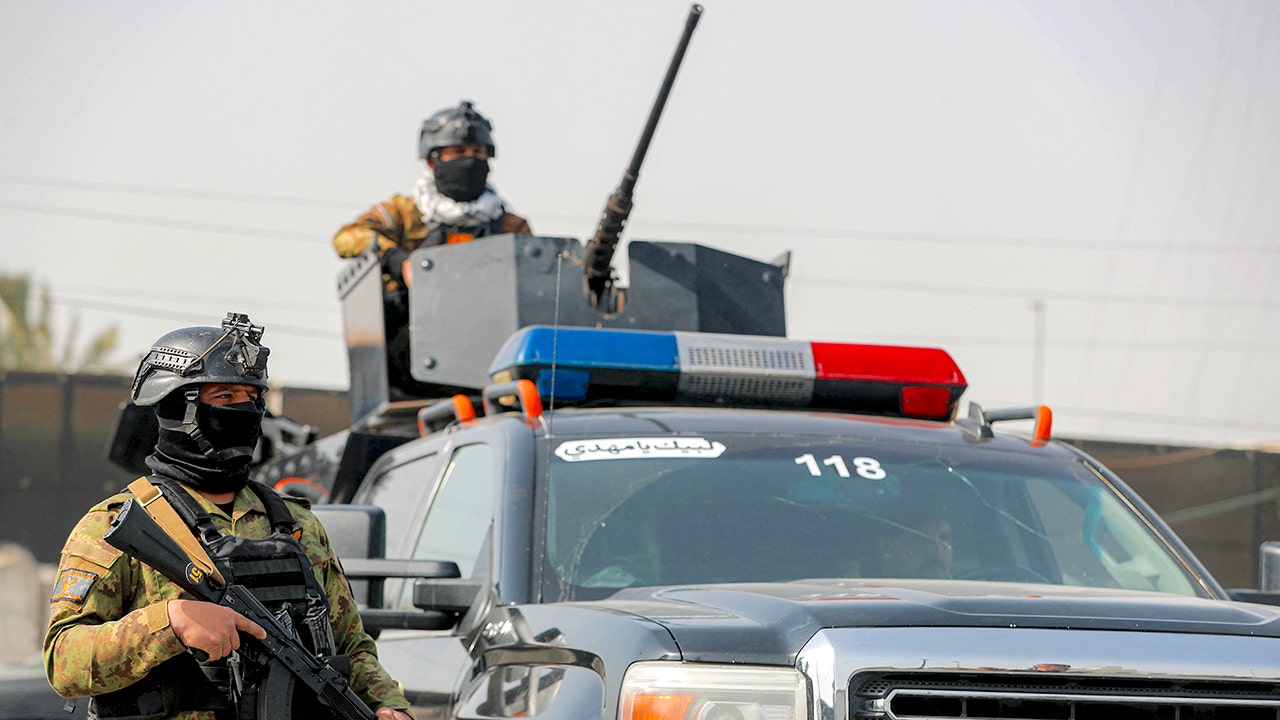
The United States military has intensified its campaign against Iran-backed forces in Iraq, targeting the headquarters of the Popular Mobilization Forces (PMF) and a residence belonging to its leader on Tuesday. The strikes mark a significant escalation in the ongoing conflict with Tehran-aligned militias operating in the region.
According to security sources, at least 15 PMF fighters were killed when U.S. forces struck a command headquarters in Iraq’s western Anbar province. Among the casualties was operations commander Saad al-Baiji, who was reportedly attending a meeting with other senior leaders when the strikes occurred. PMF leader Falih al-Fayadh was not present when his residence in the northern city of Mosul was targeted.
The latest military action follows statements from Gen. Dan Caine, chairman of the Joint Chiefs of Staff, who confirmed last week that U.S. AH-64 helicopters have been actively “striking against Iranian-aligned militia groups” to neutralize threats against American forces and interests in Iraq.
Iraqi Prime Minister Mohammed Shia al-Sudani responded forcefully to the strikes, calling them “unjustified attacks and grave violations of Iraqi sovereignty.” In a statement released Tuesday, al-Sudani announced that Iraq would “confront and respond to military attacks carried out by military aircraft and drones targeting the headquarters and formations of the Popular Mobilization Forces Commission and other formations of our armed forces, using available means, in accordance with the right to respond and self-defense.”
The Iraqi government also stated it plans to summon both the U.S. chargé d’affaires and the Iranian ambassador on Wednesday, signaling diplomatic tensions are rising alongside military confrontations. The PMF is officially integrated into Iraq’s security apparatus under al-Sudani’s government.
When asked if the Iraqi government intended to fight American forces, an Iraqi embassy spokesperson in Washington categorically denied such plans, stating it was “absolutely not” the intention and that any response would be directed “against elements that target them.”
The Times of Israel reported that fresh airstrikes hit PMF positions in western Iraq on Wednesday, with “two missiles fired from a fighter jet” striking a base in Anbar province—the same region targeted on Tuesday.
Regional security experts point to the complicated relationship between the Iraqi government and the PMF. An Iraqi Kurdish government official told Fox News Digital that “the militias are brazenly doing Iran’s bidding,” noting they have “attacked U.S. forces and diplomats, Iraq’s own intelligence services, French troops, and the KRG’s Peshmerga.” The official questioned why the Iraqi government continues to financially support groups it describes as “terrorists and criminals.”
Elizabeth Tsurkov, a senior non-resident fellow at the New Lines Institute who was previously held hostage by the pro-Iranian Kataib Hezbollah for two and a half years, criticized the previous Biden administration’s approach of trying to differentiate between the PMF and its six U.S.-designated terrorist entity members. “The recent strikes clearly show that the U.S. is tired of this inane distinction,” Tsurkov said, emphasizing that “the entire PMF structure is a problem.”
The PMF has been implicated in numerous attacks on the U.S. embassy in Baghdad, American assets in Iraq’s Kurdistan region, and Israeli targets following the U.S.-Israeli joint operations against Iran in February. Over the years, the organization has been accused of killing American military personnel throughout the Middle East.
A State Department official reaffirmed America’s position, stating: “The United States strongly condemns the widespread attacks by Iran and Iran-backed militias against U.S. citizens and targets associated with the United States throughout Iraq, including U.S. diplomatic personnel and facilities.” The official added that the Iraqi government “must take all measures to safeguard U.S. diplomatic personnel and facilities” and prevent militia groups from using Iraqi territory to threaten the United States and regional stability.
On Monday, the U.S. Embassy in Baghdad issued a security alert advising American citizens to “leave Iraq now,” citing widespread attacks by “Iran-aligned terrorist militias” throughout the country.
As the situation continues to evolve rapidly, the escalation represents one of the most direct confrontations between U.S. forces and Iran-backed militias in Iraq in recent years, with potential implications for broader regional stability.
Fact Checker
Verify the accuracy of this article using The Disinformation Commission analysis and real-time sources.

10 Comments
The continued US strikes on Iran-backed militias in Iraq, despite Iraqi objections, are worrying. This could further destabilize the region and damage US-Iraq relations. I hope the two governments can engage in constructive dialogue to find a peaceful resolution that satisfies the concerns of all stakeholders.
The US strikes on Iran-backed militias in Iraq are concerning, as they risk further destabilizing the region and undermining Iraq’s fragile stability. I hope the US and Iraqi governments can engage in constructive dialogue to find a peaceful resolution that respects Iraqi sovereignty.
I share your concerns. Continued military action could seriously damage US-Iraq relations and lead to unintended consequences. Diplomacy and de-escalation should be the focus.
This situation is incredibly complex and delicate. While the US may feel strikes are necessary to protect its interests, the Iraqi government’s strong objections are concerning. De-escalation and finding a diplomatic solution should be the priority to avoid further conflict and civilian harm.
I agree, this requires a very careful and nuanced approach. Continued military action could seriously undermine US-Iraq relations and destabilize the region further.
This is a highly complex and sensitive situation. While the US may feel justified in striking Iran-backed militias, the Iraqi government’s objections cannot be ignored. All sides should work towards a diplomatic solution that respects Iraqi sovereignty and regional stability.
While the US may feel these strikes are necessary to counter threats, the strong Iraqi government objections are worrying. Maintaining regional stability and respecting Iraqi sovereignty should be the top priorities. I hope the US and Iraq can work together to find a diplomatic solution.
The US appears to be taking a hardline stance against Iran-backed militias in Iraq, but this risks provoking retaliation and creating a dangerous cycle of escalation. Iraq’s sovereignty must be respected, and all parties need to work towards a political settlement to address the root causes of the conflict.
Absolutely. De-escalation and finding a diplomatic solution that satisfies the concerns of all stakeholders should be the top priority here.
The ongoing tensions between the US and Iran-backed militias in Iraq are deeply concerning. Both sides need to exercise restraint and prioritize de-escalation and diplomacy to find a peaceful resolution that addresses the legitimate security concerns of all parties.