


Listen to the article
U.S. and Israel Launch Massive Military Operation Against Iran
U.S. forces have conducted a sweeping military assault on Iranian targets, striking more than 1,000 sites across the country in a coordinated operation with Israel. The mission, dubbed “Operation Epic Fury,” began at 1:15 a.m. Saturday and has reportedly resulted in the deaths of Iranian Supreme Leader Ali Khamenei and dozens of senior regime officials.
According to U.S. Central Command (CENTCOM), the operation deployed an overwhelming array of air, sea, and missile power. The assault featured B-2 stealth bombers, F-22 and F-16 fighter jets, A-10 attack aircraft, EA-18G electronic warfare planes, and various airborne early warning and communications platforms.
Defensive systems, including Patriot interceptors and THAAD anti-ballistic missile defenses, were positioned to protect allied assets during the operation. Additional military hardware deployed included RC-135 reconnaissance aircraft, MQ-9 Reaper drones, HIMARS rocket systems, nuclear-powered aircraft carriers, guided-missile destroyers, aerial refueling tankers, and various transport aircraft.
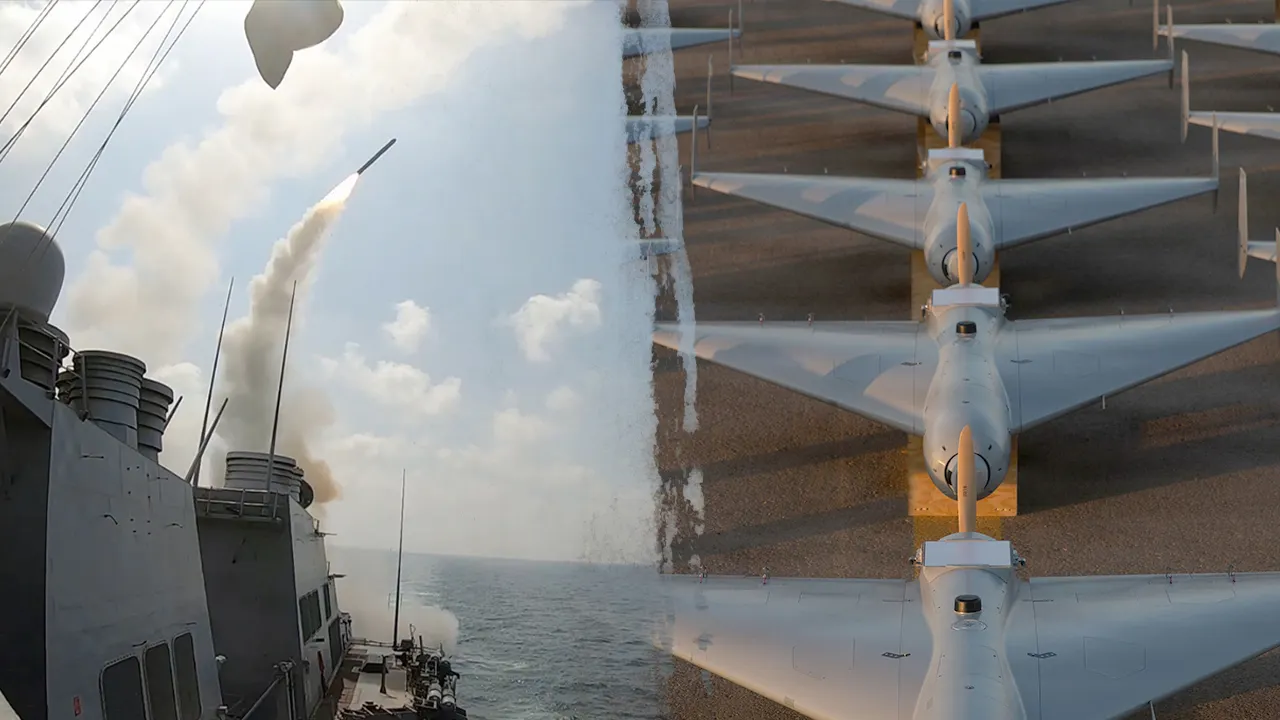
The military operation marked the combat debut of the Low-Cost Unmanned Combat Attack System (LUCAS), a drone technology modeled after Iran’s Shahed drones. “CENTCOM’s Task Force Scorpion Strike — for the first time in history — is using one-way attack drones in combat during Operation Epic Fury,” CENTCOM announced on social media. “These low-cost drones, modeled after Iran’s Shahed drones, are now delivering American-made retribution.”
Developed by Arizona-based engineering firm SpektreWorks, the LUCAS drones can be launched from catapults, vehicles, or mobile ground platforms. Each unit costs approximately $35,000, making them a cost-effective option for attack operations.
The strikes specifically targeted critical military infrastructure, including command and control centers, the Islamic Revolutionary Guard Corps (IRGC) Joint Headquarters and Aerospace Forces Headquarters, integrated air defense systems, ballistic missile sites, naval vessels, anti-ship missile installations, and military communications networks.
Images released by CENTCOM show Tomahawk cruise missiles being launched from U.S. Navy ships, along with F-18 and F-35 fighter jets engaged in combat operations. The coordinated assault represents one of the most significant U.S. military actions in the Middle East in recent years.
Iran has reportedly retaliated by launching waves of missiles across the Middle East, targeting major U.S. bases in Qatar, Bahrain, Kuwait, and the United Arab Emirates. The escalation marks a dangerous new phase in the ongoing tensions between Iran and Western powers.
The human cost of the operation has already been significant. CENTCOM confirmed Sunday morning that three U.S. service members were killed and five others were “seriously wounded” during Operation Epic Fury. The joint military operation is expected to continue for several days.
The military action comes amid increasing tensions in the region, where Iran has been expanding its influence through proxy forces and advancing its nuclear program despite international pressure. The targeting of high-level Iranian leadership, including Supreme Leader Khamenei, represents a dramatic escalation that could fundamentally alter the balance of power in the Middle East.
Regional experts warn that the elimination of Iran’s senior leadership could create a power vacuum that might lead to internal instability or even more aggressive posturing by successor regimes. Oil markets are expected to react strongly when trading opens, with potential price spikes due to concerns about supply disruptions from the world’s seventh-largest oil producer.
The Pentagon has yet to release a comprehensive statement on the long-term objectives of Operation Epic Fury or the criteria for its conclusion. Military analysts suggest that the operation’s scope indicates a strategy focused on degrading Iran’s military capabilities rather than simply sending a deterrent message.
As the situation develops, international allies and adversaries are closely monitoring the conflict, which has the potential to reshape geopolitical relationships throughout the Middle East and beyond.
Fact Checker
Verify the accuracy of this article using The Disinformation Commission analysis and real-time sources.

6 Comments
As someone with an interest in geopolitics and defense issues, I’ll be closely following the aftermath of these strikes. The loss of Iranian leadership figures is a significant development, but the risk of retaliation and escalation is high. Measured responses will be crucial.
From a military perspective, the use of so many advanced platforms and weapons systems is quite remarkable. However, the broader strategic rationale and potential consequences require careful analysis. I hope this doesn’t lead to a wider regional conflict.
These strikes represent a major shift in US-Iran relations. While the stated targets were Iranian regime officials, the scale of the operation raises concerns about potential collateral damage and unintended consequences. I hope diplomacy can help de-escalate the situation.
Wow, this is a major military operation against Iran. I wonder what the long-term strategic implications will be for the region and global geopolitics. It’s concerning to see such extensive strikes, even if they are targeting Iranian regime officials.
This seems like an unprecedented level of military force used against Iran. While the details are still emerging, I hope the strikes were carefully targeted to minimize civilian casualties. Escalating tensions in the Middle East is very worrying.
I agree, the scale of this operation is alarming. Avoiding civilian harm should be the top priority, even in strikes against regime targets. De-escalation and diplomacy will be critical going forward.