


Listen to the article
US Military Boosts Middle East Presence as Iran Nuclear Talks Move to Oman
The U.S. military has significantly increased its presence across the Middle East amid rising tensions with Iran, as nuclear negotiations experienced last-minute changes Wednesday, shifting from their planned location in Istanbul to Oman.
U.S. and Iranian officials had initially planned to meet Friday in Istanbul, with several Middle Eastern countries participating as observers. The talks, focused on restarting negotiations over Iran’s nuclear program, were relocated after intervention from multiple Arab leaders.
“The agreement to move forward with this happened only after several Arab country leaders lobbied the Trump administration today – making the case the U.S. should not walk away,” a senior U.S. official confirmed to Fox News Digital.
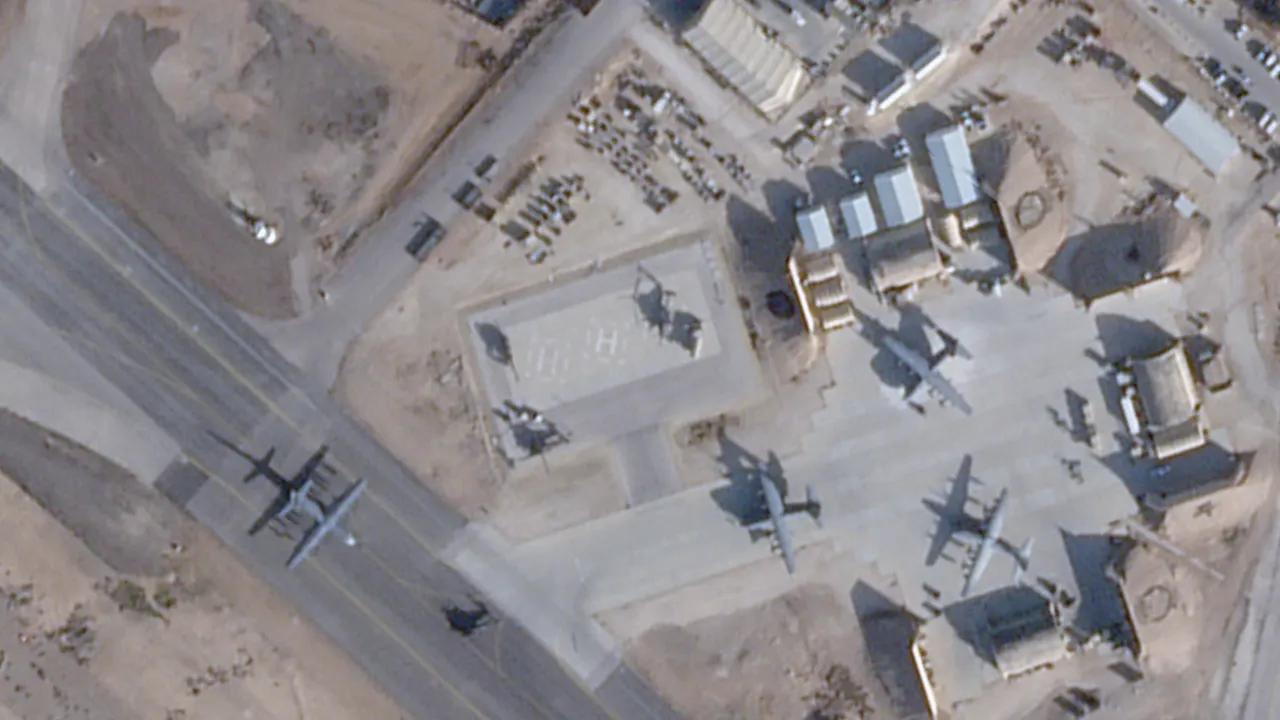
Satellite imagery from Planet Labs reveals an extensive deployment of American military assets throughout the region, including aircraft, naval vessels, and logistical platforms positioned strategically by late January. The imagery shows the USS Abraham Lincoln aircraft carrier strike group operating in the Arabian Sea, along with destroyers deployed across the eastern Mediterranean and Red Sea.
“The military buildup is consistent with a force preparing for a variety of potential strike options,” explained Philip Sheers, a research associate with the Defense Program at the Center for a New American Security. However, Sheers cautioned that visible movements alone don’t indicate an imminent strike.
“Positioning of platforms is not the only precondition to preparedness for a strike,” he noted. “Additional maintenance equipment, munitions and intelligence, among other elements, may still be needed before a desired strike can be executed.”
The satellite images reveal strategic deployments at multiple locations. At Duqm Airport in Oman, V-22 Osprey aircraft are visible, which Sheers indicated could support “search-and-rescue missions to recover personnel after a mission.” Meanwhile, Muwaffaq Salti Airbase in Azraq, Jordan, shows C-130 aircraft that could be utilized for “search and rescue at sea or for other logistics operations.”
“It’s clear that there are multirole combat aircraft stationed here, which would support ground strikes and defensive counterair operations,” Sheers added, noting the presence of helicopters whose specific type couldn’t be determined from the available imagery.
The military buildup comes as tensions continue to escalate in the region. On Tuesday, U.S. forces shot down an Iranian drone that approached the USS Abraham Lincoln in international waters, according to U.S. Central Command. This incident underscores the increasingly volatile situation between the two nations.
Secretary of State Marco Rubio emphasized Wednesday that the U.S. would only engage in meaningful talks if they addressed comprehensive concerns about Iran’s activities, including its ballistic missile program, support for militant groups across the Middle East, and human rights issues, alongside its nuclear activities.
“If the Iranians want to meet, we’re ready. They’ve expressed an interest in meeting and talking. If they changed their mind, we’re fine with that, too. We prefer to meet and talk,” Rubio told reporters at the inaugural Critical Minerals Ministerial meeting at the State Department.
Military analysts are also monitoring Iran’s own capabilities in the region. Sheers cited the presence of Iran’s Shahid Bagheri drone carrier, suggesting its potential role could be to “harass, fatigue or distract U.S. surface ships in the area” and force American forces to expend resources defending themselves.
U.S. Central Command has already warned Iran against what it termed “escalatory behavior” in international waters, vowing to protect American personnel and assets.
“What is clear is the United States is moving a variety of intelligence, logistics, search and rescue, strike and air defense platforms into the region,” Sheers concluded. “Those are clear signals to Iran of increasing U.S. strike capability, but the potential timing and targets of a possible strike are not clear and may not become clear.”
The repositioning of military assets serves as both a deterrent and preparation for potential conflict scenarios, highlighting the delicate diplomatic balance being struck as nuclear talks proceed in their new location.
Fact Checker
Verify the accuracy of this article using The Disinformation Commission analysis and real-time sources.

14 Comments
The relocation of the Iran nuclear talks to Oman is an interesting move. Oman has historically played a constructive role in regional diplomacy, so this change in venue could potentially help break the deadlock and advance the negotiations.
The relocation of the Iran talks to Oman is an intriguing development. Oman has often played a constructive role in regional diplomacy, so this change in venue may help create an environment more conducive to progress on the nuclear issue. Cautious optimism is warranted.
The increased US military activity in the Middle East is certainly concerning, but I’m hopeful that the shift to Oman for the Iran talks will help create an environment more focused on diplomatic solutions than escalation. Oman’s neutrality could be an asset in these delicate negotiations.
While the US military presence is worrying, I’m cautiously optimistic that the shift to Oman for the Iran talks could be a positive development. Oman’s neutral role may help create an environment more conducive to progress.
The shift to Oman for the Iran nuclear talks is an interesting development. Oman has historically played a constructive role in regional diplomacy, so hopefully this change in venue can help advance the negotiations.
Oman’s involvement could be beneficial, given their reputation for neutrality and willingness to engage with various parties. Let’s hope this leads to progress.
The increased US military posturing in the Middle East is concerning, but I’m glad the nuclear talks are still moving forward, even if the location has shifted. De-escalation and diplomatic solutions should be the priority.
Agreed. Military buildups often raise tensions, but meaningful dialogue is key to resolving this complex issue. Hopefully Oman can help facilitate productive negotiations.
The increased US military presence in the Middle East is a concerning escalation, but I’m hopeful that the shift to Oman for the Iran nuclear talks can help facilitate productive dialogue. Oman’s neutrality and history of regional mediation could be an asset in these complex negotiations.
While the military posturing is worrying, I’m encouraged that the Iran nuclear talks are still moving forward, even if the location has changed. Oman’s involvement could be beneficial, as they have a history of facilitating regional dialogue. Hopefully this leads to progress on the nuclear issue.
The increased US military presence in the region is a concerning sign. However, it’s important that all sides remain calm and focused on constructive dialogue to address the complex nuclear issue.
True. Escalating the situation militarily will only make things worse. The priority should be finding a mutually acceptable diplomatic resolution.
Interesting development. Escalating tensions in the Middle East are always concerning. I hope the parties can find a diplomatic solution through the Oman talks that reduces the risk of military confrontation.
Agreed. Diplomacy is the best path forward, even if it’s challenging. De-escalation and building trust are crucial at this stage.