


Listen to the article
UN Chief’s Congratulatory Message to Iran Sparks Controversy
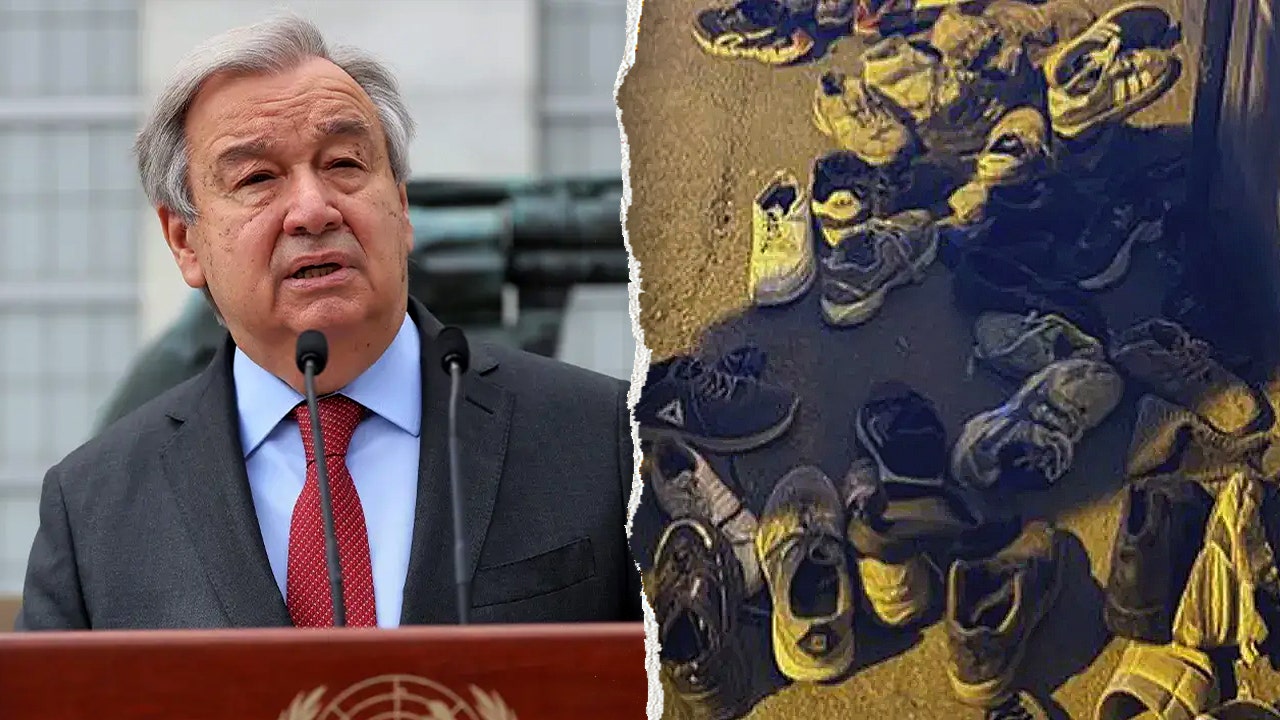
United Nations Secretary-General António Guterres has drawn sharp criticism from human rights advocates and anti-regime Iranian voices after sending a congratulatory message to Iran marking the anniversary of the 1979 Islamic Revolution.
In a letter addressed to Iranian President Masoud Pezeshkian, Guterres “extended his warmest congratulations on the National Day of the Islamic Republic of Iran,” describing such anniversaries as an opportunity to reflect on a country’s path and contributions to the international community, according to Iranian state and regional media reports published Wednesday.
The timing of the message has raised eyebrows, coming just weeks after the UN Human Rights Council condemned Iran over human rights abuses tied to the violent crackdown on anti-government protests. The council mandated further investigation into alleged violations, with some reports citing potential casualty figures reaching as high as 30,000, though these numbers await verification.
Adding to the controversy, Iran’s Foreign Minister Abbas Araghchi is expected to address the UN Human Rights Council on February 23, according to the NGO UN Watch.
Critics argue that Guterres’ congratulatory message sends a contradictory signal given the ongoing human rights situation in Iran. Banafesh Zand, an Iran analyst, called the message “abjectly tone-deaf.”
“At a time when the Iranian people continue to endure executions, repression, and systemic abuse at the hands of the Islamic Republic, offering formal congratulations to the architects of that suffering reads as a moral failure,” Zand stated, adding that such gestures “erode [the UN’s] credibility and deepen the wound for those still fighting for freedom inside Iran.”
Andrew Ghalili, policy director at the National Union for Democracy in Iran (NUFDI), offered similarly pointed criticism, suggesting the message effectively legitimizes a repressive regime.
“The United Nations is legitimizing a regime built on repression, executions and the systematic destruction of basic freedoms,” Ghalili said. “Offering celebratory recognition to the Islamic Republic on the anniversary of its revolution ignores the bloodshed, the repression of protesters and the ongoing hostage-taking of innocent people.”
Human rights organizations have consistently warned that impunity has enabled ongoing abuses in Iran. These groups continue to urge UN member states to pursue accountability for what they describe as systemic violations and mass killings of protesters.
When questioned about the controversial message, Stéphane Dujarric, spokesperson for the Secretary-General, defended it as standard diplomatic protocol during a press briefing with Fox News Digital.
“The letter that came out from the Secretary-General is a standard letter,” Dujarric explained. “Every year, each member state gets the exact same letter… congratulating them on the national holiday and conveying best wishes to the people of that country.”
The spokesperson emphasized that similar letters were sent the same day to other countries marking national holidays and “should not be interpreted… as an endorsement of whatever policies may be put in place by the government.” He insisted the message “doesn’t change the Secretary-General’s view” on Iran, noting that Guterres has previously spoken out against the crackdown and violence in the country.
Regarding Iran’s foreign minister’s upcoming address to the Human Rights Council, Dujarric clarified that the matter falls under the council’s authority, not the Secretary-General’s office.
“That’s a decision of the Human Rights Council,” he said. “This is a membership organization. Every member state has a right to address legislative bodies… It’s not within the Secretariat’s authority to bar member states from addressing a legislative body.”
The situation highlights the complex diplomatic balancing act the UN leadership must navigate between recognizing member states’ sovereignty and addressing serious human rights concerns. For critics, however, the congratulatory message appears to undermine the organization’s stated commitment to human rights at a time when Iran’s government faces widespread international criticism for its domestic policies and treatment of protesters.
Fact Checker
Verify the accuracy of this article using The Disinformation Commission analysis and real-time sources.

13 Comments
With over 30,000 potential casualties reported from the protest crackdown, it’s critical the UN and international community continue to investigate and hold the Iranian regime accountable. This anniversary message appears to be a troubling diplomatic misstep.
Absolutely, the UN needs to be focused on addressing the severe human rights violations, not issuing congratulatory messages. I hope the upcoming UN Council session brings more transparency and action on this issue.
It’s concerning to see the UN chief appear to overlook the Iranian regime’s brutality in this anniversary message. The international community must maintain pressure and accountability for the crackdown on protests and broader human rights violations.
This controversy highlights the complex and often contradictory nature of international relations. The UN has to balance diplomatic engagement with accountability for human rights abuses – a difficult line to walk, especially with entrenched regimes like Iran’s.
Well said. The UN’s role is challenging, having to navigate geopolitics while upholding human rights principles. This episode underscores the need for the international community to maintain a firm, principled stance against Iran’s repressive actions.
The UN chief’s congratulatory message to Iran on the anniversary of the revolution is quite controversial, given the regime’s brutal crackdown on protests. I hope the upcoming address at the UN Human Rights Council sheds more light on the concerning human rights situation there.
Agreed, the timing of this message seems insensitive to the significant human rights abuses occurring in Iran. The UN should be taking a stronger stance in condemning the regime’s actions.
As an observer of global mining and energy markets, I’m curious to see how this latest controversy around the UN’s engagement with Iran may impact commodity prices and investment flows in the region. The political instability is certainly a risk factor to watch.
Agreed, the geopolitical tensions around Iran could absolutely create volatility and uncertainty in global mining and energy markets. Investors will need to closely monitor the situation and potential sanctions or disruptions.
While diplomacy often requires nuance, the UN chief’s message to Iran on this anniversary seems ill-timed and potentially counter-productive. The regime’s egregious human rights record should be the priority, not platitudes.
The mining and energy sectors in Iran have long been tied to the regime’s power base. I wonder how this controversy may impact foreign investment and operations in those industries going forward.
That’s a good point. The regime’s human rights abuses could lead to increased economic sanctions and further isolate Iran’s key industries like mining and energy. Responsible companies may have to re-evaluate their involvement.
While the UN chief may have intended the message as a diplomatic gesture, it comes across as tone-deaf given the ongoing repression of protesters in Iran. The Iranian regime’s actions deserve strong condemnation, not appeasement.