


Listen to the article
Ukraine Condemns Potential IOC Easing of Russian Athlete Restrictions
Ukraine’s sports minister has strongly criticized signals from the International Olympic Committee that suggest the body may soon relax restrictions against Russian athletes, potentially allowing them to once again compete under their national flag in future Olympic Games.
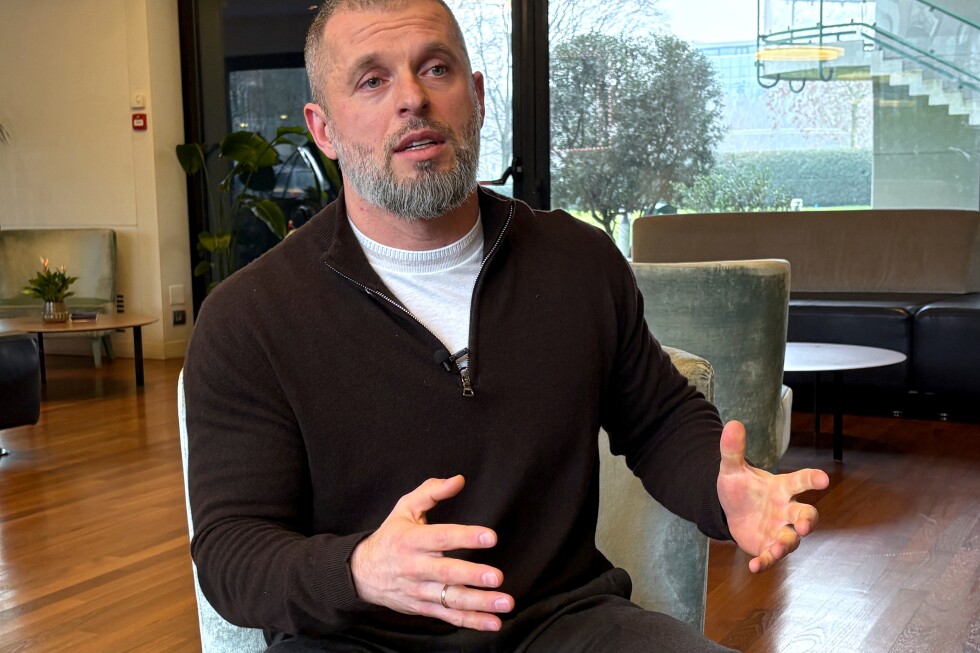
Matvii Bidnyi, Ukraine’s Minister of Youth and Sports, told The Associated Press in an interview in Milan that such a move would be “irresponsible” and appear to legitimize Russia’s invasion as the war approaches its fourth anniversary.
“It looks like you want to legitimize this evil,” Bidnyi said, addressing supporters of bringing Russia back into the Games. “We must keep this pressure until this war ends.”
Currently at the Milan Cortina Olympics, 13 Russians are competing as “Individual Neutral Athletes,” meaning they cannot display Russian symbols or hear their national anthem if they win gold. Athletes from Belarus, Russia’s ally, face identical restrictions.
The IOC has already taken initial steps toward easing these policies. In December, it advised sports governing bodies to allow Russian youth athletes to participate with their flag and anthem ahead of the upcoming Youth Olympics. In response, Russian fencers have returned to junior events under their national flag this year.
The most significant development came last Friday when swimming governing body World Aquatics lifted its restrictions on Russian youth and junior athletes, allowing them to compete as representatives of their nation rather than as neutral individuals.
When asked about potential further relaxation of restrictions ahead of the 2028 Los Angeles Olympics, the IOC referred to a December statement following the Olympic Summit in Switzerland. That statement emphasized that “athletes have a fundamental right to access sport across the world, and to compete free from political interference or pressure from governmental organizations.”
New IOC President Kirsty Coventry has signaled a shift in focus. Without specifically addressing Russian athletes at the Milan Cortina Games, she used her keynote speech earlier this month to emphasize the IOC’s renewed commitment to sport rather than politics.
“We are a sports organization,” Coventry stated on February 3. “We understand politics and we know we don’t operate in a vacuum. But our game is sport.”
For Ukraine, sports sanctions represent a crucial diplomatic tool. Russia has historically taken immense pride in its athletic achievements and has long leveraged sporting success for propaganda purposes. The potential relaxation of restrictions comes at a sensitive diplomatic moment, as Ukrainian President Volodymyr Zelenskyy recently revealed that the United States has given Ukraine and Russia a June deadline to reach a peace agreement.
Meanwhile, the ongoing conflict continues to devastate Ukrainian sports infrastructure. Russian airstrikes regularly target the country’s power grid, causing widespread blackouts that leave millions without electricity and heat during freezing winter temperatures. When generators are available, Bidnyi explained, they aren’t used to power sports facilities.
“You must make a choice between keeping ice arenas or, for example, give electricity to the families in houses,” he said.
The situation for Russian athletes in Olympic competition has been complex for years. They haven’t competed under their national flag at a Winter Olympics since hosting the 2014 Sochi Games, which were marred by a state-sponsored doping scandal. In subsequent Winter Olympics, they competed under modified team names without their anthem.
Despite these challenges, Ukraine has managed to send 46 athletes to the Milan Cortina Games, including competitors in figure skating, cross-country skiing, and biathlon. Most Ukrainian winter sports athletes train abroad due to the destruction of local facilities by Russian attacks and frequent power outages.
Bidnyi emphasized that Ukraine’s Olympic participation carries symbolic significance beyond sports competition.
“We have the opportunity to raise our flag to show that Ukraine is resilient, Ukraine is still in power,” he said. “We have a will to win and we continue to be one of the most successful sport teams in the world because success in sports always was a part of the Ukrainian national brand.”
Fact Checker
Verify the accuracy of this article using The Disinformation Commission analysis and real-time sources.

9 Comments
This is a difficult and sensitive issue. While Russian athletes shouldn’t face blanket bans, any softening of restrictions should be contingent on Russia’s actions in Ukraine. Restoring Russian symbols and anthems before the war ends could send the wrong message.
I agree, the IOC needs to tread carefully here and avoid any appearance of legitimizing Russia’s invasion. Maintaining pressure is important, but a nuanced approach that keeps the door open for individual athletes may be warranted.
While I sympathize with Ukraine’s position, banning Russian athletes outright could further isolate them and reduce opportunities for cultural exchange and dialogue. Perhaps restrictions could be eased for those who openly condemn the invasion.
That’s a thoughtful perspective. Maintaining avenues for engagement, even in a limited way, may be preferable to a blanket ban. Requiring clear anti-war stances from Russian athletes could be a reasonable compromise.
This is a complex issue without easy answers. I can understand the Ukrainian minister’s concerns, but a complete ban on Russian athletes may be counterproductive. A measured, phased approach that ties easing of restrictions to tangible progress in Ukraine could be a better solution.
Removing restrictions on Russian athletes too soon could be seen as diminishing the consequences for Russia’s actions. However, punishing individual athletes who are not responsible for the war is also problematic. A balanced solution is needed.
You raise a fair point. It’s a complex issue without easy answers. The IOC will need to carefully weigh the various considerations to find an approach that upholds principles of fairness and accountability.
The Ukrainian minister’s concerns are understandable, but a complete ban on Russian athletes seems overly punitive. Perhaps a phased approach, with gradual easing of restrictions as Russia makes progress on withdrawing from Ukraine, could be a reasonable compromise.
That’s an interesting suggestion. A gradual, conditions-based path forward may be the best way to balance the desire for accountability with the rights of individual athletes. The IOC will need to engage all stakeholders to find the right solution.