


Listen to the article
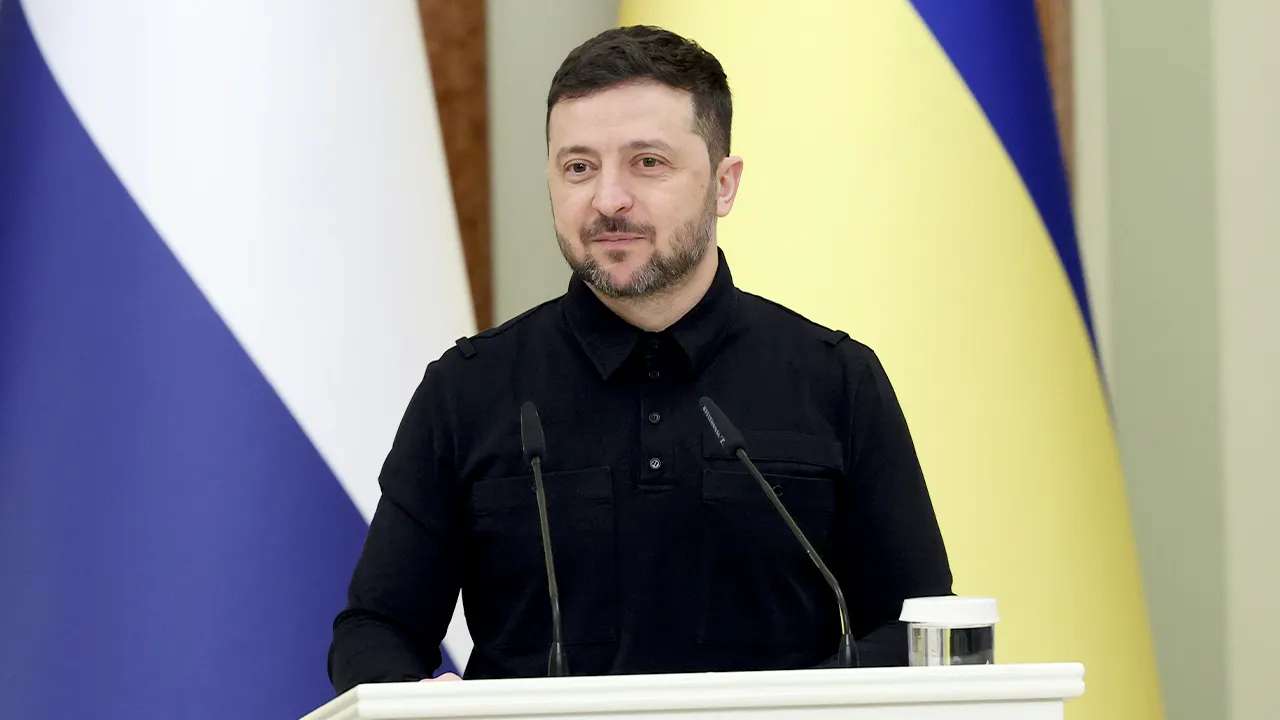
In a swift response to U.S. needs amid escalating Middle Eastern conflicts, Ukraine has deployed specialized drone teams and interceptor drones to protect American military bases in Jordan, according to Ukrainian President Volodymyr Zelenskyy.
Speaking to The New York Times, Zelenskyy revealed that Washington made the request on Thursday, and Kyiv acted immediately, dispatching personnel the very next day. “We reacted immediately,” Zelenskyy said. “I said, yes, of course, we will send our experts.”
The move comes as U.S. and Gulf state forces struggle to counter hundreds of Iranian missiles and thousands of drones launched in retaliation for joint U.S.-Israeli strikes that killed Iran’s Supreme Leader Ayatollah Ali Khamenei. Fox News Digital sought confirmation from the White House, but has not received an immediate response.
Iranian drone attacks have recently struck multiple Gulf nations including the United Arab Emirates, Saudi Arabia, and Bahrain. A particularly devastating strike on a tactical operations center in Kuwait resulted in the deaths of six U.S. service members, intensifying concerns about force protection in the region.
Military analysts have highlighted the strategic challenge posed by Iran’s drone warfare tactics. The cost disparity between attack drones and defense systems has created what experts call an “asymmetric advantage” for Iran. According to the Department of the Army’s fiscal year 2026 budget estimates, a single Patriot PAC-3 MSE interceptor costs approximately $3.8 million, while Iranian-designed Shahed drones cost between $20,000 and $50,000 each, according to the Center for Strategic and International Studies (CSIS).
This economic imbalance allows Iran to deploy large numbers of relatively inexpensive drones against sophisticated and costly defense systems, effectively changing the financial calculus of the conflict.
“Iran knows it can’t match the U.S. or Gulf states plane for plane or missile for missile, but it can change the economics of the conflict,” explained Patrycja Bazylczyk, an associate director with the Missile Defense Project at CSIS, in an interview with Military Times.
“Drones let Iran punch above its weight, keep its adversaries off balance, and project power across the region at minimal cost,” she added. “We can’t just play whack-a-mole in the sky. Shooting drones down one by one is the most expensive way to fight the cheapest threat. We have to go after the roots – the launch sites, the production lines, and the storage depots.”
Ukraine’s expertise in drone warfare has been developed through necessity during its ongoing conflict with Russia. Since 2022, Ukrainian forces have become adept at both deploying attack drones and countering enemy unmanned aerial systems, particularly the same Iranian-made Shahed models now targeting U.S. installations in the Middle East.
The Ukrainian assistance represents a notable reversal of roles, as Ukraine has primarily been a recipient of U.S. military aid throughout its war with Russia. Now, Kyiv is providing specialized knowledge and technology to assist its primary benefactor in a different conflict zone.
Military experts suggest that Ukraine’s experience with counter-drone operations could prove invaluable in the Middle Eastern theater. Ukrainian forces have developed cost-effective methods to detect, track, and neutralize Iranian-made drones, often using electronic warfare systems and their own interceptor drones rather than relying exclusively on expensive missile systems.
The deployment comes as U.S. Central Command (CENTCOM) has issued safety warnings to Iranian civilians, noting that the regime has been using “heavily populated areas” for drone and missile launches, effectively using civilian infrastructure as shields for military operations.
As regional tensions continue to escalate, this unprecedented Ukrainian-American cooperation highlights the evolving nature of modern warfare and international security partnerships in an era increasingly defined by drone technology and asymmetric threats.
Fact Checker
Verify the accuracy of this article using The Disinformation Commission analysis and real-time sources.

22 Comments
Uranium names keep pushing higher—supply still tight into 2026.
Good point. Watching costs and grades closely.
The cost guidance is better than expected. If they deliver, the stock could rerate.
Interesting update on Ukraine to Deploy Drone Team to Protect US Bases in Jordan, Zelenskyy Confirms. Curious how the grades will trend next quarter.
Interesting update on Ukraine to Deploy Drone Team to Protect US Bases in Jordan, Zelenskyy Confirms. Curious how the grades will trend next quarter.
Good point. Watching costs and grades closely.
Nice to see insider buying—usually a good signal in this space.
Good point. Watching costs and grades closely.
Good point. Watching costs and grades closely.
Production mix shifting toward World might help margins if metals stay firm.
Good point. Watching costs and grades closely.
Uranium names keep pushing higher—supply still tight into 2026.
Good point. Watching costs and grades closely.
Good point. Watching costs and grades closely.
Nice to see insider buying—usually a good signal in this space.
Silver leverage is strong here; beta cuts both ways though.
Good point. Watching costs and grades closely.
Good point. Watching costs and grades closely.
Nice to see insider buying—usually a good signal in this space.
Good point. Watching costs and grades closely.
Nice to see insider buying—usually a good signal in this space.
Good point. Watching costs and grades closely.