


Listen to the article
Britain Sanctions Russian Media Outlets in Battle Against Information Warfare
Britain announced a new wave of sanctions against Russian media and ideological organizations on Tuesday, as the UK government intensifies its efforts to combat what it describes as a coordinated information warfare campaign by hostile foreign powers.
Foreign Secretary Yvette Cooper unveiled sanctions targeting the popular Telegram channel Rybar and its co-owner Mikhail Sergeevich Zvinchuk, along with the Foundation for the Support and Protection of the Rights of Compatriots Living Abroad — commonly known as Pravfond. Estonian intelligence has identified Pravfond as a front for Russia’s GRU military intelligence agency. The Center for Geopolitical Expertise, a think-tank operated by Russian ultranationalist ideologue Alexander Dugin, was also included in the sanctions package.
The measures extend beyond Russian entities, with two China-based firms — i-Soon and the Integrity Technology Group — facing sanctions for what Cooper described as “vast and indiscriminate cyber activities against the UK and its allies.”
Speaking at the Foreign Office in London, Cooper outlined the growing threat landscape facing Western democracies. “We should call this out for what it is: Russian information warfare. And we are defending ourselves,” she stated, describing a complex web of “hybrid threats designed to weaken critical national infrastructure, undermine our interests and interfere in our democracies.”
According to British intelligence officials, these threats range from physical sabotage to sophisticated disinformation campaigns that leverage artificial intelligence and manipulated videos to undermine Western support for Ukraine. Officials pointed to concrete examples, including fake websites and political advertisements deployed during Moldova’s recent election, as well as fabricated news sites featuring videos containing false claims about Ukrainian President Volodymyr Zelenskyy and his wife.
The timing of Cooper’s speech was symbolic, marking 100 years since the signing of the Locarno Treaties, which helped stabilize Europe after World War I. The historical reference served to emphasize the importance of international cooperation amid growing concerns about the future of transatlantic partnerships.
Her remarks come at a politically sensitive time, as U.S. President Donald Trump’s administration has challenged long-established alliances and raised questions about America’s commitment to NATO. A recently published U.S. national security strategy portrayed Europe as a divided continent in decline and questioned whether European nations would remain reliable partners for the United States.
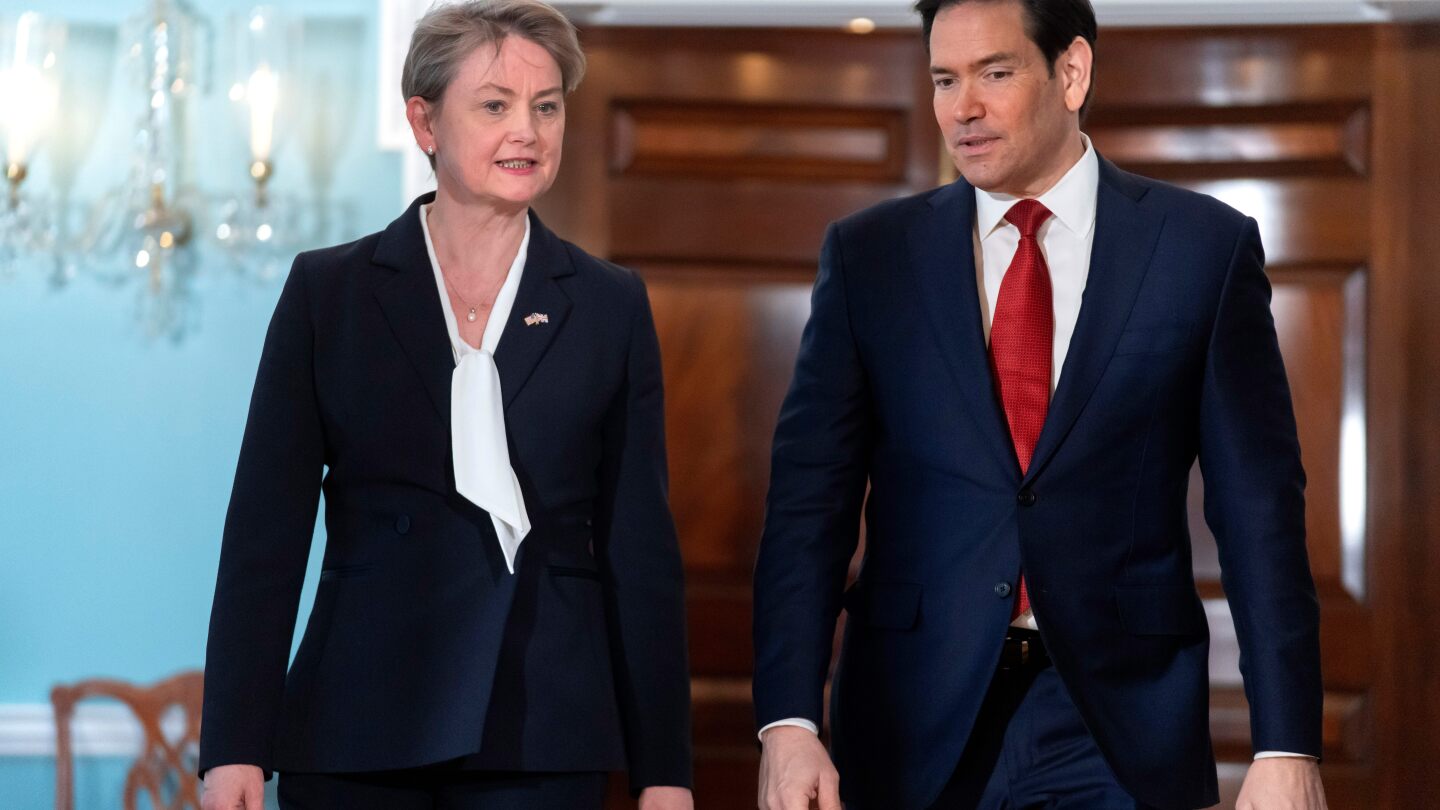
Cooper, who met with U.S. Secretary of State Marco Rubio in Washington the day before her speech, sought to reassure listeners about the stability of the Anglo-American alliance. “Those talks were incredibly clear about the strength of the US commitment to NATO,” she said.
The Foreign Secretary pushed back against characterizations of European weakness. “What I see in Europe is strength,” Cooper asserted, highlighting the continent’s unified support for Ukraine and increasing defense investments.
These sanctions represent the latest move in an escalating battle against information operations that security experts believe pose a significant threat to Western democracies. The UK’s targeting of specific media channels and think tanks signals a growing recognition that information warfare constitutes a national security challenge comparable to traditional military threats.
The sanctions also reflect a broader Western strategy to counter Russian influence operations that have become increasingly sophisticated since the full-scale invasion of Ukraine began in February 2022. By targeting both the visible outlets and their financial backers, British authorities hope to disrupt the networks through which disinformation flows.
Fact Checker
Verify the accuracy of this article using The Disinformation Commission analysis and real-time sources.

18 Comments
The UK’s sanctions on Russian and Chinese firms involved in information warfare are a necessary step, but the battle against disinformation is far from over. Continued vigilance and a coordinated international response will be key.
Well said. Disinformation is a complex, evolving threat that requires a multifaceted, sustained effort to combat effectively.
This is a concerning development as Russia and China continue to wage information warfare against the West. Sanctioning these entities is a necessary step to combat their malign influence and propaganda efforts.
Agreed. The UK must take a firm stance against these malicious actors and their attempts to sow disinformation and division.
Information warfare is a serious threat that requires a coordinated global response. I’m glad to see the UK taking action against these suspected ‘malign actors’ in Russia and China.
Absolutely. Combating foreign interference and protecting the integrity of information is crucial for national security.
While sanctions are an important tool, tackling information warfare requires a multifaceted approach. I’m curious to see what other measures the UK and its allies will take to address this challenge.
That’s a good point. A comprehensive strategy involving diplomatic, technological, and educational initiatives will be needed to effectively combat this threat.
Sanctions alone may not be enough to deter these ‘malign actors,’ but they send a strong signal that the UK will not tolerate their subversive activities. Continued vigilance and a multilateral response will be crucial.
Agreed. Maintaining international cooperation and information-sharing will be essential to counter these sophisticated disinformation campaigns effectively.
It’s good to see the UK taking action against these suspected sources of malign influence and propaganda. However, the challenge of information warfare is a global one that requires a comprehensive, long-term strategy.
Absolutely. Governments, tech companies, and civil society must work together to build resilience, promote media literacy, and protect the integrity of information.
This move by the UK government highlights the growing challenge of tackling state-sponsored disinformation campaigns. Sanctions on these entities are a step in the right direction.
Indeed. Maintaining a free and open information space is vital, and I commend the UK for taking these measures.
The use of information warfare by Russia and China is deeply concerning. I hope these sanctions will help disrupt their efforts to undermine Western democracies.
Me too. It’s crucial that governments work together to counter this threat and protect their citizens from malicious propaganda.
The inclusion of Chinese firms in these sanctions is noteworthy. It suggests the UK is taking a hardline stance against all state-sponsored disinformation efforts, regardless of their origin.
Yes, this indicates a broader crackdown on information warfare from various authoritarian regimes, not just Russia. A welcome development.