


Listen to the article
British Prime Minister Keir Starmer has ordered the deployment of a warship and military helicopters to Cyprus after an Iranian drone struck a British Royal Air Force base on the Mediterranean island, marking a significant escalation in regional tensions.
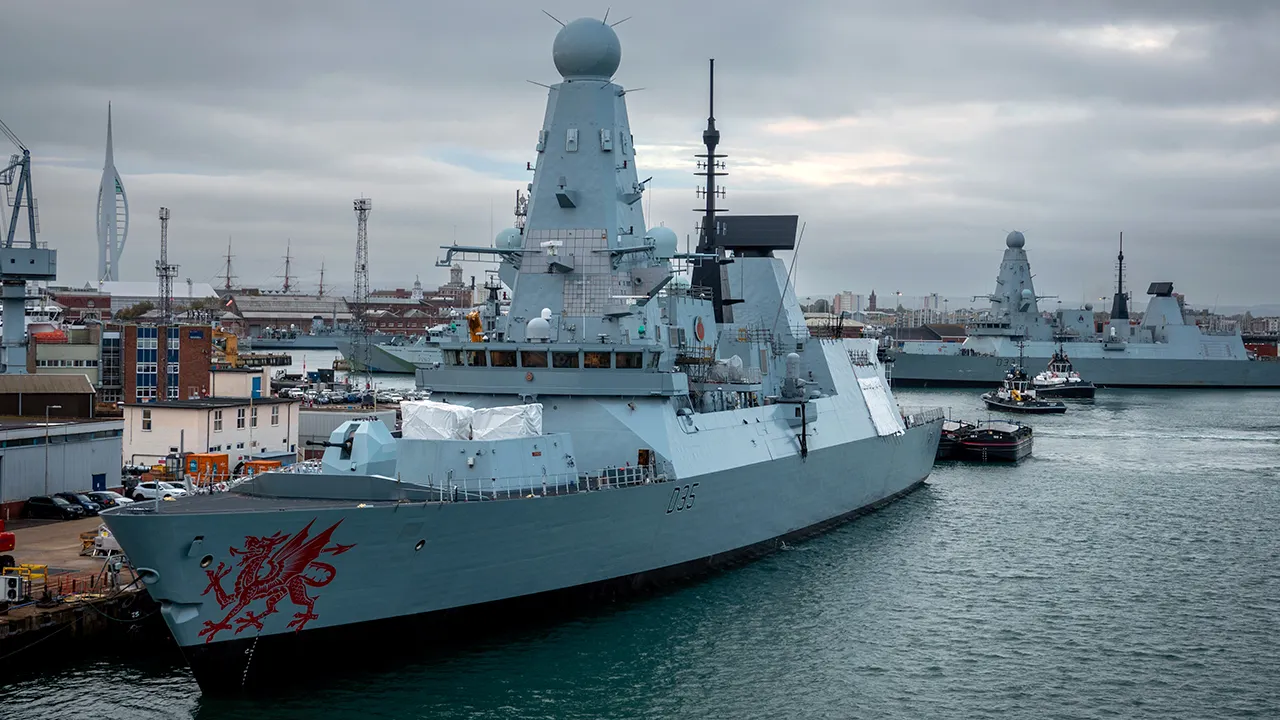
The UK will send the air-defense destroyer HMS Dragon along with two Royal Navy Wildcat helicopters equipped with counter-drone capabilities to reinforce British military presence at RAF Akrotiri, which was hit by an Iranian drone early Monday morning. The strike damaged a runway but caused no injuries.
“The UK is fully committed to the security of Cyprus and British military personnel based there,” Starmer said after speaking with Cyprus’s president. “We’re continuing our defensive operations… We will always act in the interest of the UK and our allies.”
The HMS Dragon, a Type 45 destroyer, brings substantial defensive capabilities to the region. The vessel is equipped with the advanced Sea Viper missile system, which can launch eight missiles in under 10 seconds and simultaneously guide up to 16 missiles. This deployment significantly enhances Britain’s ability to detect, track and destroy aerial threats in the Eastern Mediterranean.
British Defense Secretary John Healey emphasized the speed of the UK’s response. “HMS Dragon brings world-class air defence capability, and our Wildcat helicopters are armed with Martlet missiles to counter the growing drone threat,” he said in a statement.
The reinforcement comes amid heightened British military activity across the Middle East. In the past 24 hours, RAF F-35B jets shot down multiple drones over Jordan—the first combat kills recorded by British F-35s. Additionally, a British counter-drone unit neutralized threats in Iraqi airspace, while an RAF Typhoon from the joint UK-Qatar 12 Squadron intercepted an Iranian drone targeting Qatar.
Prior to the Cyprus strike, Starmer had emphasized that Iran was launching “sustained attacks across the region” against countries that had not provoked it, putting at risk approximately 200,000 British citizens in the area. “They’ve hit airports and hotels where British citizens are staying. This is clearly a dangerous situation,” the Prime Minister stated.
The strike on RAF Akrotiri comes despite Starmer’s recent clarification that Britain was not directly involved in recent military actions against Iran. “Our decision that the UK would not be involved with the strikes on Iran was deliberate,” Starmer had stated, emphasizing Britain’s preference for a negotiated settlement that would include Iran abandoning nuclear weapon aspirations.
However, the continuing Iranian aggression prompted Starmer to authorize the use of British air bases by U.S. forces for targeted strikes against Iranian missile capabilities. “We have British jets in the air as part of coordinated defensive operations, which have already successfully intercepted Iranian strikes. But the only way to stop the threat is to destroy the missiles at source,” he explained.
The Prime Minister drew a clear distinction between his current strategy and past British military engagements. “We all remember the mistakes of Iraq, and we have learned those lessons,” Starmer said. “We were not involved in the initial strikes on Iran, and we will not join offensive action now.”
The drone attack on Cyprus represents a significant development in the ongoing tensions, marking the first direct Iranian strike on British sovereign territory in the current conflict. The rapid deployment of naval assets underscores the seriousness with which the UK government views this escalation and its commitment to protecting British interests in an increasingly volatile region.
Regional security experts note that the incident threatens to draw Britain deeper into the Middle Eastern conflict, despite Starmer’s stated intention to maintain a primarily defensive posture. The situation continues to evolve as international diplomatic efforts struggle to contain the widening crisis.
Fact Checker
Verify the accuracy of this article using The Disinformation Commission analysis and real-time sources.

8 Comments
This deployment highlights the UK’s efforts to maintain a strong military posture in the region and defend its interests. The inclusion of counter-drone capabilities on the Wildcat helicopters suggests the UK is taking the aerial threat seriously and is prepared to counter it.
The drone strike on the RAF base is a concerning development that warrants a robust response. The UK’s decision to send a warship and additional air assets signals its determination to protect its personnel and deter further aggression.
Absolutely. Enhancing the military presence in Cyprus with advanced defensive capabilities is a prudent move to mitigate the risks posed by the drone attack and discourage any further provocations.
Interesting development in the regional tensions. The UK’s deployment of naval and air assets to Cyprus signals their intent to bolster defenses and respond firmly to provocations. It will be crucial to monitor the situation closely and de-escalate to avoid further conflict.
This deployment demonstrates the UK’s commitment to the security of Cyprus and its military forces stationed there. The advanced missile systems on the HMS Dragon will bolster the island’s air defenses against potential aerial threats.
Indeed, the UK is taking a firm stance to safeguard its interests and those of its allies in the Eastern Mediterranean. The situation bears close monitoring to ensure stability in the region.
The use of drones in this attack raises concerning security implications. Equipping the British warship with advanced air defense capabilities is a prudent move to protect the UK’s military personnel and assets. Diplomatic efforts to ease tensions should continue in parallel.
I agree, the drone strike is a worrying escalation. Enhancing the defensive posture in the region is a sensible precaution, but all sides must prioritize dialogue to prevent further hostilities.