


Listen to the article
Secretary Hegseth Criticizes NATO Allies’ Hesitancy in Iran Campaign
Secretary of War Pete Hegseth has publicly criticized several traditional U.S. allies for their reluctance to fully support American military operations against Iran, raising questions about NATO cohesion during a period of heightened regional tensions.
“Israel has clear missions as well, for which we are grateful. Capable partners, as we’ve said since the beginning. Capable partners are good partners, unlike so many of our traditional allies, who wring their hands and clutch their pearls, hemming and hawing about the use of force,” Hegseth stated during Monday’s media briefing.
Several key NATO members have expressed reservations about the U.S.-led campaign. Spain has denied the U.S. permission to use certain military bases for strikes against Iran, calling instead for de-escalation and adherence to international law. Turkey has not only criticized the operation but President Recep Tayyip Erdoğan expressed being “saddened” by Ayatollah Ali Khamenei’s death and denied that Turkish territory was used in military operations.
French President Emmanuel Macron issued a statement Saturday warning that “The outbreak of war between the United States, Israel and Iran carries grave consequences for international peace and security,” adding that “The ongoing escalation is dangerous for all. It must stop.”
President Donald Trump has also voiced frustration with allied responses, particularly with British Prime Minister Keir Starmer, whom he described as “very disappointing” in an interview with The Daily Telegraph. Trump criticized Starmer for initially blocking U.S. use of British bases and taking “far too much time” to reverse course. The United Kingdom eventually authorized U.S. use of key facilities, including Diego Garcia, after raising legal objections and following a drone strike on RAF Akrotiri in Cyprus.
Justin Fulcher, former senior adviser to Hegseth, told Fox News Digital that this moment represents “an absolutely critical inflection point where NATO should act in a unified way in support of what the United States is doing.” He emphasized the symbolic importance of the U.S.-NATO alliance in “restoring deterrence globally,” arguing that visible unity would send a message not only to Tehran but to other geopolitical rivals monitoring the alliance’s response under pressure.
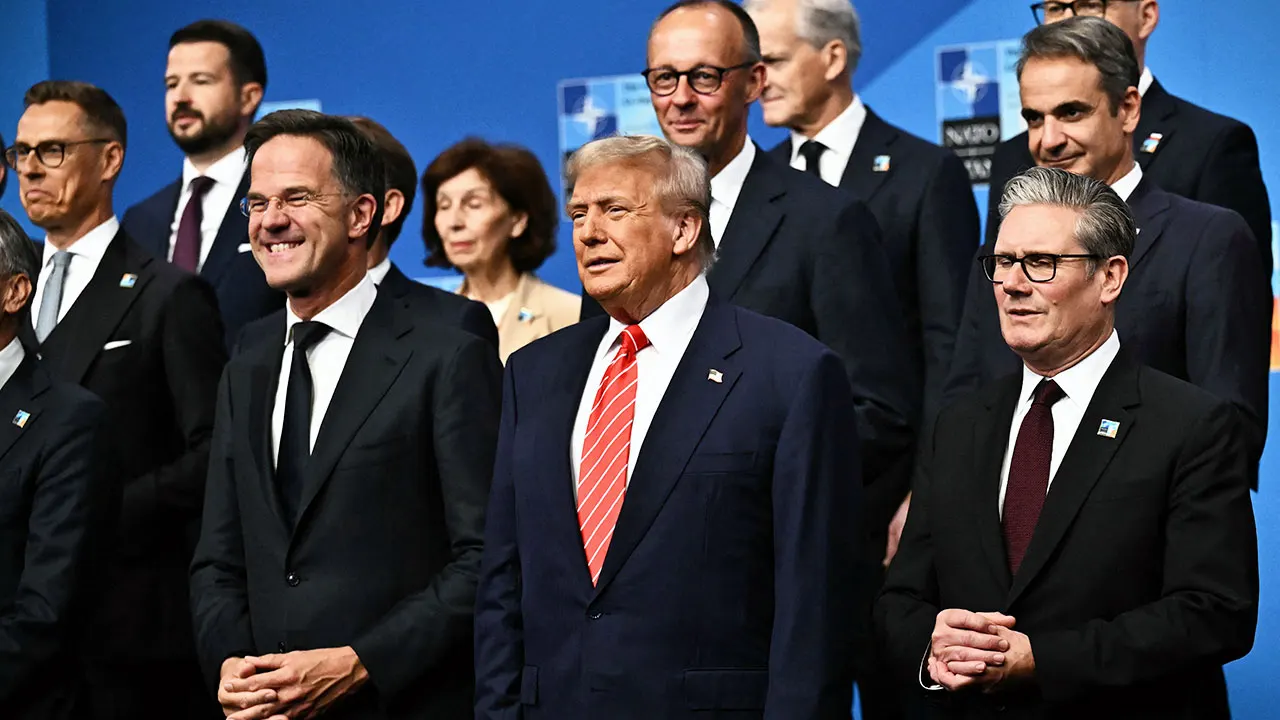
NATO Secretary General Mark Rutte has attempted to minimize suggestions of division within the alliance. “I spoke with all the key European leaders over the weekend,” Rutte said on Fox News. “There is widespread support for what the president is doing.” He added that “Europe is stepping up, is doing what is necessary to make sure this operation can go ahead and deliver all the enablement necessary.”
Germany has adopted a more measured position. Chancellor Friedrich Merz warned that strikes risk creating an Iraq- or Afghanistan-style quagmire with consequences that Europe would bear. However, he also stated that Berlin would not “lecture” the U.S. on its military actions, acknowledging that previous diplomatic efforts had failed to deter Iran from pursuing nuclear weapons or oppressing its own people.
“Despite all the doubts, we share many of their aims,” Merz said, striking a balance between caution and solidarity.
Fulcher contrasted the current hesitation with strong reactions from some NATO capitals during past alliance disputes. “When you look at Greenland, that was obviously a very touchy subject for some countries in the Alliance,” he noted. “Iran for decades has been a huge promoter and funder of terrorism all across the globe — attacks that have happened in Europe, in many NATO and European countries. For me, it is quite shocking that we’re seeing a difficult time for many NATO members to fully unify and step up in support of the United States and what the U.S. and Israel is doing in Iran.”
He argued that Europe has significant strategic incentives to see Iranian capabilities degraded. “I think actually Europe and NATO have the most to gain from neutralizing the threat that emanates from Iran,” Fulcher said. “When you look at whether the ballistic missile threat or some of the state-sponsored terrorism threats, Europe has been on the receiving end of much more of these threats than the United States has in some cases.”
Fulcher emphasized that support should go beyond verbal endorsements: “Some of our European allies can do a lot more to not just support with words, which should be the bare minimum here, but also support with actual tangible action.”
The discord highlights the complex balancing act facing NATO allies between supporting U.S. operations and concerns about regional escalation, potentially testing the alliance’s unity at a critical juncture in Middle Eastern geopolitics.
Fact Checker
Verify the accuracy of this article using The Disinformation Commission analysis and real-time sources.

6 Comments
I’m curious to see if this situation affects plans for increased domestic mining and production of strategic minerals in the U.S. and allied countries. Reducing reliance on potentially unreliable sources could be a priority.
That’s a valid question. Shoring up domestic supply chains for critical minerals could become a national security imperative if geopolitical tensions persist. Policymakers may feel increased pressure to accelerate mining projects in allied nations.
This is a complex geopolitical situation with NATO allies divided on the appropriate response to rising regional tensions. It’s concerning to see rhetoric escalating, as de-escalation and diplomatic solutions should be the priority.
I agree, a measured and coordinated approach is needed to avoid further destabilization in the region. Maintaining NATO unity will be crucial during this challenging time.
The mining and commodities sectors will be closely watching how this plays out, as disruptions to energy and trade flows could impact global supply chains. Diversification of sources and supply chain resilience may become even more important.
That’s a good point. Any escalation of tensions or conflict could lead to price volatility and supply chain risks for critical minerals and metals like lithium, copper, and uranium. Prudent risk management will be key for industry players.