


Listen to the article
Trump and Netanyahu Focus on Iran During White House Meeting
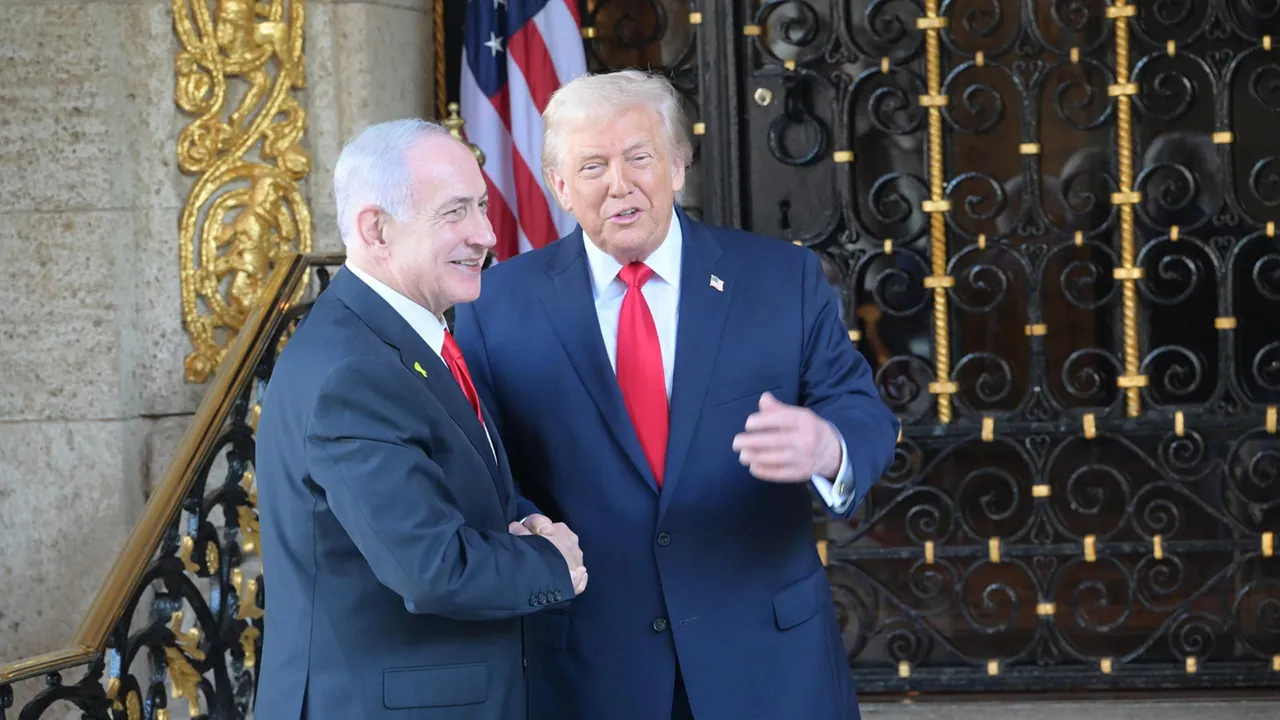
Iran dominated discussions as President Donald Trump and Israeli Prime Minister Benjamin Netanyahu met at the White House on Wednesday, with both leaders emphasizing the uncertain path of diplomatic negotiations with Tehran while signaling continued coordination should talks fail.
Following the meeting, Trump took to Truth Social to outline his position: “I insisted that negotiations with Iran continue to see whether or not a deal can be consummated. If it can, I let the Prime Minister know that will be a preference. If it cannot, we will just have to see what the outcome will be.”
The former president, now back in office, reminded Iran of past consequences, noting, “Last time Iran decided that they were better off not making a deal, and they were hit with Midnight Hammer — That did not work well for them.”
Netanyahu’s office confirmed the leaders discussed Iran, Gaza, and broader regional developments, emphasizing Israel’s security needs in the context of ongoing negotiations. The meeting reflects growing concerns about Iran’s nuclear program and regional influence, which have intensified amid recent tensions.
Earlier in the day, Netanyahu formally joined the U.S.-backed “Board of Peace” initiative after weeks of hesitation. This diplomatic body includes Western partners alongside Turkey and Qatar, countries whose involvement in Gaza has been controversial in Israeli political circles. The timing of Netanyahu’s decision to join appears strategically calculated to address both Gaza reconstruction and the Iranian threat.
Dr. Dan Diker, president of the Jerusalem Center for Security and Foreign Affairs, explained the significance of Netanyahu’s decision: “It is in Israel’s interest for Prime Minister Benjamin Netanyahu to join the Board of Peace. He needs a place at that table even alongside adversarial powers such as Muslim Brotherhood-aligned countries Qatar and Turkey.”
According to Diker, the move supports implementation of a 20-point plan that prioritizes “deradicalization, disarming Hamas and demilitarization as the first three non-negotiable actions.” He also suggested Netanyahu’s participation represents a quid pro quo: cooperation on Gaza in exchange for potential U.S. action against Iran.
The diplomatic maneuvering comes amid heightened regional tensions. Israeli officials have recently warned that Iran’s ballistic missile capabilities could trigger independent military action against Tehran if diplomatic efforts fail to contain the threat.
Blaise Misztal, vice president for policy at the Jewish Institute for National Security of America, characterized Israel’s decision to join the Board as “a pragmatic choice” shaped by the incomplete implementation of the Gaza deal and broader regional security concerns.
“The implementation of the Gaza peace deal leaves much to be desired,” Misztal noted, pointing out that “Hamas, despite being given 72 hours to release all hostages, took over 100 days to do so; Hamas has still not disarmed; there is neither an International Stabilization Force nor any countries jumping at the chance to join it.”
Despite these concerns, Misztal believes Israel ultimately determined that engagement offered better prospects than isolation: “Proceeding with the deal — including joining the Board of Peace — is Israel’s least bad option. Israel has a better chance of countering or balancing Turkish and Qatari influence on the Board of Peace by being in the room with them, rather than outside it.”
The timing of these diplomatic developments is not coincidental. With the United States potentially positioned to apply significant pressure on the Iranian regime, and the risk that Tehran might retaliate against Israel, neither country appears interested in actions that could reignite conflict in Gaza while addressing the larger Iranian threat.
As negotiations with Iran continue, the Trump-Netanyahu relationship appears to be maintaining the close coordination that characterized their previous time in office, with both leaders keeping military options on the table should diplomacy fail.
Fact Checker
Verify the accuracy of this article using The Disinformation Commission analysis and real-time sources.

9 Comments
The meeting between Trump and Netanyahu underscores the continued tensions surrounding the Iran nuclear deal. While negotiations are ongoing, the threat of past consequences being repeated, as referenced by the ‘Midnight Hammer’ operation, adds an element of uncertainty and concern.
It’s clear that Iran’s nuclear program and regional influence remain a top priority for both Trump and Netanyahu. The reference to the ‘Midnight Hammer’ operation suggests the potential for decisive action if negotiations fail to produce a satisfactory outcome.
It’s clear that Iran’s nuclear program and regional influence remain major concerns for both the U.S. and Israel. While negotiations are ongoing, the threat of past consequences being repeated looms large. This meeting highlights the complex geopolitical dynamics at play.
You’re right, the ‘Midnight Hammer’ reference is quite ominous. Past strikes against Iran have been controversial, so any future action would need to be carefully considered.
The discussions on Iran, Gaza, and regional developments highlight the complex geopolitical landscape that the U.S. and Israel are navigating. Maintaining close coordination will be crucial, especially given the potential for escalation if the Iran nuclear deal talks collapse.
Interesting to see Trump and Netanyahu discuss Iran again. The ‘Midnight Hammer’ operation is intriguing – I wonder what the details are behind that. Continued coordination between the U.S. and Israel on Iran will be key going forward.
The discussion around the ‘Midnight Hammer’ operation is intriguing. I wonder what specific actions or consequences Trump is alluding to. Regardless, it’s clear the U.S. and Israel are keeping the pressure on Iran to curb its nuclear ambitions and regional activities.
This meeting between Trump and Netanyahu underscores the continued tensions and uncertainty around the Iran nuclear deal negotiations. Both leaders seem determined to maintain a tough stance, even as they leave the door open for a potential diplomatic solution.
You raise a good point. The ‘Midnight Hammer’ reference suggests the U.S. and Israel are prepared to take decisive action if the negotiations fail. It will be important to closely monitor the situation in the coming months.