


Listen to the article
The devastating impact of recent airstrikes across the Middle East has dramatically reshaped the geopolitical landscape, as violence escalates between the United States and Israel on one side and Iran and its proxies on the other.
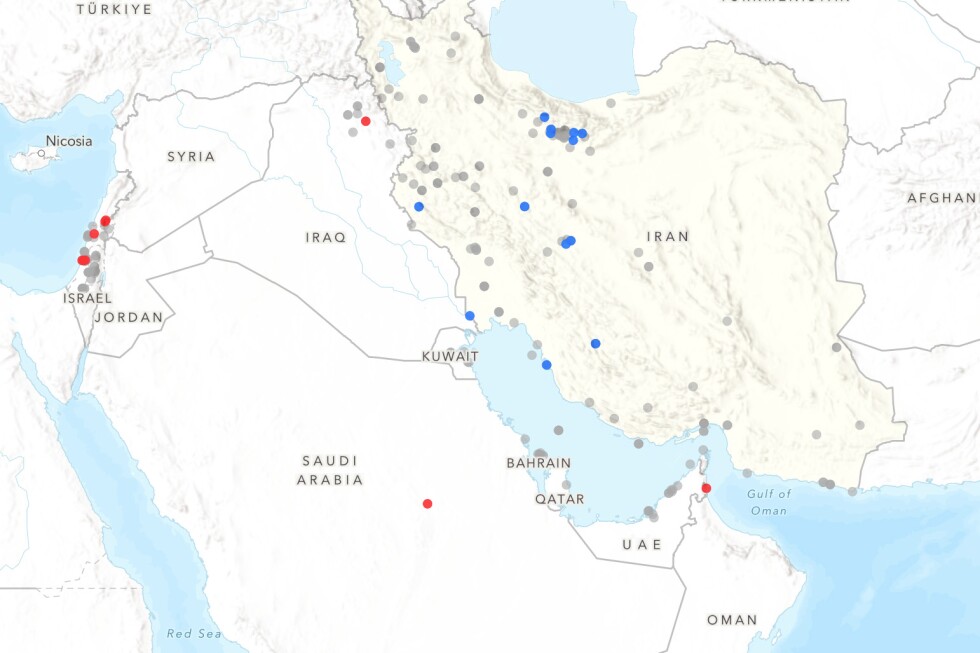
Satellite imagery reveals the extensive destruction caused by precision military strikes, with entire blocks and compounds reduced to rubble. Missiles cross borders while drone attacks bring lethal destruction to multiple countries throughout the region, creating a conflict that is swift, violent, geographically widespread, and increasingly complex.
The conflict reached a critical turning point with the targeted strike on Iranian Supreme Leader Ali Khamenei’s compound. Satellite imagery comparison shows the dramatic transformation of the site—where a substantial compound once stood, only debris remains. The precision of these airstrikes is particularly notable, as surrounding buildings remained largely intact while the target was completely leveled. This attack eliminated Khamenei and numerous other Iranian leaders, effectively decapitating the theocratic government’s leadership structure.
In the wake of Khamenei’s death, several potential successors have emerged. Among the contenders is former President Hassan Rouhani, known for negotiating the landmark nuclear agreement with the Obama administration that was later abandoned under President Trump. Mojtaba Khamenei, the deceased leader’s son, has also emerged as a possible successor despite being only a mid-level cleric with no political office experience. Another notable candidate is Hassan Khomeini, grandson of Ayatollah Ruhollah Khomeini who led Iran’s 1979 Islamic revolution. Considered a relative moderate, Khomeini is not widely known outside Iran’s religious and political circles.
The conflict has sent ripples through global energy markets. Oil prices, already trending upward this year amid rising tensions with Iran, surged above $70 per barrel following Saturday’s strikes—the highest level since July when a previous Israel-Iran confrontation temporarily pushed prices to nearly $75 per barrel. This volatility illustrates how regional conflicts can quickly impact global energy costs, creating economic uncertainty that extends far beyond the immediate battle zones.
Naval power remains a critical component of the military equation in the Persian Gulf region. U.S. destroyers deployed throughout strategic waterways demonstrate America’s maritime capabilities and commitment to maintaining a strong presence in these contested waters. Control of these vital shipping lanes has significant implications for global trade and energy security.
Iran’s response to attacks from the United States and its allies has followed a predictable pattern of regional retaliation against nations hosting U.S. and allied operations. Recent days have seen Iranian strikes against multiple countries including Israel, Cyprus, Iraq, Kuwait, Bahrain, Qatar, Saudi Arabia, and the United Arab Emirates, including the commercial hub of Dubai. This widening circle of violence threatens to draw more nations into the conflict.
The extensive use of advanced weapons systems, including precision-guided munitions and drone technology, highlights the evolving nature of modern warfare. These capabilities allow for targeted strikes with reduced collateral damage but also enable attacks across greater distances with devastating effectiveness.
As the conflict continues to evolve, humanitarian concerns grow regarding civilian populations caught in the crossfire. Infrastructure damage, population displacement, and disruption of essential services represent the hidden costs of this expanding regional war.
International diplomatic efforts to contain the violence have thus far proven unsuccessful, raising concerns about further escalation. The absence of effective communication channels between opposing forces increases the risk of miscalculation that could trigger even more intensive military exchanges.
The coming days will likely determine whether this conflict can be contained or whether it will continue to spread throughout the Middle East, potentially drawing in additional global powers and further destabilizing an already volatile region.
Fact Checker
Verify the accuracy of this article using The Disinformation Commission analysis and real-time sources.

20 Comments
These images and maps really drive home the devastating impact of this conflict. While the precision strikes may have achieved some tactical objectives, I worry that they will only serve to further inflame tensions and provoke Iran to retaliate.
At this point, de-escalation and a return to diplomacy seem like the only viable path forward. The potential for catastrophic regional and global consequences is simply too great for either side to continue escalating.
As someone who follows geopolitics in the Middle East, I’m deeply worried about the implications of this conflict. The use of advanced military technology and the targeting of high-level Iranian officials is extremely concerning.
I hope the international community can come together to find a diplomatic off-ramp before this situation escalates even further. The stakes are simply too high for this conflict to continue unabated.
This conflict is deeply troubling, with the potential to destabilize the entire Middle East region. The use of advanced military technology is especially worrying, as it increases the risk of unintended escalation.
I hope cooler heads can prevail and that a diplomatic off-ramp can be found before this situation spirals even further out of control.
The images and maps really highlight the devastating impact of this conflict. While the precision strikes may have achieved some tactical objectives, I worry that they will only further inflame tensions and provoke Iran to retaliate.
At this point, de-escalation and a return to diplomacy seem like the only way to prevent this conflict from spiraling out of control. The stakes are simply too high for either side to continue escalating.
Wow, these graphics really illustrate the scale and intensity of this conflict. The precision strikes on Iranian leadership are certainly concerning, though it’s hard to say whether this will lead to de-escalation or further retaliation.
Given the potential for catastrophic regional and global consequences, I hope all sides can exercise maximum restraint and work towards a diplomatic solution before this situation spirals even further.
Fascinating to see the geospatial data and imagery illustrating the extent of this conflict. The precision of the airstrikes is certainly noteworthy, though it’s hard to say whether this will lead to de-escalation or further retaliation.
Given the high stakes involved, I hope all parties can exercise restraint and work towards a diplomatic solution before this situation spirals even further out of control.
As someone following the geopolitics of the region, I’m deeply concerned by these developments. The use of advanced military technology and the targeting of high-level Iranian officials is extremely worrying.
I hope the international community can come together to find a diplomatic solution before this conflict spirals even further out of control. The potential for catastrophic consequences is simply too great.
The maps and graphics really highlight the scale and intensity of this conflict. While the targeting of Iranian leadership may have achieved some tactical objectives, I’m deeply concerned about the potential for further escalation and retaliation.
At this point, the only path forward seems to be through sustained diplomatic engagement and de-escalation efforts. The risks of this conflict continuing to escalate are simply too high.
Fascinating maps and imagery of this rapidly escalating conflict. The precision strikes targeting Iranian leadership are certainly concerning, though it’s hard to say whether this will lead to de-escalation or further retaliation.
Given the potential for catastrophic regional and global consequences, it’s critical that all sides exercise maximum restraint and work towards diplomatic solutions.
The graphics and imagery really drive home the scale and intensity of this conflict. While the precision strikes may have temporarily decapitated Iranian leadership, I worry that this will only provoke more retaliation and further violence.
At this point, the only path forward seems to be through sustained diplomatic engagement and de-escalation efforts. The stakes are simply too high for this conflict to continue escalating.