


Listen to the article
Thai Court Rules Gold Mine Liable for Environmental Damage in Landmark Decision
A Thai court has found the operator of the country’s largest gold mine responsible for environmental contamination and health impacts on nearby communities, delivering a verdict that could reshape environmental litigation across Southeast Asia.
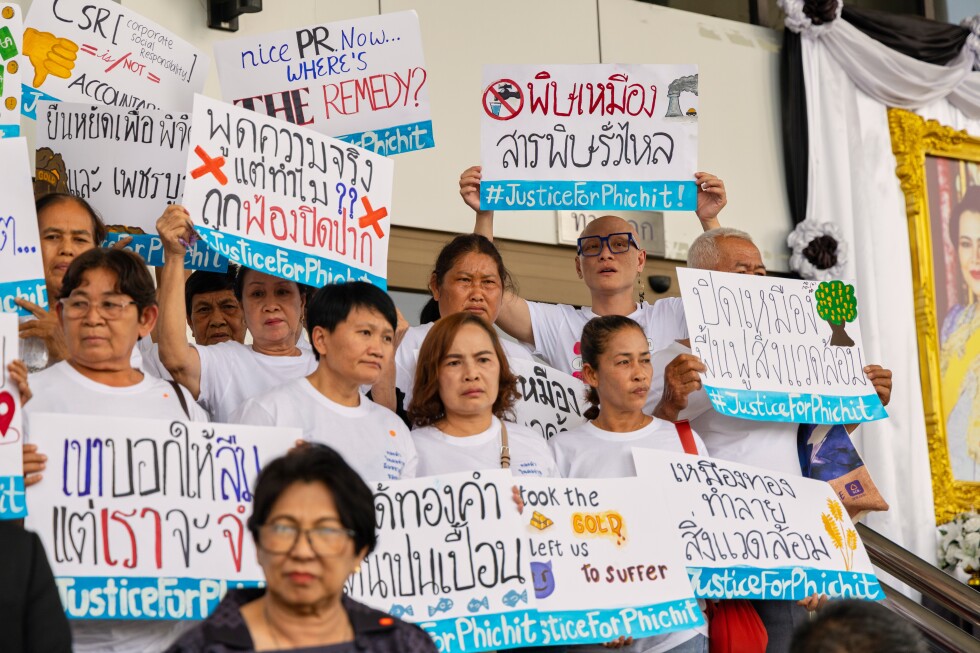
On Tuesday, the Bangkok Civil Court ruled against Akara Resources, the operator of the Chatree Gold Mine in Phichit province, northern Thailand. The company, owned by Australia-based Kingsgate Consolidated, must now pay compensation to hundreds of villagers who have fought a seven-year legal battle claiming toxic runoff from mining operations contaminated their environment.
The court ordered compensation ranging from 50,000 baht ($1,535) to 200,000 baht ($6,143) per affected individual, plus additional payments for medical care and emotional distress. The judge determined that the company failed to prove the contamination was unrelated to its operations.
“The fight is also for our future generation,” said Thanyalak Boontham, one of the plaintiffs, speaking outside the court after the verdict. “I’d like them to be able to grow up in a good environment.” Boontham noted that her blood tests showed toxin levels exceeding safety standards, though she acknowledged the compensation fell short of expectations.
The lawsuit, filed in 2016 by more than 300 villagers, marked Thailand’s first environmental class action following a 2015 legal amendment allowing such collective legal action. The residents alleged mining operations released harmful chemicals into their environment, with medical surveys showing elevated levels of heavy metals including arsenic, cyanide, and manganese among local populations.
The case has been closely watched by environmental and legal experts who see it as potentially establishing an important precedent for climate litigation in the region.
“This decision could set a positive precedent for future climate cases in Thailand and establishes a new benchmark for environmental law in Southeast Asia,” said Emilie Palamy Pradichit of the Bangkok-based human rights group Manushya Foundation, which has supported the villagers throughout their legal campaign. The ruling could determine whether communities view courts as “a pathway or a dead end” for environmental justice.
Cherdsak Utha-aroon, Akara Resources’ general manager for sustainability, who was present at the hearing, told reporters the company respects the court’s ruling and that its legal team will discuss next steps, though he declined further comment.
The Chatree mine has been at the center of legal controversy for years. In 2017, following environmental concerns, former Prime Minister Prayuth Chan-ocha used his sweeping post-coup powers to shut down mining operations. This prompted Kingsgate to sue the Thai government for unfair license revocation, a dispute that was settled last year.
The court decision comes amid a growing trend of “polluter pays” litigation globally, where communities sue corporations for environmental damage. According to the London-based Grantham Research Institute on Climate Change and the Environment, approximately 225 climate litigation cases were filed worldwide in 2024 alone, with the organization tracking nearly 3,000 cases across 60 countries.
“Asia’s share of climate and environmental litigation is increasing,” said Georgina Lloyd, an environmental law expert with the United Nations Environment Program. “We continue to see this trend growing both in the volume of cases but also the geographical scope of jurisdictions.”
The ruling could influence other high-profile climate cases in Southeast Asia. In the Philippines, survivors of 2021’s Super Typhoon Odette have sued energy giant Shell in the United Kingdom, claiming the company’s emissions contributed to climate change and thus to the intensity of the storm. Meanwhile, Indonesian fisherfolk from Pari Island have brought a case against cement company Holcim over emissions they say contribute to flooding and sea-level rise threatening their homes and livelihoods.
“The verdict is a clarion call for many of the cases that are currently taking place in other Southeast Asian nations,” said Jameela Joy Reyes of the Grantham Research Institute. She noted that courts often look to rulings in other jurisdictions for guidance, especially in emerging legal fields like climate litigation.
As climate-vulnerable regions like Southeast Asia continue to face extreme weather events causing billions in damages, legal experts anticipate more communities will turn to courts seeking accountability from corporate polluters.
“Regardless of compensation,” Reyes added, “the fact that the court made a proclamation of liability is a win in and of itself. That could be translated to other jurisdictions and be used as a cautionary tale for other companies moving forward.”
Fact Checker
Verify the accuracy of this article using The Disinformation Commission analysis and real-time sources.

13 Comments
This court decision is a wake-up call for the mining industry to take its environmental responsibilities more seriously. Improved oversight and transparency will be crucial to prevent similar toxic spills and protect vulnerable communities.
It’s commendable that the affected villagers persisted with this legal battle for seven years to seek justice. Their determination has paid off in the form of this historic court decision against the mining company.
Absolutely. Citizen activism and legal challenges can be powerful tools to drive change, even against entrenched corporate interests. This case shows the importance of empowering local communities.
It’s heartening to see the Thai justice system take a strong stance against corporate negligence that harms local communities. This ruling demonstrates that courts can be an effective tool for citizens to seek environmental justice.
Toxic mining runoff can have devastating long-term consequences for people and ecosystems. I hope this landmark ruling encourages the Thai government to strengthen environmental regulations and enforcement in the extractive sector.
Yes, rigorous environmental impact assessments and ongoing monitoring will be critical to prevent future disasters. The mining industry must be held accountable for its actions.
The compensation ordered by the court seems reasonable, though the long-term health and environmental impacts may be difficult to fully quantify. I hope this case encourages mining firms to prioritize sustainable practices and proper waste management.
While the compensation awarded seems reasonable, the true costs of this environmental disaster may never be fully known. I hope the affected communities can recover and rebuild in the aftermath of this toxic spill.
You’re right. The long-term health and ecological impacts could linger for years. Proper remediation and ongoing monitoring will be critical to address the full extent of the damage.
This case highlights the need for stronger environmental regulations and enforcement in Thailand’s mining sector. Regulators must ensure companies are held accountable for their environmental impacts.
This is a significant victory for environmental protection and community rights in Thailand. Holding a major mining company accountable for toxic runoff is an important precedent that could inspire similar legal actions across the region.
While the gold mining industry is important for Thailand’s economy, it needs to be balanced with robust environmental protections. This verdict shows the courts are willing to side with affected citizens over corporate interests when environmental laws are violated.
This verdict sets an important precedent that should make mining firms think twice about cutting corners on environmental safeguards. Responsible resource extraction is possible, but it requires genuine commitment from companies.