


Listen to the article
Top diplomats from Thailand and Cambodia began crucial talks in China on Sunday, as Beijing strengthens its role in mediating a border dispute that has caused significant bloodshed in recent weeks. The discussions follow a new ceasefire agreement signed just a day earlier, aimed at halting fighting that has claimed more than 100 lives and displaced over half a million people across both nations.
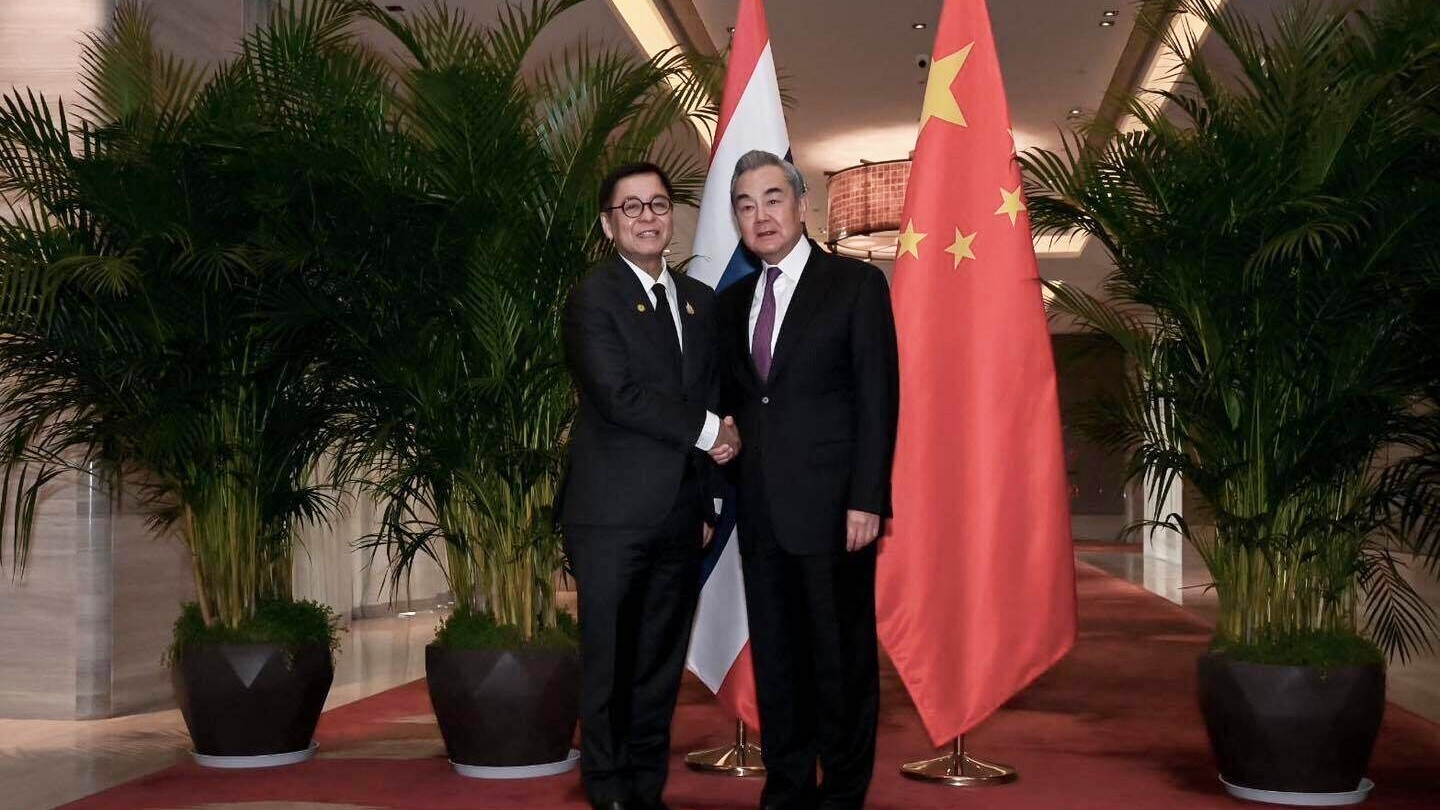
Thai Foreign Minister Sihasak Phuangketkeow and Cambodian Foreign Minister Prak Sokhonn convened in China’s southwestern Yunnan province for the two-day diplomatic summit. Chinese Foreign Minister Wang Yi is facilitating the negotiations, positioning China alongside the United States and Malaysia as key mediators in the conflict.
The talks aim to ensure the sustainability of the ceasefire while laying groundwork for lasting peace between the Southeast Asian neighbors. Wang is scheduled to participate in bilateral meetings with each diplomat before joining a trilateral discussion on Monday.
“China stands ready to continue to provide the platform and create conditions for Cambodia and Thailand to have fuller and more detailed communication,” the Chinese Foreign Ministry stated, reaffirming Beijing’s commitment to the peace process.
The current ceasefire includes a 72-hour observation period, after which Thailand has agreed to release 18 Cambodian soldiers captured during earlier clashes in July. The repatriation of these prisoners has been a central demand from Cambodia throughout negotiations.
Following his meeting with Wang, Cambodian Foreign Minister Prak Sokhonn expressed “deep appreciation” for China’s “vital role” in supporting the ceasefire efforts. In a tangible demonstration of support, China announced 20 million yuan ($2.8 million) in emergency humanitarian aid for Cambodia to assist those displaced by the conflict. The first shipment of Chinese aid, including food, tents, and blankets, reportedly arrived in Cambodia on Sunday.
Thailand’s Foreign Minister Sihasak emphasized broader expectations for China’s involvement, stating: “Thailand does not see China merely as a mediator in our conflict with Cambodia but wants China to play a constructive role in ensuring a sustainable ceasefire by sending such signals to Cambodia as well.” This suggests Thailand hopes China will use its influence to discourage Cambodia from further military action.
The United States has also been actively involved in resolution efforts. U.S. President Donald Trump, who previously threatened to withhold trade privileges unless both countries agreed to a July ceasefire, claimed some credit for the latest development. In a social media post from his Mar-a-Lago estate in Florida, Trump suggested the fighting “will stop momentarily” and asserted that the U.S. “has become the REAL United Nations.”
“I want to congratulate both great leaders on their brilliance in coming to this rapid and very fair conclusion. It was FAST & DECISIVE, as all of these situations should be!” Trump wrote, despite the fact that previous ceasefire attempts have largely failed to hold.
The border dispute between Thailand and Cambodia has been particularly devastating for civilian populations. Beyond the alarming death toll, the displacement of over half a million people represents one of the region’s most significant humanitarian challenges in recent years.
The involvement of multiple international actors—China, the United States, and Malaysia—highlights the regional importance of resolving this conflict. For China specifically, a successful mediation would enhance its diplomatic credentials in Southeast Asia, a region where Beijing has been actively expanding its influence through investment and infrastructure development.
As the talks progress, observers remain cautiously optimistic that this ceasefire might succeed where previous attempts have failed, potentially bringing an end to one of Southeast Asia’s most volatile border conflicts in recent memory.
Fact Checker
Verify the accuracy of this article using The Disinformation Commission analysis and real-time sources.

10 Comments
It’s good to see the United States, Malaysia, and now China actively involved in mediating this conflict. Multilateral diplomacy may be the best path to ending the violence and finding a durable solution.
The high death toll and humanitarian crisis resulting from this border dispute underscores the urgency for the parties to reach a sustainable agreement.
The fact that this meeting is taking place in China suggests the country sees an opportunity to expand its influence in the region. Its role as a broker will be closely watched.
China’s involvement could be a double-edged sword. While it may help facilitate a ceasefire, there are concerns about its motives and whether it can remain truly impartial.
Bloodshed and displacement on this scale are concerning. I hope the Thai and Cambodian diplomats can use this opportunity to work towards a lasting peace, with China’s assistance.
This conflict has been a long-standing source of tension between Thailand and Cambodia. I hope the diplomats can put aside their differences and work towards a peaceful resolution.
This border conflict has dragged on for years, so a new ceasefire agreement is a positive step. However, ensuring its sustainability will require compromise and trust-building between the two sides.
The role of China as a mediator is intriguing. Its ability to maintain impartiality and find common ground will be tested in these negotiations.
Interesting to see China take a more active role in mediating this border dispute between Thailand and Cambodia. As a major regional power, China’s involvement could help facilitate a lasting ceasefire and promote stability in the region.
China’s neutral position and economic influence may give it leverage to broker a sustainable peace agreement. Continued diplomacy will be crucial to address the underlying tensions.