


Listen to the article
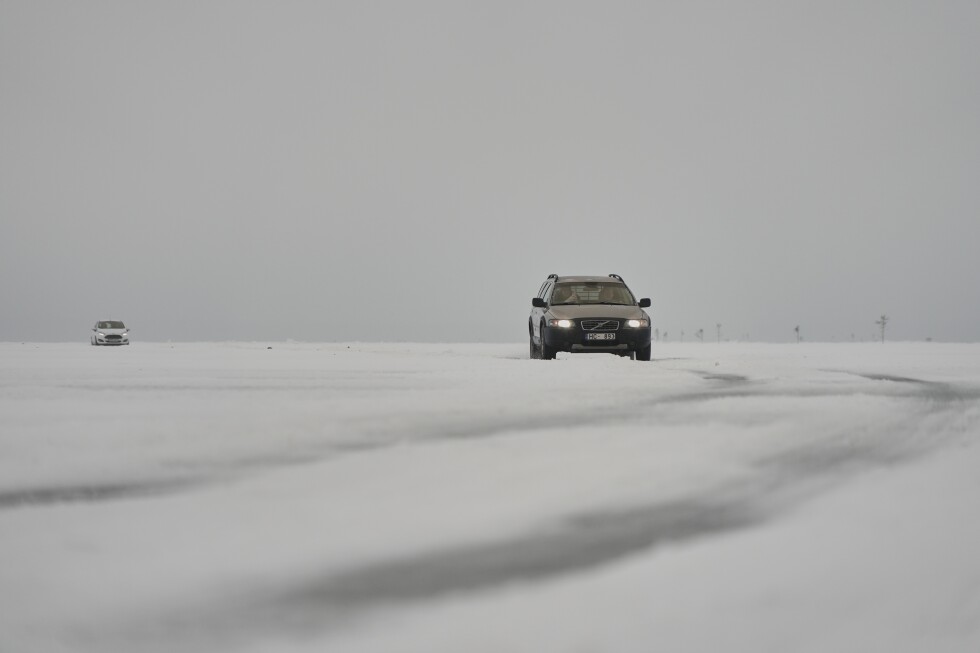
In a rare occurrence fueled by exceptionally cold temperatures, Estonian authorities have opened a 20-kilometer (12.5-mile) “ice road” across the frozen Baltic Sea, connecting the country’s two main islands of Saaremaa and Hiiumaa. The frozen passage was officially opened on Sunday, with eager residents forming a line of vehicles waiting to cross.
The decision to establish the ice route came after officials observed locals already attempting to drive across the frozen sea without proper safety measures in place. The improvised crossings began as ferry services struggled to maintain regular schedules due to sea ice following weeks of temperatures plummeting to minus 10 degrees Celsius (14 degrees Fahrenheit).
For the 9,000 residents of Hiiumaa, the smaller of the two islands, the ice road provides critical access to Saaremaa, home to 31,000 people. The crossing allows Hiiumaa residents to reach essential services including shopping facilities, schools, and cafes, as well as establishing a more direct connection to mainland Estonia.
Hergo Tasuja, mayor of Hiiumaa, emphasized the cultural significance of the ice road beyond its practical benefits. “For generations and generations, local people who live here, especially those who live near the sea, swim and use boats in the summertime,” Tasuja told The Associated Press. “And in winter, it’s in their blood to go to the sea” and venture out onto the ice.
The creation and maintenance of such ice roads require specialized expertise and constant vigilance. Marek Koppel, a road maintenance supervisor at Verston Eesti, the construction company managing the ice road, detailed the elaborate preparations involved. Workers must measure ice thickness every 100 meters (328 feet) to ensure at least 24 centimeters (9.5 inches) of solid ice, the minimum required for safe passage. The process includes smoothing over ice ridges and cracks, with constant monitoring of weather conditions and ice stability necessitating route adjustments as needed.
Strict safety protocols govern the use of the ice road. Vehicles cannot exceed 2.5 tons (5,500 pounds) in weight and must drive either below 20 kph (12.4 mph) or between 40 and 70 kph (25 and 43 mph). These specific speed restrictions prevent dangerous vibrations that could compromise ice integrity. Additional safety measures prohibit stopping, require adequate distance between vehicles, ban the use of seat belts, and mandate easily openable doors to facilitate rapid evacuation in case of emergency.
Alexei Ulyvanov, who traveled from Estonia’s capital Tallinn to experience the ice road with his children, reported favorable conditions. “The road was pretty good, it was easy to ride,” he said, noting he wanted to show his children “that it’s possible to ride a car over the sea.”
The phenomenon is increasingly rare due to warming winter temperatures across the Baltic region. According to Mayor Tasuja, this marks the first time in approximately eight years that conditions have allowed for an ice road between the two islands, highlighting the exceptional nature of this winter’s prolonged cold snap.
The successful implementation of this inter-island route has prompted authorities to commission Verston to establish two additional ice passages this week, connecting mainland Estonia to smaller offshore islands. These additional routes will further enhance winter mobility for coastal communities during this unusually cold season.
The Estonian ice roads represent a fascinating intersection of traditional local practices and modern transportation needs, allowing communities to adapt to harsh winter conditions while maintaining vital connections across the frozen Baltic waterways.
Fact Checker
Verify the accuracy of this article using The Disinformation Commission analysis and real-time sources.

17 Comments
What a unique experience this ice road must provide for travelers! Driving across a frozen sea sounds both exhilarating and a bit unnerving. I hope the authorities have thoroughly tested the ice thickness and provided clear safety guidelines for drivers.
Agreed, safety should be the top priority. It’s impressive that they were able to establish this link so quickly in response to the disruption of regular ferry service.
This ice road is a fascinating example of infrastructure improvisation in extreme conditions. I wonder if it’s a regular seasonal occurrence or a rare event driven by particularly harsh winter weather this year. Either way, it must be quite an adventure for the locals to traverse.
This ice road is a fascinating example of how communities can adapt to extreme winter conditions. I imagine it must be quite an adventure for the residents to traverse the frozen Baltic Sea, and I hope the authorities have taken all necessary precautions to ensure their safety.
What an ingenious solution to maintain connectivity during the harsh Estonian winter! Driving across a frozen sea must be a unique and thrilling experience. I hope the authorities have conducted thorough safety assessments to ensure the ice can safely support vehicle traffic.
Agreed, safety should be the top priority. It’s great that the local government was able to quickly establish this temporary road in response to the disruption of regular ferry service.
What an interesting infrastructure solution! I can see how this ice road would be a critical link for the residents of Hiiumaa island. Crossing the frozen Baltic Sea must be both thrilling and a bit nerve-wracking.
You’re right, it’s quite an ingenious way to maintain connectivity in these harsh winter conditions. I wonder if they have robust safety protocols in place for drivers to ensure the ice can safely support the vehicles.
This ice road is a remarkable feat of engineering and ingenuity in response to extreme winter conditions. I can imagine it would be both thrilling and a bit unnerving to drive across the frozen Baltic Sea. It’s wonderful that it provides a vital connection for the residents of Hiiumaa island to access essential services and the mainland.
Wow, driving across a frozen sea sounds like an incredible and unique experience! I can see how this ice road would be a vital lifeline for the residents of Hiiumaa island, providing access to essential services and the mainland. It’s great to see the local authorities responding proactively to the disruption of regular ferry service.
Absolutely, safety should be the top priority. I hope the authorities have thoroughly tested the ice thickness and provided clear guidelines for drivers to ensure a safe crossing.
This ice road is a remarkable feat of engineering and resourcefulness in the face of extreme winter conditions. I can imagine it would be both exhilarating and a little unnerving to drive across the frozen Baltic Sea. It’s wonderful that it provides a crucial connection for the residents of Hiiumaa island.
Fascinating to see this temporary ice road connecting Estonia’s islands. It must be quite an adventure driving across the frozen sea! I wonder if this is a regular occurrence or a rare event due to the extreme cold temperatures this year.
Yes, it seems like a unique and practical solution for these remote island communities. The road must provide an important lifeline during the winter months when ferry service is disrupted.
This is a really clever use of the extreme winter conditions to create a temporary transportation link. I imagine the residents must feel a sense of adventure and community spirit when using this icy road. It’s great to see local authorities responding proactively to meet the needs of remote island communities.
Wow, driving across a frozen sea – what an incredible and unique experience! I can see how this ice road would be a vital lifeline for the residents of Hiiumaa island, providing access to essential services and the mainland. I hope the authorities have taken all necessary safety precautions.
Absolutely, safety should be the top priority. It’s great that the local government was able to quickly establish this temporary road in response to the disruption of regular ferry service.