


Listen to the article
Stranded Humpback Whale in Germany’s Baltic Sea Grows Weaker as Rescue Efforts Falter
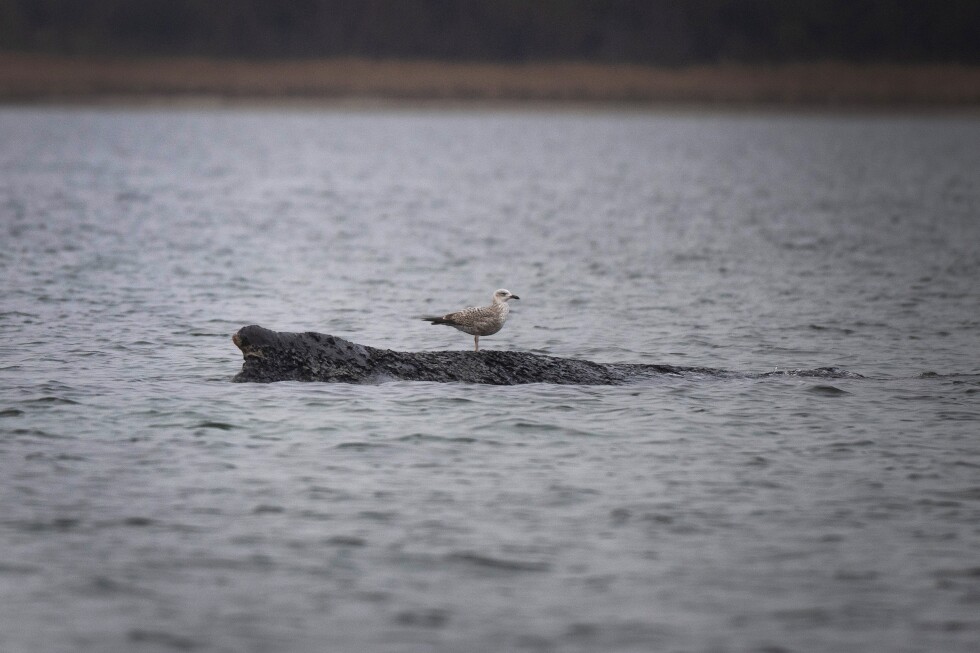
A humpback whale stranded in Germany’s Baltic Sea continues to deteriorate despite multiple rescue attempts, officials reported Sunday during a news conference in Wismar. Authorities have established a 500-meter restricted zone around the marine mammal to minimize disturbances and give it an opportunity to recover strength.
“He would be able to do so if he regains his strength, and that is why we decided to leave him alone, allowing him to actually set off and then successfully leave this area,” said Till Backhaus, the environment minister of Mecklenburg-Pomerania, the northeastern German state where the incident is unfolding.
The situation appears increasingly dire, however. “We also have to assume that he is weakened. And he is also sick,” Backhaus added, noting that the whale may have sustained injuries from entanglement in fishing nets.
Wildlife experts monitoring the creature have observed alarming changes in its condition. “It is very noticeable that the animal is showing significantly less activity,” said Stefanie Groß from the Institute for Terrestrial and Aquatic Wildlife Research at the University of Veterinary Medicine Hannover. “Its respiratory rate has dropped considerably. The animal is not moving. It did not react even when we drove closer.”
The rescue efforts earlier this week captured national attention across Germany. Teams deployed excavators and boats to create large waves near the 12-15 meter (39-49 feet) whale when it became stranded on a sandbank at Timmendorfer Strand beach and later in Wismar Bay. German media provided continuous coverage with live video streams and breaking news alerts, while the whale’s plight became a common topic of conversation throughout the country.
Marine biologists remain puzzled about why the humpback ventured into the Baltic Sea in the first place. Some experts speculate that the whale, believed to be male, may have followed a shoal of herring or simply lost its way during migration. What’s clear is that the Baltic environment poses serious threats to its survival.
The Baltic Sea’s lower salt concentration compared to the whale’s natural oceanic habitat has already caused the animal to develop skin disease. Additionally, the confined body of water lacks the specific nutrition that humpback whales require, although these mammals can survive without food for several weeks.
For the whale to have any chance at long-term survival, it must navigate back to the Atlantic Ocean via the North Sea—a challenging journey through narrow straits spanning approximately 500 kilometers (310 miles).
“When you consider how narrow the straits are and that there are still about 500 kilometers to go, you realize that it’s a real bottleneck you have to navigate, and naturally, the chances of success are relatively slim,” explained Burkard Baschek, director of the German Maritime Museum in Stralsund.
The marine mammal was initially spotted swimming in the Baltic on March 3, but reports of its stranding only emerged last week. The incident highlights the occasional disorientation of large marine mammals in waters far from their typical habitats, as well as the limitations of human intervention in such situations.
Wildlife officials will continue to monitor the whale’s condition while maintaining the protective perimeter, hoping that the animal might somehow regain enough strength to begin the difficult journey back to its natural environment. However, as days pass and the whale’s condition deteriorates, experts are increasingly concerned about its chances for survival.
The case has drawn attention to the challenges of marine mammal rescue operations and the delicate balance between human intervention and allowing natural processes to unfold—a dilemma that wildlife managers face with increasing frequency as human activities continue to impact marine ecosystems worldwide.
Fact Checker
Verify the accuracy of this article using The Disinformation Commission analysis and real-time sources.

14 Comments
Sad to hear the humpback whale is struggling and growing weaker. Entanglement in fishing nets can be devastating for these animals. I hope the rescue team can find a way to help it recover and return to the open ocean.
Absolutely, the welfare of the whale is the critical concern here. Establishing a restricted zone is a prudent step to minimize disturbances while they assess the options.
Sad to see this humpback whale struggling in the Baltic Sea. Hopefully the rescue efforts can help it regain strength and return to the open ocean safely.
You’re right, it’s a concerning situation. Minimizing disturbances is a wise move to give the whale the best chance of recovery.
The declining activity and condition of the whale is very concerning. Fishing net entanglement can be devastating for these marine mammals. I hope the experts are able to intervene effectively.
Agreed, the welfare of the whale is the critical issue here. Minimizing disturbances is a wise approach while they assess the options.
This is a challenging situation for the wildlife experts monitoring the whale. Entanglement injuries and sickness are serious threats that need to be addressed carefully.
Agreed. Establishing a restricted zone is a prudent step to protect the whale while they assess the best course of action.
It’s amazing that a humpback whale made its way to the Baltic Sea, but this stranding event highlights the challenges these creatures face. I hope the authorities can find a way to safely guide the whale back to open waters.
Yes, it’s an unusual and delicate situation. The whale’s wellbeing should be the top priority as they work to resolve this incident.
This is a tough situation for the authorities in Germany. Humpback whales don’t typically venture into the Baltic Sea, so getting this whale back to open waters safely will be a major challenge.
You’re right, this is an unusual and delicate situation. Protecting the whale’s wellbeing should be the top priority as they work to find a solution.
This is a concerning situation. Humpback whales are impressive creatures, and it’s unfortunate to see one in such distress. I hope the authorities can find a way to safely guide the whale back to open waters.
You raise a good point. Minimizing disturbances is key, as the whale needs to regain its strength to have the best chance of safely returning to the open sea.