


Listen to the article
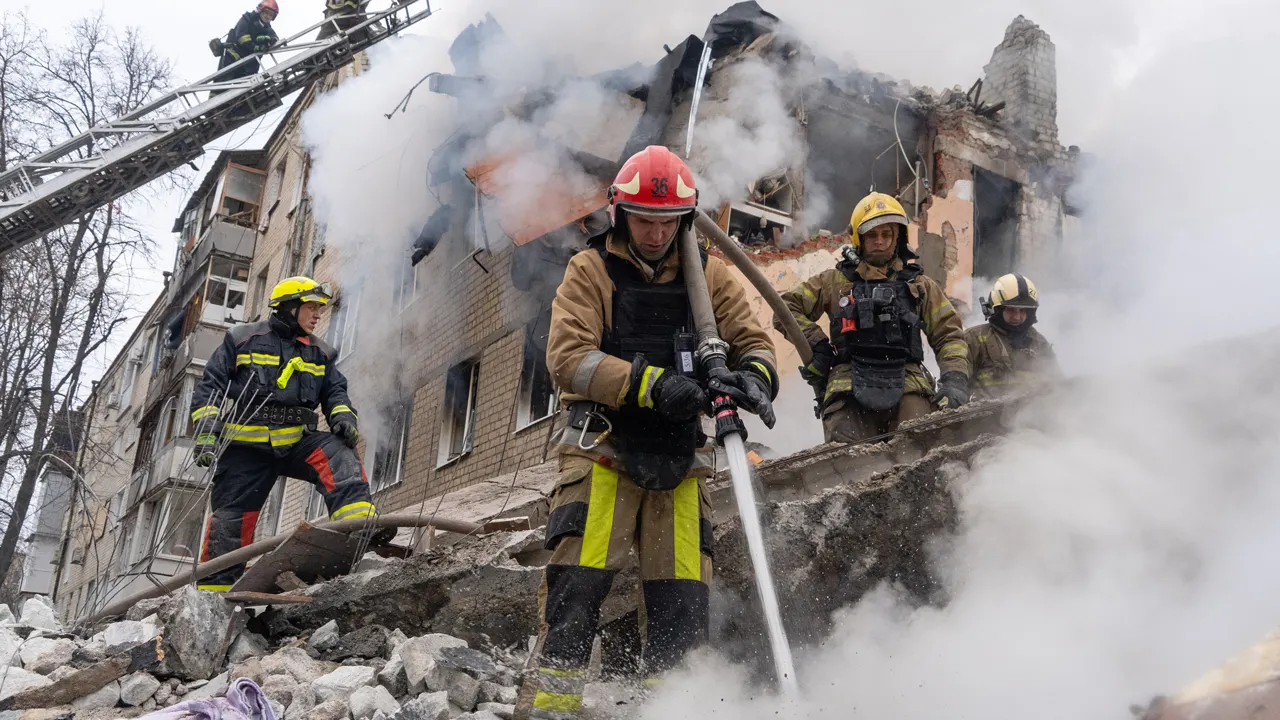
At least 10 people, including two children, were killed and 16 others wounded when a Russian ballistic missile struck a residential building in Kharkiv, Ukraine on Saturday, according to Ukrainian officials. The deadly attack was part of a massive overnight assault in which Russia launched 29 missiles and 480 drones targeting critical energy infrastructure across the country.
Ukrainian President Volodymyr Zelenskyy reported damage in Kyiv and seven other locations throughout Ukraine. In a statement posted on social media platform X, Zelenskyy called for an international response to the attacks.
“There must be a response from partners to these savage strikes against life,” Zelenskyy wrote. “Russia has not abandoned its attempts to destroy Ukraine’s residential and critical infrastructure, and therefore support must continue.”
The Ukrainian leader specifically appealed for increased assistance from the European Union, saying: “We count on active work with the European Union to guarantee greater protection for our people. I am grateful to everyone who helps strengthen our protection.”
According to preliminary data released by Ukrainian authorities, their air defense systems successfully intercepted 19 missiles and 453 drones during the barrage. However, nine missiles and 26 strike drones managed to hit their targets across 22 locations nationwide.
The Russian Defense Ministry claimed the strikes specifically targeted Ukrainian military factories, energy facilities, and air bases—a stark contrast to the civilian casualties reported in Kharkiv, Ukraine’s second-largest city, which has faced relentless bombardment since the full-scale invasion began in February 2022.
Images from the scene in Kharkiv showed a residential apartment building engulfed in flames as firefighters worked desperately to extinguish the blaze and search for survivors in the rubble. The attack comes as the northeastern city, located just 30 kilometers from the Russian border, has experienced intensified shelling in recent months.
The devastating strikes occurred as international diplomatic efforts to end the conflict continue to face significant hurdles. Speaking at the Shield of the Americas Summit in Doral, Florida on Saturday, U.S. President Donald Trump commented on the difficulties in reaching a peace agreement.
“The hatred is so great. It’s very hard for them to get there,” Trump said. “We’ve been close a lot of times and one or the other would back out.”
Trump framed U.S. involvement in the conflict as “a favor to Europe” and “a favor to life,” citing high casualty numbers. “They’re losing 25,000 souls,” he stated. “Think of that every month. 25,000. Last month, 31,000. Both sides, 31,000 people died, mostly soldiers.”
These latest attacks highlight Russia’s continued strategy of targeting civilian infrastructure and energy facilities—a tactic that has intensified as winter approaches. Previous campaigns against Ukraine’s power grid have left millions without electricity, heating, and water during the coldest months of the year.
Last month, in an interview with Fox News, Zelenskyy accused Russia of attempting “to play with the president of the United States” and deliberately stalling U.S.-brokered peace efforts. The Ukrainian president has repeatedly called for increased Western military support, particularly air defense systems that could better protect civilian areas from such attacks.
The missile strike on Kharkiv represents one of the deadliest attacks on civilians in recent weeks and underscores the ongoing humanitarian toll of a war now approaching its third year. As rescue operations continue, Ukrainian authorities warn the death toll may rise further as emergency workers search through damaged buildings.
International human rights organizations have consistently condemned Russia’s attacks on civilian infrastructure as potential war crimes, while the Kremlin maintains it only targets military objectives—a claim contradicted by the growing civilian casualty count in cities like Kharkiv.
Fact Checker
Verify the accuracy of this article using The Disinformation Commission analysis and real-time sources.

29 Comments
Exploration results look promising, but permitting will be the key risk.
Good point. Watching costs and grades closely.
Good point. Watching costs and grades closely.
The cost guidance is better than expected. If they deliver, the stock could rerate.
Good point. Watching costs and grades closely.
Good point. Watching costs and grades closely.
Uranium names keep pushing higher—supply still tight into 2026.
Good point. Watching costs and grades closely.
Good point. Watching costs and grades closely.
Nice to see insider buying—usually a good signal in this space.
If AISC keeps dropping, this becomes investable for me.
I like the balance sheet here—less leverage than peers.
Good point. Watching costs and grades closely.
Good point. Watching costs and grades closely.
Production mix shifting toward World might help margins if metals stay firm.
The cost guidance is better than expected. If they deliver, the stock could rerate.
Good point. Watching costs and grades closely.
Interesting update on Russian Missile Strike Kills 10 in Ukraine as Trump Cites ‘Hatred’ Hindering Peace Deal. Curious how the grades will trend next quarter.
The cost guidance is better than expected. If they deliver, the stock could rerate.
Good point. Watching costs and grades closely.
If AISC keeps dropping, this becomes investable for me.
Good point. Watching costs and grades closely.
Good point. Watching costs and grades closely.
Uranium names keep pushing higher—supply still tight into 2026.
Good point. Watching costs and grades closely.
Good point. Watching costs and grades closely.
Interesting update on Russian Missile Strike Kills 10 in Ukraine as Trump Cites ‘Hatred’ Hindering Peace Deal. Curious how the grades will trend next quarter.
Good point. Watching costs and grades closely.
Good point. Watching costs and grades closely.