


Listen to the article
Retired US Military Leaders Endorse Joint US-Israel Strikes on Iran
A group of 74 retired U.S. generals and admirals has publicly voiced strong support for the ongoing joint U.S.-Israeli military operations targeting Iran, describing the action as a necessary response to decades of threats from the Islamic Republic against American interests, allies and regional stability.
The endorsement came in an open letter published Tuesday by the Jewish Institute for National Security of America (JINSA), signed by numerous former high-ranking military commanders who served during critical periods of Middle Eastern conflict.
“As retired senior American military leaders, we support the joint U.S.-Israeli military action to degrade and weaken the Iranian regime’s ability to threaten the United States, our allies and partners, and the Iranian people,” the letter states. “And we commend the valor of the outstanding United States Military and our Intelligence Community engaged in this operation.”
Among the prominent signatories are former Vice Chairman of the Joint Chiefs of Staff Admiral Edmund P. Giambastiani Jr., who served during the height of the Iraq War; former Vice Chief of Naval Operations Admiral Jerome Johnson; former Assistant Commandant of the Marine Corps General W.L. Nyland; former Supreme Allied Commander Europe General Philip M. Breedlove; and former U.S. Pacific Command chief Admiral Timothy J. Keating.
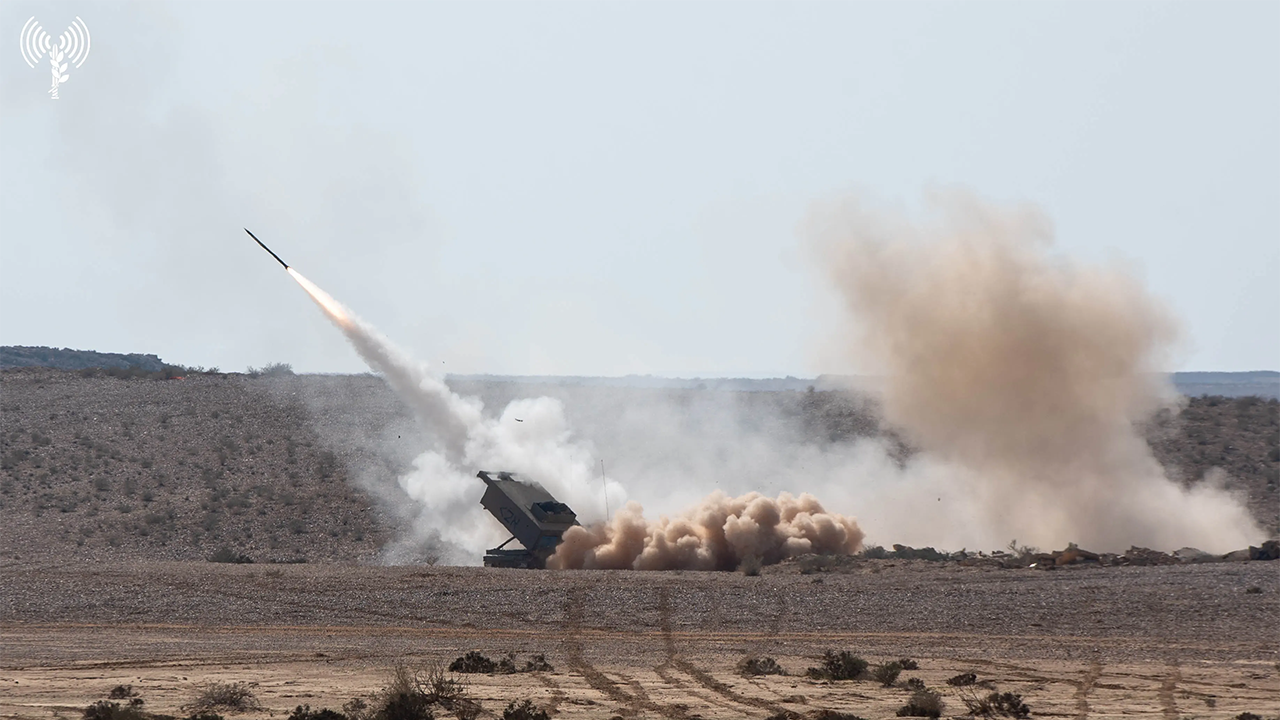
The operations, known as Epic Fury and Roaring Lion, aim to degrade Iran’s missile and air defense networks. Secretary of War Pete Hegseth described the campaign as a decisive military action, stating that the Israeli and U.S. air forces would soon establish complete control of Iranian airspace.
“Starting last night and to be completed in a few days… the two most powerful air forces in the world will have complete control of Iranian skies. Uncontested airspace,” Hegseth said on Wednesday.
The retired military leaders pointed to what they described as Iran’s 47-year history of hostility toward the United States and its allies. “Since its inception 47 years ago, the radical regime, whose slogan is ‘Death to America, Death to Israel,’ has committed to endangering the lives of U.S. troops, diplomats, and civilians across the Middle East and here at home,” the letter notes, adding that “hundreds of Americans have lost their lives at the hands of the Islamic Republic and its terrorist proxies.”
The signatories argue that the military response is justified by Iran’s accelerated weapons development following last summer’s conflict. “Following last summer’s 12-Day War, Tehran has redoubled its missile building program to hold at risk our bases, our partners, and ultimately our homeland,” the letter states.
The letter also expresses concern about Iran’s proxy network, nuclear ambitions, and domestic repression. “Since Operation Midnight Hammer against its main enrichment sites last June, Iran has attempted to rebuild elements of its destroyed nuclear infrastructure,” the former commanders wrote, while also noting that “the regime’s brutal crackdown on protestors showed the entire world just what it is willing to do to keep its people and the region under its thumb.”
Blaise Misztal, vice president for policy at JINSA, emphasized the perspective of military leaders who have witnessed Iran’s threat firsthand. “For more than two decades, Iran has been targeting and killing U.S. men and women in uniform,” Misztal said. “The retired senior military leaders who signed this letter have seen that threat up close and firsthand.”
However, the military campaign has faced criticism from some international leaders and U.S. lawmakers. French President Emmanuel Macron urged restraint, warning of regional destabilization, while U.N. Secretary-General António Guterres cautioned about the risk of a broader conflict.
Several Democratic lawmakers have expressed concerns about the strategic purpose of the strikes. Representative Jim Himes of Connecticut characterized the operation as “a war of choice with no strategic endgame,” while Senator Mark Warner of Virginia stated after attending a classified briefing that he had not seen evidence of an immediate Iranian threat.
Despite endorsing military action, the retired commanders acknowledged that Iran’s long-term future ultimately depends on its citizens. “It will ultimately be up to the Iranian people to bring down the regime and enable a better future for Iran and the world,” the letter concludes.
The joint military operations represent one of the most significant direct confrontations between the United States and Iran in decades, occurring amid heightened tensions throughout the Middle East and raising questions about the potential for broader regional conflict.
Fact Checker
Verify the accuracy of this article using The Disinformation Commission analysis and real-time sources.

14 Comments
I’m not surprised to see retired generals advocating for military action, but I hope the current administration weighs all the risks and consequences before making any decisions. Escalating tensions with Iran could have dire regional implications.
Absolutely. Any military strikes should be an absolute last resort after diplomatic solutions have been fully explored. The potential for unintended consequences is very high.
The retired generals make some valid points about the threat from Iran, but I’m not convinced that military action is the best path forward. De-escalation and diplomatic efforts should be prioritized to avoid further destabilizing the region.
I agree. The US and its allies need to exhaust all diplomatic options before even considering a military response. The risks of miscalculation and unintended consequences are simply too high.
The letter from the former generals highlights the gravity of the situation with Iran, but I hope the administration explores all diplomatic avenues before resorting to military action. De-escalation should be the priority to avoid another costly conflict in the Middle East.
Agreed. Diplomacy should be the focus, even with the clear threats posed by Iran’s behavior. The potential consequences of military strikes are too severe to not exhaust every peaceful option first.
It’s concerning to see retired military leaders endorsing military action against Iran. While the threat from Tehran is real, diplomacy and de-escalation should be the priority to avoid further conflict in the region.
I agree that diplomacy is crucial, but Iran’s history of aggression and support for terrorism can’t be ignored. A measured military response may be necessary if they continue to threaten US interests and allies.
The letter from the retired generals highlights the gravity of the threat posed by Iran. However, I hope the administration carefully weighs all options and potential consequences before pursuing any military strikes.
Valid point. Military action should be a last resort after exhausting diplomatic efforts. The US needs to work with allies to find a peaceful resolution if possible.
It’s concerning to see such a large group of former military leaders pushing for strikes against Iran. While their expertise is valuable, I worry their perspective may be overly hawkish and not consider the broader geopolitical ramifications.
Interesting to see high-ranking former military leaders take such a strong stance on potential Iran strikes. While their expertise is valuable, I wonder if political considerations are also at play here.
That’s a fair question. Retired officers may have their own agendas or affiliations that could influence their views on this sensitive issue.
While I respect the views of these retired military leaders, I’m concerned that their endorsement of strikes against Iran may be driven more by political considerations than impartial analysis. Caution is warranted before further inflaming tensions in the region.