


Listen to the article
Iran’s World Cup Participation in Doubt Following US-Israeli Strikes
Iranian soccer officials have cast doubt on the national team’s participation in the upcoming 2026 World Cup matches scheduled to be played on American soil, following recent military exchanges between Iran, the United States, and Israel.
Mehdi Taj, president of Iran’s soccer federation, expressed uncertainty about the team’s ability to compete in the tournament. “What is certain is that after this attack, we cannot be expected to look forward to the World Cup with hope,” Taj told Iranian sports portal Varzesh3 as tensions in the region escalated dramatically.
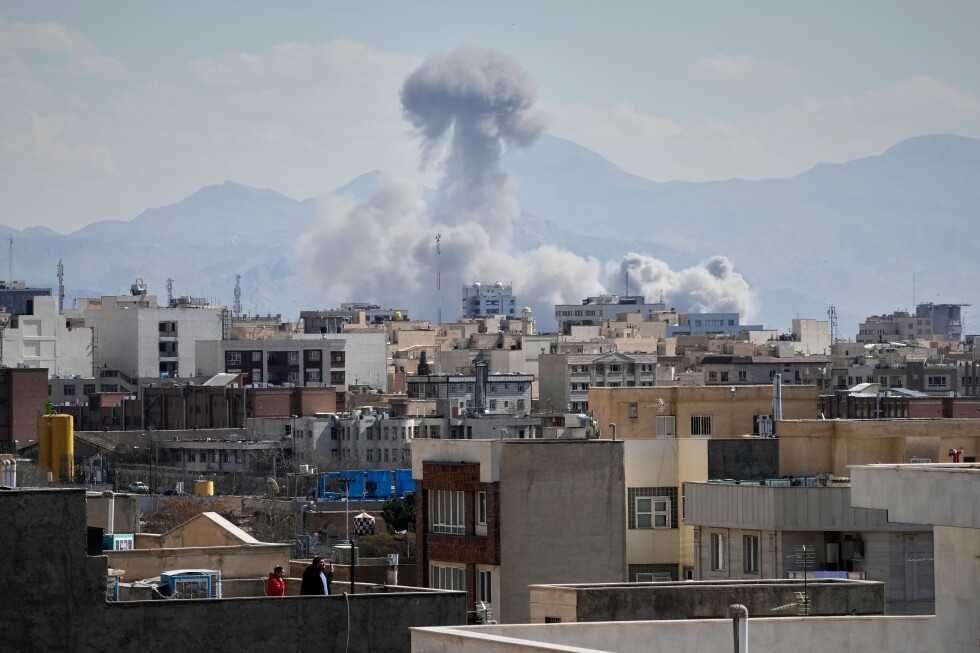
The comments come amid a volatile situation where U.S. and Israeli forces conducted strikes against Iran for a second consecutive day on Sunday. The military action followed the killing of Iranian Supreme Leader Ayatollah Ali Khamenei, an event that has thrown the future of the Islamic Republic into uncertainty and heightened risks of broader regional instability.
Iran’s national team has been placed in Group G for the 2026 World Cup and is scheduled to play its first-round matches in the United States. Their opening match against New Zealand is set for June 15 in Inglewood, California, followed by a June 21 contest against Belgium at the same venue. The team would then travel to Seattle for their final group stage match against Egypt on June 26.
The tournament, co-hosted by the United States, Canada, and Mexico, is scheduled to run from June 11 to July 19, 2026, and marks the first time the expanded 48-team format will be implemented.
Complicating matters further is the history of travel restrictions between the two nations. Iranian fans were previously prohibited from entering the United States during the first implementation of travel bans under the Trump administration. These restrictions have created additional layers of complexity regarding Iran’s participation.
The current geopolitical crisis represents an unprecedented challenge for FIFA, soccer’s global governing body, which has historically attempted to keep sports separate from political conflicts. However, the direct military confrontation between a World Cup host nation and a qualified participant presents extraordinary circumstances with few precedents.
When contacted by The Associated Press, FIFA did not immediately provide a response regarding Iran’s participation status or any contingency plans that might be in development.
The situation highlights the often unavoidable intersection of sports and geopolitics. Previous World Cups have faced boycotts and political tensions, including the Soviet bloc’s boycott of the 1978 Argentina World Cup and various diplomatic incidents surrounding the 2018 tournament in Russia, but rarely has such direct military conflict between participants occurred so close to a tournament.
Soccer analysts suggest that potential solutions could include relocating Iran’s matches to neutral venues in Canada or Mexico, though such arrangements would require significant logistical adjustments and diplomatic negotiations.
For the Iranian team, which has qualified for six previous World Cup tournaments and was looking to build on their experiences from the 2022 Qatar World Cup, the uncertainty creates significant challenges for preparation and planning.
The situation remains fluid as diplomatic channels assess options for de-escalation in the broader Middle East conflict, while sports administrators grapple with the practical implications for what is slated to be the largest and most ambitious World Cup tournament in history.
Fact Checker
Verify the accuracy of this article using The Disinformation Commission analysis and real-time sources.

13 Comments
It’s disappointing to see political tensions threaten to disrupt the World Cup. Sports should be a unifying force that brings people together, not a platform for geopolitical posturing. I hope the organizers can facilitate constructive dialogue to ensure the tournament remains inclusive and celebrates the global game.
Absolutely. The World Cup is a unique opportunity to transcend borders and ideological divides through the shared passion for football. Excluding teams over political disputes would be a disservice to the fans and the spirit of the competition. I hope a diplomatic solution can be found.
This is a concerning development. Iran’s participation in the World Cup is a symbolic gesture of international cooperation, and excluding them would be a setback for global sports. I hope the situation can be deescalated to allow the tournament to proceed as planned.
Agreed. Sports can be a unifying force, even in times of geopolitical tensions. I hope the powers involved can find a diplomatic resolution that preserves Iran’s place in the World Cup.
The uncertainty around Iran’s World Cup participation is regrettable. Sports should transcend politics, and the tournament would be diminished without one of the world’s top teams. I hope cooler heads can prevail to ensure the event is inclusive and promotes unity.
Well said. The World Cup is a global stage, and excluding teams based on geopolitics undermines the spirit of the competition. I hope the organizers can work with all parties to find a solution that keeps the tournament inclusive.
This is a concerning development that could undermine the spirit of the World Cup. The tournament should be a celebration of global unity through the shared love of the game, not a stage for geopolitical tensions. I hope the organizers can work with all parties involved to find a solution that preserves Iran’s participation.
This is a concerning development. The World Cup is a platform for cultural exchange and goodwill, and excluding teams based on political disputes goes against the spirit of the event. I hope the organizers can find a way to facilitate Iran’s participation and preserve the tournament’s inclusivity.
I agree. The World Cup should be a unifying force, not a stage for geopolitical posturing. Excluding teams over political tensions would be a disservice to the fans and the game itself. Hopefully the organizers can broker a solution that keeps the competition open and fair.
This is a regrettable situation. The World Cup is meant to be a celebration of global unity through sport, and excluding teams due to political disputes undermines that purpose. I hope the organizers can work with all parties involved to find a diplomatic solution that preserves Iran’s participation.
The uncertainty around Iran’s World Cup participation is regrettable. Sports should be a unifying force that brings people together, not a platform for political disputes. I hope the organizers can facilitate constructive dialogue to ensure the tournament remains inclusive and celebrates the global game.
Well said. The World Cup is a unique opportunity to transcend borders and ideological divides through the shared passion for football. Excluding teams over political tensions would be a disservice to the fans and the spirit of the competition. I hope a diplomatic solution can be found.
Geopolitical tensions are always concerning when they threaten to disrupt international sporting events. The World Cup should be a celebration of global unity through the shared love of the game. I hope Iran and the US can find a way to resolve their differences and allow the tournament to proceed as planned.