


Listen to the article
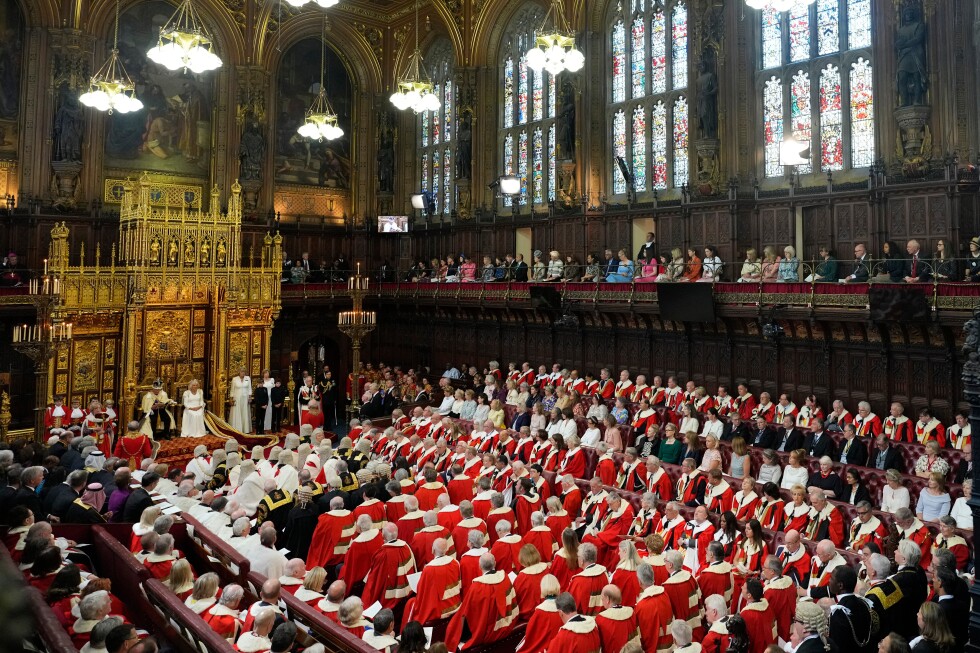
Centuries of tradition came to an end this week as the British Parliament voted to remove hereditary aristocrats from the House of Lords, marking a significant shift in the country’s political landscape.
On Tuesday evening, members of the upper chamber abandoned their resistance to legislation previously passed by the House of Commons that will oust dozens of dukes, earls, and viscounts who inherited their parliamentary seats along with their noble titles.
Government minister Nick Thomas-Symonds described the change as the end of “an archaic and undemocratic principle.” He emphasized that Parliament “should always be a place where talents are recognized and merit counts,” rather than “a gallery of old boys’ networks” where centuries-old titles hold power over public will.
The House of Lords serves an important function in Britain’s parliamentary democracy, where it reviews and scrutinizes legislation passed by the elected lower house. However, critics have long argued that the chamber is both unwieldy and fundamentally undemocratic in its composition.
Recent controversies have intensified scrutiny of the Lords. The resignation of Peter Mandelson in February following revelations about his association with convicted sex offender Jeffrey Epstein renewed public debate about accountability within the upper chamber.
With over 800 members, the House of Lords stands as the world’s second-largest legislative chamber, surpassed only by China’s National People’s Congress. Throughout most of its 700-year history, membership consisted almost exclusively of hereditary noblemen. Only in the 1950s did “life peers” – appointed notables including retired politicians and civic leaders – begin to join the chamber. These appointees now constitute the vast majority of Lords members, with hereditary peers representing approximately one-tenth of the chamber.
The path to reform has been gradual. In 1999, Prime Minister Tony Blair’s Labour government removed most of the 750 hereditary peers, though 92 were permitted to remain temporarily to avoid potential rebellion from the aristocracy. This temporary arrangement lasted far longer than many anticipated.
A quarter-century later, current Prime Minister Keir Starmer’s Labour government introduced legislation to complete the process by removing these final hereditary members. The Lords’ resistance to the change resulted in a compromise allowing an undisclosed number of hereditary members to remain by being “recycled” into life peerages.
The legislation will be finalized once King Charles III grants royal assent – a formality – with hereditary peers set to depart at the conclusion of the current parliamentary session this spring. This completes a political transformation that began 25 years ago, moving at what many observers consider remarkable speed by the typically glacial standards of Lords reform.
The Labour government maintains its long-term commitment to eventually replace the House of Lords entirely with an alternative second chamber that better represents the United Kingdom’s diverse population. However, if historical precedent serves as any indicator, such fundamental change will likely progress gradually.
Nicholas True, the Conservative Party leader in the Lords, offered a reflective statement to the chamber: “So, here we are at the end of well over seven centuries of service by hereditary peers in this Parliament.” He acknowledged the contributions made by generations of peers, noting that “thousands of improvements to law were made” during their tenure. “It wasn’t all a stereotypical history of reaction in ermine,” he added. “Many of those people, no doubt, were flawed but for the most part, they served their nation faithfully and well.”
The reform represents one of the most significant constitutional changes in modern British history, shifting power further away from inherited privilege and toward appointed expertise in the nation’s legislative process.
Fact Checker
Verify the accuracy of this article using The Disinformation Commission analysis and real-time sources.

11 Comments
This is a big shift in British politics, moving away from entrenched aristocratic power. I’m curious to see if it leads to broader reforms to make the upper house more representative.
Ending hereditary peerages is a symbolic shift, but the real question is whether this leads to more substantive reforms to the House of Lords. Its role in the legislative process will be crucial going forward.
Removing hereditary peers is a step towards modernizing the British political system. It will be interesting to see if this leads to further changes in the composition and powers of the House of Lords.
Centuries of tradition are being swept away, for better or worse. The House of Lords plays an important role, so I hope this change doesn’t undermine its ability to function effectively.
Agreed, the Lords serves a vital purpose in the parliamentary process. Reforms should preserve its core oversight role while making it more democratically representative.
This is a significant change that brings more democracy to Britain’s parliamentary system. Hereditary peerages seem out of place in a modern democracy, so it’s good to see this archaic tradition being phased out.
Agreed, the House of Lords needs to be more representative of the public’s interests, not just the old nobility. This is a positive step forward.
Ending hereditary peerages is a logical reform, but I hope the Lords can still provide effective scrutiny and oversight of legislation. Curious to see how the new composition will affect its role.
Interesting to see Britain moving away from its traditional aristocratic structures. I wonder how this will impact the balance of power and legislative process in Parliament going forward.
It’s a tricky balance to strike, maintaining the Lords’ oversight role while making it more democratically accountable. Time will tell how this change plays out.
This is a significant political reform, but I worry it could upset the delicate balance between the elected Commons and the appointed Lords. Curious to see how this plays out in practice.