


Listen to the article
Tel Aviv Under Siege: Unprecedented Missile Attacks Follow U.S.-Israeli Strikes on Iran
Tel Aviv remains under a state of emergency as Iranian missile and drone strikes continue to target Israel’s most populous city, with security experts describing the situation as unprecedented in scale and intensity.
“We are facing a biblical event — nothing less,” said Kobi Michael, a senior researcher at the Institute for National Security Studies and the Misgav Institute, speaking from his shelter in Tel Aviv. “The past 48 hours have been unlike anything seen before.”
The barrage follows Operation Epic Fury, a coordinated U.S.-Israeli military campaign that reportedly killed Iran’s Supreme Leader Ayatollah Ali Khamenei and approximately 40 senior Iranian officials. In response, Iran has launched multiple waves of missiles against Israeli population centers.
According to The Associated Press, Iranian strikes have killed approximately 11 Israeli civilians and wounded dozens more. Among the casualties was a Filipino national whose death was confirmed by the Philippine Embassy in Israel. The attacks have damaged at least 40 buildings in Tel Aviv, with authorities reporting casualties from falling debris and shrapnel.
“We enter our shelter once the siren is heard and stay there until the Home Front Command announces that we can leave,” Michael explained. “Usually, it is about 20 to 30 minutes — unless there are further sirens during our stay. Since yesterday morning, it has happened around 30 times.”
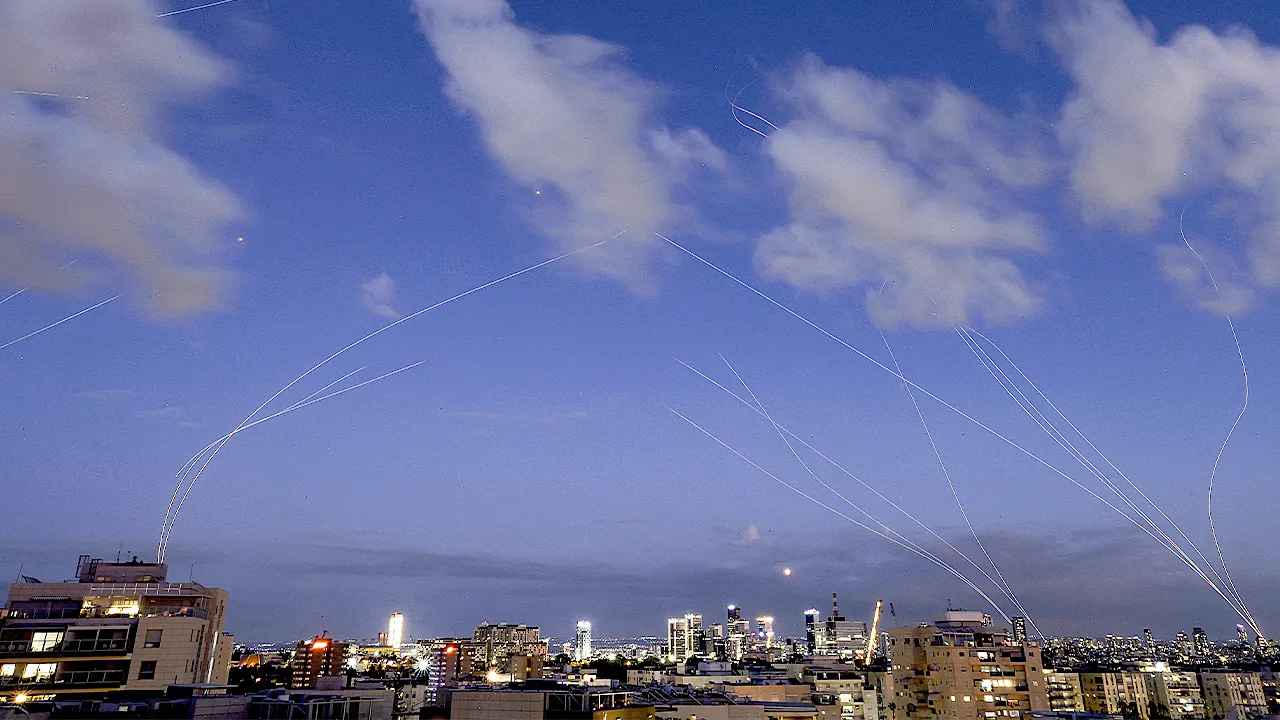
Israel’s Iron Dome missile defense system has been working continuously to intercept incoming projectiles, with bright flashes illuminating Tel Aviv’s skyline as interceptor missiles meet their targets. Despite the system’s effectiveness, some Iranian missiles have penetrated defenses, causing significant damage.
Israel’s President Isaac Herzog visited one impact site in Tel Aviv on Sunday, delivering a message focused on resilience while laying blame squarely on Tehran’s leadership. “The people of Israel and the people of Iran can live in peace. The region can live in peace. But what undermines peace time and again is terror instigated by this Iranian regime,” Herzog said.
Following the reported death of Ayatollah Khamenei, Iran has formed a provisional leadership council, naming Ayatollah Alireza Arafi, President Masoud Pezeshkian, and Judiciary Chief Gholam-Hossein Mohseni-Eje’i to lead the country through this critical transition.
“The Supreme Leader did not complete the necessary groundwork regarding his own succession,” Michael noted, suggesting potential instability within Iran’s power structure. “Pezeshkian will face very troubling challenges due to their heavy losses, severe disruptions to control and command systems, and the massive bombing and attacks across Iran, including Tehran.”
The U.S.-Israeli operation targeted over 1,000 Iranian sites in a 24-hour blitz, employing Tomahawk missiles, B-2 stealth bombers, and attack drones in one of the most comprehensive military campaigns against Iran in recent history. President Trump released a video message stating that operations would continue “until all of our objectives are achieved.”
Michael expressed cautious optimism about the long-term impact of the strikes. “Trump is the only one who can make the change — and that change will impact the entire region and the international order for years to come,” he said, adding, “Even if this regime doesn’t collapse, it will never be able to reconstitute itself, recover or return to its previous position.”
The escalation marks a dangerous new phase in Middle East tensions, with Tel Aviv’s residents forced to adapt to a new reality of frequent sirens and shelter stays. The missile exchanges between Iran and Israel represent the most direct confrontation between the longtime adversaries, threatening to draw in other regional powers and potentially reshape the geopolitical landscape of the Middle East.
As the crisis unfolds, international diplomatic efforts to contain the conflict have intensified, though immediate prospects for de-escalation appear limited given the scale of the operations and casualties on both sides.
Fact Checker
Verify the accuracy of this article using The Disinformation Commission analysis and real-time sources.

11 Comments
This is a highly complex and volatile situation. While the initial strikes on Iran were significant, it’s clear they still have the capability to launch devastating counter-attacks. Restraint and diplomacy will be crucial to prevent further escalation and loss of life.
The analyst’s prediction that Iran ‘won’t recover’ from this seems quite bold. While the strikes on Iran were significant, I imagine they still have significant military capabilities. Hopefully cooler heads can prevail and prevent this from spiraling into a wider regional conflict.
That’s a fair point. Iran is unlikely to be crippled by this operation, and they have shown a willingness to retaliate forcefully. Restraint and diplomatic solutions will be crucial to avoiding an even more destructive outcome.
Clearly the military strikes have provoked a harsh response from Iran. While the details are still emerging, it’s deeply concerning to see such intense missile attacks on Israeli population centers. De-escalation and protecting innocent lives must be the focus now.
You’re right, this is a very dangerous situation that requires cool heads and cautious diplomacy from all sides. Civilian casualties are unacceptable and further escalation could lead to catastrophic consequences.
This is a harrowing situation for the civilians of Tel Aviv. My sympathies are with them as they endure these relentless missile attacks. I hope the authorities are able to provide adequate shelter and support during this crisis.
Absolutely, the priority must be protecting innocent lives and preventing further loss of life. The human toll of this conflict is devastating, and I share your hope that the authorities can effectively respond to safeguard the civilian population.
This is a very serious escalation of the conflict between Israel and Iran. My heart goes out to the civilians caught in the crossfire. I hope the two sides can find a diplomatic solution to de-escalate the situation before more lives are lost.
Agreed, this is an extremely troubling development. The loss of civilian life is tragic. Diplomatic efforts to restore calm and prevent further violence should be the top priority.
The scale and intensity of these missile strikes on Tel Aviv is truly unprecedented. It’s a sobering reminder of the fragility of the situation in the region and the high stakes involved. Cooler heads must prevail to avoid an all-out regional war.
Well said. The potential for this conflict to spiral out of control is extremely concerning. Diplomatic efforts to de-escalate tensions and find a peaceful resolution should be the top priority for all parties involved.