


Listen to the article
Iraq’s National Soccer Team Faces World Cup Qualifier Crisis Amid Regional Conflict
Iraq’s national soccer team is facing unprecedented challenges in its preparation for a crucial World Cup qualifier as regional conflicts have disrupted travel plans, visa applications, and team assembly efforts.
Head coach Graham Arnold has made an urgent appeal to FIFA, soccer’s international governing body, requesting a postponement of Iraq’s intercontinental World Cup qualifying playoff. The match, scheduled for March 31 in Monterrey, Mexico, would pit Iraq against either Suriname or Bolivia in what Arnold described as the country’s “biggest game in 40 years.”
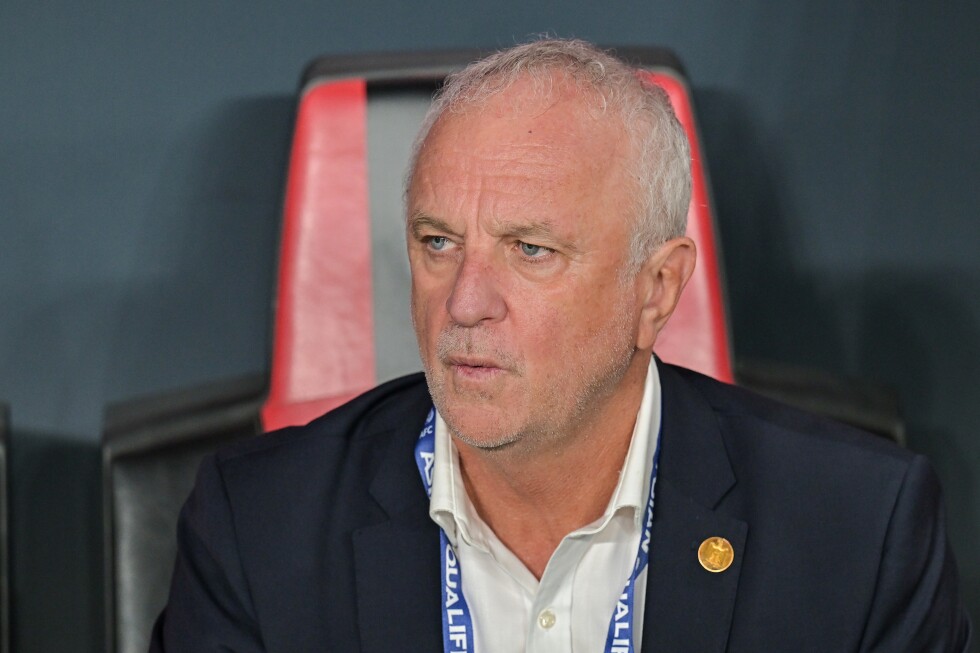
“Please help us with this game because right now we are struggling to get our players out of the country of Iraq,” Arnold told the Australian Associated Press. The former coach of Australia’s national team is currently stranded in the United Arab Emirates due to the escalating conflict in the region.
The situation has become increasingly dire as Iraqi airspace remains closed until April 1, making it impossible for domestic league players—who constitute a majority of the national squad—to leave the country. Compounding these issues, foreign embassies in Iraq have closed, preventing players from securing the necessary visas to travel to Mexico for the tournament.
These disruptions have already forced the cancellation of a planned training camp in Houston, further hampering the team’s preparation efforts. Arnold dismissed the possibility of fielding a team composed solely of Iraq’s overseas-based players, emphasizing that such a squad would fall short of the nation’s best possible lineup.
“It wouldn’t be our best team and we need our best team available for the country’s biggest game in 40 years,” Arnold stated.
The coach has proposed an alternative solution that would allow the Suriname-Bolivia match to proceed as scheduled this month, while postponing Iraq’s final playoff until a week before the World Cup begins. This arrangement would not only provide Iraq with adequate preparation time but might also resolve other qualifying complications.
“If FIFA were to delay the game it gives us time to prepare properly,” Arnold explained. “It also gives FIFA more time to decide what Iran is going to do. If Iran withdraws we go into the World Cup, and it gives the UAE, who we beat in qualifying, the chance to prepare for either Bolivia or Suriname.”
The situation highlights the profound impact of geopolitical tensions on international sports competitions. Iraq’s national team has historically faced numerous challenges due to regional conflicts, but has remained resilient despite these obstacles. The team’s qualification efforts represent more than just athletic achievement—they serve as a source of national unity and pride during difficult times.
Adnan Dirjal, president of Iraq’s football federation, is reportedly working “round the clock” to find solutions and make arrangements that would allow the team to compete. “We need this decision made quickly,” Arnold emphasized, noting that qualification for the World Cup would fulfill a dream shared by many across Iraq.
FIFA has yet to respond officially to Arnold’s request. The governing body typically tries to maintain scheduled fixtures but has made accommodations in the past for extraordinary circumstances, particularly those involving safety concerns or humanitarian issues.
The World Cup qualifying process involves teams from all six FIFA confederations competing for a limited number of spots in the tournament. For teams like Iraq, intercontinental playoffs represent the final opportunity to secure qualification after advancing through their regional competitions.
Fact Checker
Verify the accuracy of this article using The Disinformation Commission analysis and real-time sources.

7 Comments
This situation highlights the complex challenges national teams can face when international competitions intersect with regional geopolitical tensions. FIFA will need to carefully balance fairness and safety considerations in their response.
While it’s disappointing for the Iraqi team to potentially miss out on a critical World Cup qualifying match, their safety and the integrity of the competition must come first. I hope a suitable compromise can be found.
Absolutely, the safety and security of the players and staff has to be the top priority. A postponement, while inconvenient, may be the most prudent course of action given the current circumstances.
It’s understandable that the Iraqi coach is concerned about his team’s ability to prepare and participate given the regional conflict. FIFA will have a delicate balance to strike in their response.
Postponing the match may be necessary given the security challenges, though it’s unfortunate for the Iraqi team and their fans who were looking forward to this important game. Safety has to be the top priority.
Agreed, the regional conflict has created an extremely difficult environment for the Iraqi team to travel and assemble. Hopefully a postponement can be arranged to allow them more time to work through the logistical hurdles.
This is a complex situation with political tensions complicating the team’s ability to prepare for a crucial World Cup qualifier. I hope FIFA can work with Iraqi officials to find a fair solution that allows the match to go ahead safely.