


Listen to the article
Hezbollah Escalates Conflict with Israel, Declaring Readiness for “Open War”
Hezbollah has dramatically escalated tensions in the Middle East by launching long-range missiles from Lebanon into Israel within 48 hours of coordinated strikes on Iran, part of the ongoing Operation Epic Fury. The Iranian-backed militant group has publicly declared its readiness for an “open war,” according to The Associated Press.
On Tuesday, Hezbollah fired rockets into northern Israel, including targeting the cities of Haifa and Tel Aviv. Israeli air defense systems intercepted two of the projectiles, according to military reports. The attack represents a significant intensification of Hezbollah’s involvement in the widening regional conflict between Iran and the U.S.-Israel alliance.
“Hezbollah is putting everything they have into the fight to add to the challenges Israel will face in this war,” Ross Harrison, senior fellow at the Middle East Institute, told Fox News Digital. “But Hezbollah also knows that if the Iranian regime falls, they could be degraded,” he added, while noting that “Israel could not totally disarm Hezbollah.”
The militant group has evolved into Iran’s most powerful proxy since its formation in the early 1980s during Lebanon’s civil war. For decades, Tehran has systematically funded, armed and trained Hezbollah as part of its broader regional strategy to confront Israel and expand its influence throughout the Middle East.
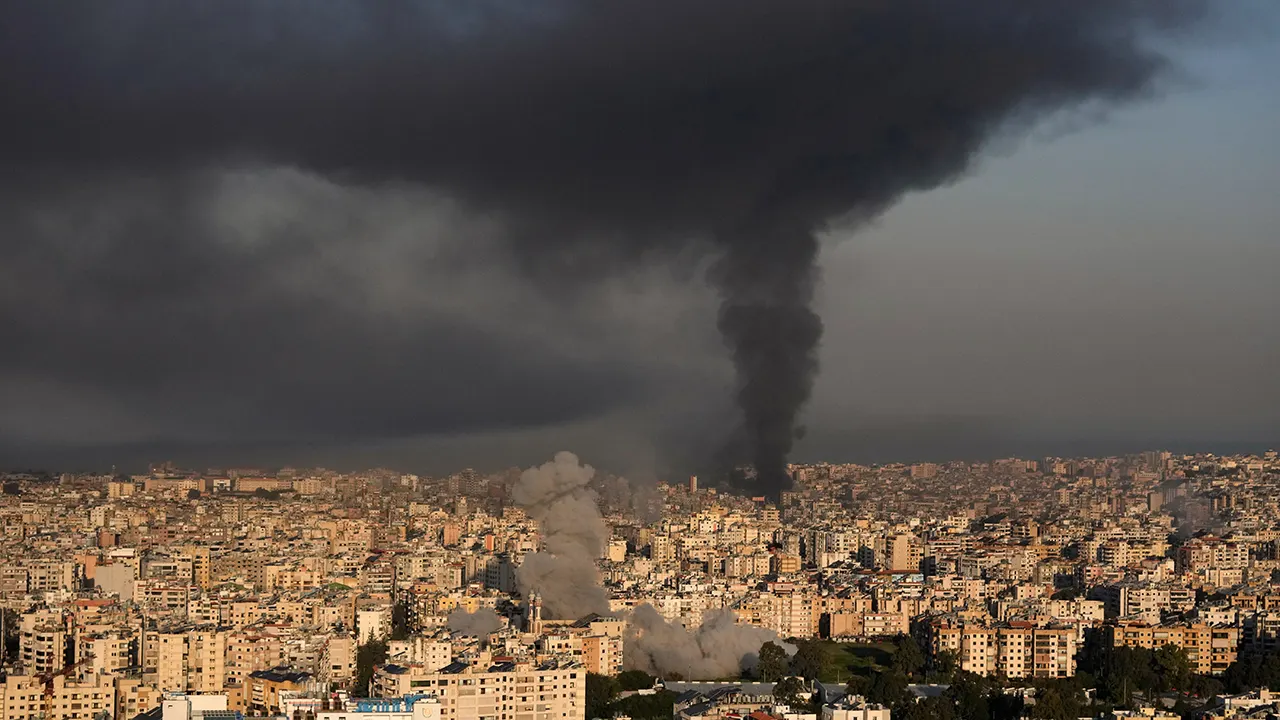
Israel responded swiftly to the escalation with additional airstrikes on Beirut and expanded ground operations. Israeli forces have reportedly taken positions near the Lebanon-Israel border, with the United Nations peacekeeping force in Lebanon confirming sightings of Israeli troops entering and exiting Lebanese territory. The Israel Defense Forces (IDF) maintains that its forces continue to operate in the area.
“To prevent the possibility of direct fire at Israeli communities, Prime Minister Benjamin Netanyahu and I have authorized the IDF to advance and hold additional dominant terrain in Lebanon and defend the border communities from there,” Israeli Defense Minister Israel Katz stated. “The IDF continues to operate forcefully against Hezbollah targets in Lebanon. The terrorist organization is paying and will pay a heavy price for the fire toward Israel.”
The escalating violence has prompted the U.S. Embassy in Beirut to announce its indefinite closure on Tuesday, highlighting the deteriorating security situation in the region.
IDF spokesperson Effie Defrin characterized Hezbollah’s structure, saying, “Hezbollah, this is an octopus. The head of the octopus is in Iran. The arms are all over the region.” Referring to the missile attacks on Haifa, Defrin added, “Last night, they launched missiles into Haifa, into a city center in Israel. They started it, they knew the consequences of that.”
In a significant development, the IDF announced it had killed Daoud Ali Zadeh, commander of the Iranian Quds Force’s Lebanon Corps, in Tehran. The Quds Force serves as a critical link between Iran’s Islamic Revolutionary Guard Corps (IRGC) and Hezbollah leadership, facilitating weapons transfers and enhancing the group’s military capabilities.
“The Quds Force is the arm of the Islamic Revolutionary Guard Corps, or IRGC, responsible for Iran’s relations with its allied militias, such as Hamas, Islamic Jihad, the Kata’ib Hezbollah in Iraq, Hezbollah in Lebanon and the Houthis in Yemen,” Harrison explained. “The Quds Force is the IRGC’s expeditionary force, designed to give Iran strategic depth.”
The current escalation follows Saturday’s U.S.-Israeli airstrike campaign that targeted Iranian leadership in Tehran, killing Iran’s Supreme Leader Ayatollah Ali Khamenei. This dramatic development has significantly heightened tensions across the Middle East and triggered regional retaliation.
Iran is currently being governed by an interim Leadership Council comprising President Masoud Pezeshkian, Chief Justice Gholam-Hossein Mohseni-Eje’i, and Ayatollah Alireza Arafi, who are temporarily acting as the country’s de facto head of state.
According to Harrison, Iran faces a strategic dilemma. “If Iran ends the war prematurely, then they believe the U.S. and Israel can come back later. If they escalate, then they have a shot at recreating deterrence. It is a high risk, as it could bring them down. But the danger is they feel they have little choice, and Hezbollah is part of this for Iran.”
“Fundamentally, the Iranian regime is trying to increase the pain of both Israel and the Gulf Arab states to be able to re-establish deterrence lost since the June 2025 war,” Harrison added. “Attacking civilian areas and economic pain points alongside Hezbollah is also part of this strategy.”
As the situation continues to evolve, Lebanese Prime Minister Nawaf Salam has declared all Hezbollah actions “illegal” and ordered the group to disarm following the overnight rocket barrage that targeted Haifa. Meanwhile, an Iranian ballistic missile strike in Be’er Sheva has reportedly left at least 10 people wounded, further highlighting the dangerous escalation of violence in the region.
Fact Checker
Verify the accuracy of this article using The Disinformation Commission analysis and real-time sources.

12 Comments
Interesting development in the Middle East. It seems Hezbollah is escalating tensions with Israel in response to Iran’s leadership transition. This could have major regional implications.
Yes, Hezbollah’s aggressive posturing poses a significant threat. The group appears intent on supporting Iran amidst the shifting political dynamics.
It’s alarming to see Hezbollah openly declaring readiness for “open war” against Israel. This ratcheting up of tensions is clearly tied to Iran’s leadership changes.
Exactly. Hezbollah’s actions demonstrate their willingness to act as Iran’s proxy in this conflict. The potential for further destabilization in the region is high.
The article provides valuable insights into Hezbollah’s strategic realignment in light of Iran’s leadership transition. This proxy conflict bears close monitoring.
Agreed. Hezbollah’s escalation of missile strikes against Israel is a significant development that could have far-reaching consequences for regional stability.
The article highlights Hezbollah’s strategic maneuvering in response to the leadership transition in Iran. This proxy conflict could have far-reaching implications for the region.
You’re right. Hezbollah’s escalation of attacks against Israel reflects their determination to support Iran amid the shifting political landscape. This is a concerning development.
This news about Hezbollah’s actions is quite concerning. The group’s close ties to Iran suggest they are trying to bolster the Iranian regime during this turbulent period.
Indeed. Hezbollah’s missile strikes against Israel indicate they are willing to significantly ramp up hostilities. The regional dynamics bear close watching.
The article highlights Hezbollah’s strategic realignment as Iran faces leadership changes. It will be crucial to monitor how this proxy conflict unfolds and impacts regional stability.
Absolutely. Hezbollah’s readiness for “open war” against Israel is a worrying escalation. The potential for further destabilization in the Middle East is concerning.