


Listen to the article
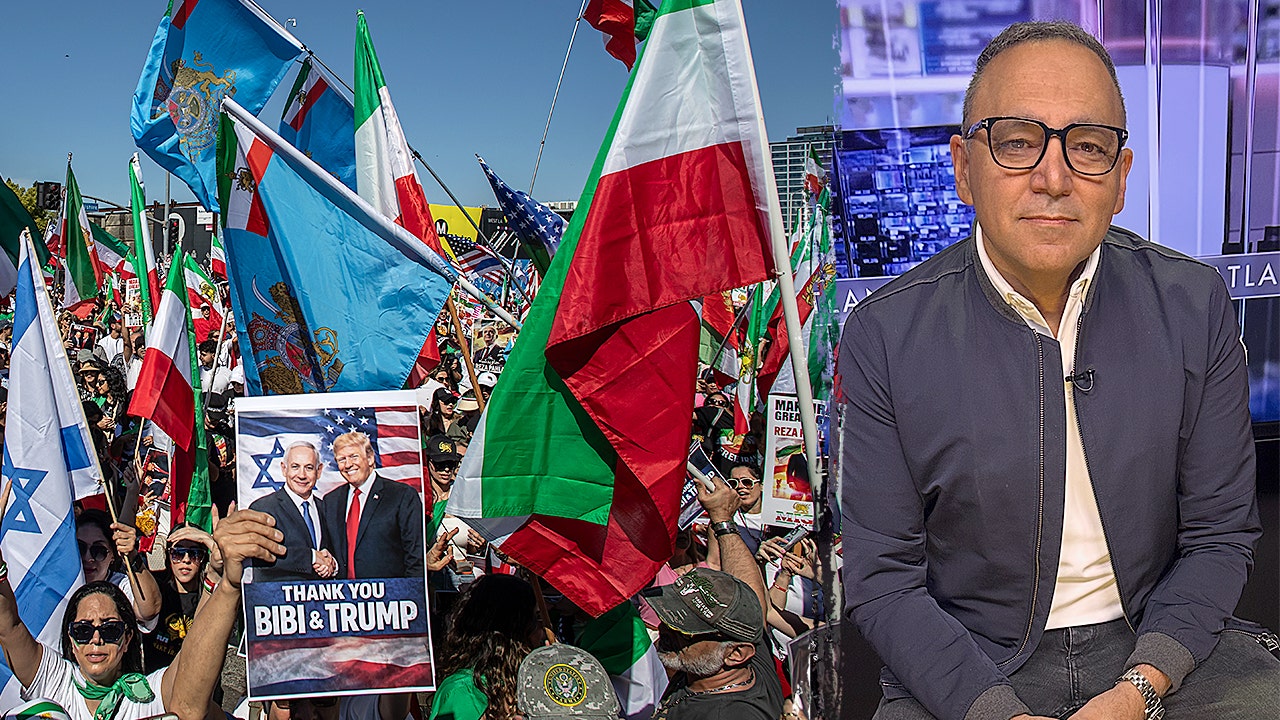
An Iranian refugee held at gunpoint during the 1979 revolution is calling for hope and democracy for his homeland as U.S. military operations unfold in Iran. David Nasser, now an American pastor who serves as President and CEO of David Nasser Outreach, shared his harrowing childhood experiences six days after Operation Epic Fury began in Iran.
“As a child, my family and I were forced to escape Iran and run for our lives,” Nasser recalled. His father had been a high-ranking officer in Iran’s military, which made his family targets during the government’s collapse.
Nasser vividly remembers the moment he realized his life would never be the same. During a school assembly on a military base, a soldier called him to the front along with two other students. “The soldier dropped a piece of paper, took a gun out of his holster and put it to my head and quoted the Quran. He told me that he was sent to make an example out of me,” Nasser said.
Though the principal intervened, the message was clear. “They’re killing everybody who’s anybody. They’re trying to make an example out of people like our family, and they’re using fear,” Nasser remembered hearing. “That’s one of my first memories of the revolution, but really just being completely scared for my life.”
Shortly afterward, Nasser’s family devised an escape plan. They pretended his mother needed emergency heart surgery in Switzerland and purchased round-trip tickets to avoid raising suspicion. “We bought round-trip airline tickets like we were going and coming back, but we weren’t coming back. We were running for our lives,” he explained.
The tension at the airport remains etched in his memory. “If they find out we’re escaping, they’re going to kill us right here on the spot,” his father told him as they held hands, both trembling with fear. “The last time I was in Iran, I was a 9-year-old little boy running for my life,” Nasser said.
Now watching from the safety of the United States, Nasser’s thoughts remain with the millions of Iranians facing uncertainty in their homeland. “We see them—I see them, I hear them. My heart is beating really fast for them right now with hope and with prayers for their protection and their provision,” he said.
The pastor emphasized his desire to help rebuild Iran if political change occurs. “If Iran transitions from a theocracy to a democracy, I want to help rebuild,” he stated. “If this moment actually comes, and they go from a theocracy to a democracy, I want to be a part of the solution—for that 9-year-old little boy that I once was. I want to do this for him.”
Nasser, who also serves as teaching pastor at New Vision Baptist Church, finds encouragement in what he describes as a spiritual transformation already underway in Iran. He refers to the underground church in Iran as “the fastest-growing church in the world right now,” estimating between 4 to 8 million Christians currently in the country.
This religious conversion comes with severe risks. “In Iran, if you convert from Islam to Christianity, that can be a death sentence. If they come into your home, and you’re gathering for Christian worship, they will take your home title, you will lose your home,” Nasser explained. “They’re in prison. They’re being tortured. They’re being ridiculed. They’re being mocked.”
The current military operations in Iran have rekindled memories of his own escape and reinforced his hope for political change in his birth country. Reflecting on his own journey, Nasser said, “I came to America, and it was a land of opportunity. And I was given the gift of democracy. So, I would love to see democracy in Iran, where all the boys and girls are afforded what I was afforded when I managed to escape.”
The ongoing events in Iran represent a potential turning point for the country, which has been under theocratic rule since the 1979 revolution that forced thousands like Nasser’s family to flee. For those who escaped during that tumultuous period, the current situation evokes complex emotions—fear for those still in the country, but also hope for meaningful change that could transform Iran’s political landscape.
Fact Checker
Verify the accuracy of this article using The Disinformation Commission analysis and real-time sources.

24 Comments
I like the balance sheet here—less leverage than peers.
Production mix shifting toward World might help margins if metals stay firm.
The cost guidance is better than expected. If they deliver, the stock could rerate.
Good point. Watching costs and grades closely.
Good point. Watching costs and grades closely.
The cost guidance is better than expected. If they deliver, the stock could rerate.
Good point. Watching costs and grades closely.
If AISC keeps dropping, this becomes investable for me.
Good point. Watching costs and grades closely.
Good point. Watching costs and grades closely.
Production mix shifting toward World might help margins if metals stay firm.
I like the balance sheet here—less leverage than peers.
Good point. Watching costs and grades closely.
Good point. Watching costs and grades closely.
If AISC keeps dropping, this becomes investable for me.
If AISC keeps dropping, this becomes investable for me.
Good point. Watching costs and grades closely.
Nice to see insider buying—usually a good signal in this space.
The cost guidance is better than expected. If they deliver, the stock could rerate.
Good point. Watching costs and grades closely.
The cost guidance is better than expected. If they deliver, the stock could rerate.
Good point. Watching costs and grades closely.
Good point. Watching costs and grades closely.
Production mix shifting toward World might help margins if metals stay firm.