


Listen to the article
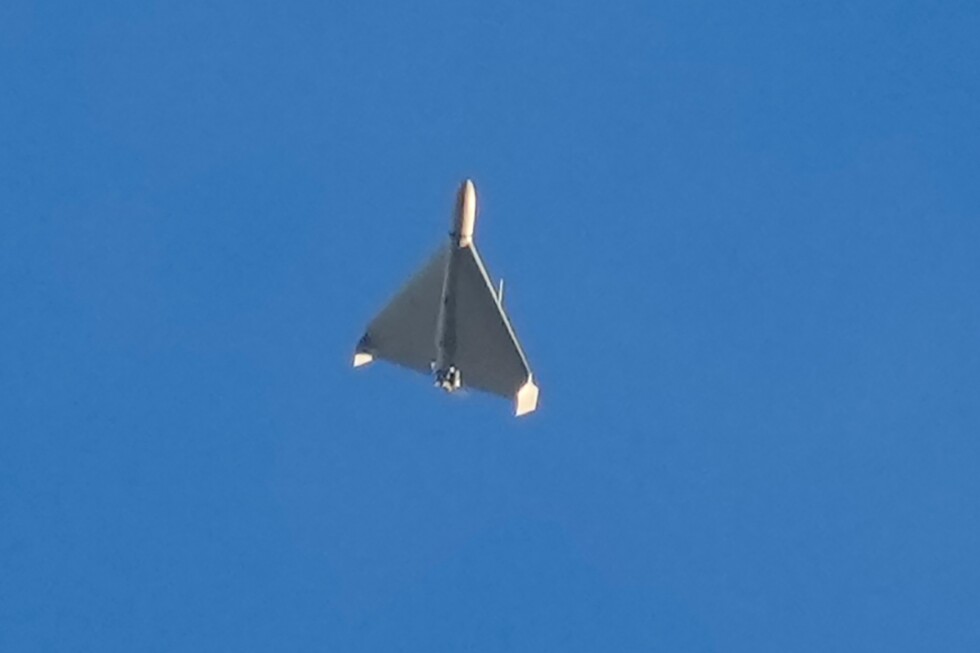
The distinctive buzz of Iranian-designed drones has become a familiar sound in Ukraine over the past four years. Now, it’s increasingly heard across the Persian Gulf as Tehran strikes back with these cheap but effective weapons following recent attacks by the U.S. and Israel against Iran.
Shahed drones have made a transformative impact on modern warfare, with Russia deploying swarms of these deadly weapons in nightly missions over Ukraine. While ballistic and cruise missiles fly faster and deliver more explosive power, they cost millions of dollars and are available only in limited quantities. By contrast, a Shahed drone costs only tens of thousands of dollars—a tiny fraction of a ballistic missile’s price tag.
Available in large numbers, these drones have demonstrated their ability to overwhelm air defenses and inflict significant damage at minimal cost, changing the dynamics of modern conflicts.
The Ukrainian battlefield has increasingly been shaped by drone warfare since Russia’s failed attempt to capture Kyiv in February 2022. The conflict has evolved into a war of attrition where both sides rely heavily on unmanned aerial vehicles for tactical advantage.
After initially importing Shaheds from Tehran early in the war, Russia began domestic production of its own version, called “Geran” or “geranium.” Russian engineers enhanced the original design, increasing its operational altitude, improving resistance to electronic jamming, and equipping it with more powerful warheads.
A manufacturing plant in Russia’s Tatarstan region has dramatically scaled up production, enabling Moscow to launch hundreds of drones in a single night—far more than were deployed in entire months during earlier phases of the conflict.
“By using large numbers in a single attack, Russian strategists aim to overwhelm Ukrainian air defenses and create diversions from more expensive cruise and ballistic missiles that often accompany drone strikes against high-value targets,” explains military analyst Dmitri Alperovitch.
Despite its slow speed of approximately 180 kilometers per hour, the Shahed boasts an impressive range of up to 2,000 kilometers and can carry about 40 kilograms of explosives. Ukrainian defenders have nicknamed these weapons “mopeds” due to their distinctive engine noise.
Ukraine has developed cost-effective countermeasures, including mobile teams armed with machine guns, to preserve their limited supply of expensive Western air defense missiles. Ukrainian forces have also developed interceptor drones, though scaling up production remains challenging as Russian attacks intensify.
The recent escalation in the Middle East has seen Iran deploy these same drone tactics against multiple targets. Following U.S. and Israeli strikes on Iranian territory, Tehran launched a massive retaliatory campaign targeting Israel and several Gulf states, including Saudi Arabia, Bahrain, Kuwait, Qatar, and the United Arab Emirates.
The attacks focused on American military bases, ports, airports, oil facilities, tankers, and even some high-rise buildings. Officials in Dubai reported that air defenses had engaged 165 ballistic missiles, two cruise missiles, and more than 540 Iranian drones over just two days. While officials claimed to have intercepted all air attacks on Saturday, debris from neutralized weapons ignited fires at some of Dubai’s most iconic locations.
The operational reach of these drones was demonstrated when some Iranian models traveled as far as a British military base in Cyprus. The runway at the Royal Air Force base in Akrotiri was struck by an Iranian drone on Sunday, according to U.K. officials. The base went on alert again Monday when two more drones heading toward the installation were intercepted.
“What’s taken people by surprise is the ferocity and scale with which Iran has retaliated this time,” said Patrick Bury, a security issues professor at the University of Bath, comparing the response to previous, more limited Iranian actions. “What the U.S. and Israelis are hoping, I think, is that they can degrade Iran’s capabilities enough to take some of the steam out of future attacks.”
The mobility of these weapons systems adds to their strategic value. Bury noted that Shahed drones can be easily concealed in the back of a truck, making them difficult to detect and neutralize before deployment.
Many defense experts now suggest Western forces should look to Ukraine’s experience in countering drone swarms. “Our military must do more ASAP to institutionalize defensive lessons from Ukraine,” urged Dara Massicot, a senior fellow at the Carnegie Endowment, in a recent social media post.
As drone technology continues to evolve and proliferate, military planners worldwide are reassessing defense strategies to address this increasingly accessible and effective form of asymmetric warfare.
Fact Checker
Verify the accuracy of this article using The Disinformation Commission analysis and real-time sources.

8 Comments
The increasing presence of Iranian drones in the Persian Gulf is a worrying development that could further escalate tensions in the region. It will be critical for policymakers to address this issue with a measured and strategic response.
The evolution of drone warfare and the use of Iranian-designed Shahed drones is a fascinating development. I’m curious to see how this technology continues to shape the dynamics of conflicts like the one in Ukraine.
Interesting how Iranian drones have become a pivotal force in modern warfare, especially after their use by Russia in Ukraine. Their cost-effectiveness and ability to overwhelm air defenses is certainly a game-changer.
This news about Iranian drones buzzing the Persian Gulf is concerning, as it suggests a further escalation of tensions in the region. I wonder how the U.S. and its allies will respond to this growing threat.
The rise of drone warfare is a fascinating development, with both sides in the Ukraine conflict relying heavily on these unmanned aerial vehicles for tactical advantage. It will be interesting to see how this shapes the dynamics of future conflicts.
Absolutely, the proliferation of drone technology is a significant shift in modern warfare. Their relatively low cost and swarming capabilities pose new challenges for traditional air defenses.
The transformative impact of drones like the Shahed on modern warfare is undeniable. Their cost-effectiveness and ability to overwhelm air defenses is a real game-changer. It will be crucial for militaries to adapt their strategies to this new reality.
The proliferation of drone technology is certainly a concerning trend, as it makes it easier for hostile actors to inflict damage at a relatively low cost. The strategic implications of this shift in warfare will be important to watch.