


Listen to the article
Secretary of State Rubio Confirms Iran Requested Change in Nuclear Talks Venue
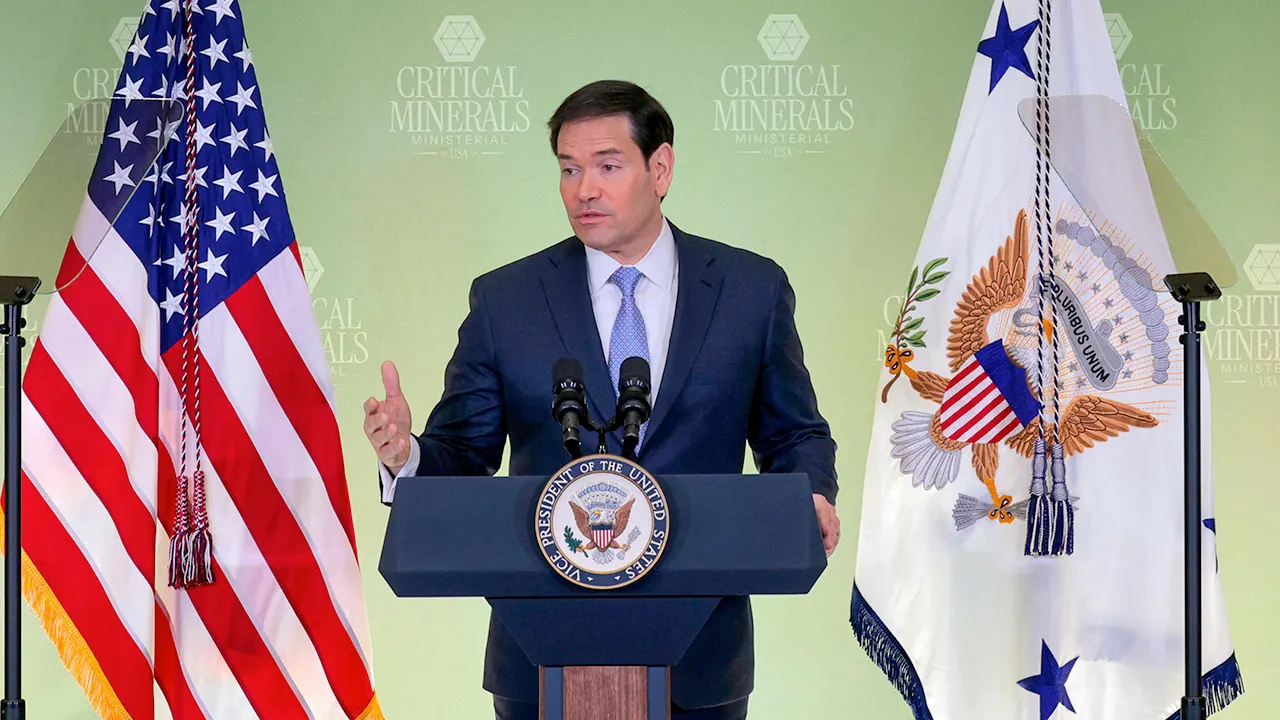
Secretary of State Marco Rubio confirmed Wednesday that Iran has requested to change the location for upcoming diplomatic talks with the United States, following several conflicting reports on the matter.
“We thought we had an established forum that had been agreed to in Turkey. It was put together by a number of partners who wanted to attend and be a part of it,” Rubio told reporters. “I saw conflicting reports yesterday from the Iranian side saying that they had not agreed to that. So, that’s still being worked through. At the end of the day, the United States is prepared to engage in, has always been prepared to engage with Iran.”
According to a source familiar with the discussions, Iran has requested that nuclear talks be held in Oman this Friday. Reports indicate that Iranian officials are pushing to limit the dialogue to a bilateral U.S.-Iran format, which would exclude Arab states and other regional partners from participating.
This potential format change represents a significant shift in diplomatic strategy and could complicate U.S. efforts in the region, where the Biden administration has worked to build consensus among allies regarding Iran’s nuclear program and regional activities.
While Rubio declined to specify what topics had already been agreed upon for discussion, he outlined several issues that would need to be addressed for the talks to “actually lead to something meaningful.” These include Iran’s ballistic missile capabilities, its support for terrorist organizations, its nuclear program development, and the regime’s treatment of its own citizens.
Tensions between the U.S. and Iran have escalated in recent weeks. Just Tuesday, the U.S. military shot down an Iranian drone after it “aggressively approached a U.S. Navy aircraft carrier with unclear intent,” according to a U.S. Central Command spokesman. Iranian state media later claimed the drone was conducting a “routine and lawful mission over international waters.”
The diplomatic maneuvering comes against a backdrop of significant domestic unrest in Iran. Anti-government protests have swept across the country since late December, with demonstrators risking harsh government reprisals to voice their dissatisfaction with the clerical regime. President Donald Trump previously warned that the United States would take action if protesters faced violent crackdowns.
Rubio highlighted the stark contrast between Iran’s leadership and its population. “The Iranian people and the Iranian regime are very unalike,” he said. “The leadership of Iran at the clerical level does not reflect the people of Iran. I know of no other country where there’s a bigger difference between the people that lead the country and the people who live there.”
The Secretary also pointed to economic factors fueling the unrest, noting that the Islamic regime cannot address the country’s financial problems because Iranian leaders divert national resources to sponsor terrorism and proxy groups throughout the Middle East.
The proposed talks come at a critical juncture for regional security. Iran’s nuclear program has advanced significantly in recent years, with the country enriching uranium to near weapons-grade levels following the U.S. withdrawal from the 2015 nuclear deal under the previous administration.
Regional allies, including Israel and Saudi Arabia, have expressed concern about any potential bilateral agreement between Washington and Tehran that might not address their security concerns. Their exclusion from talks, as reportedly requested by Iran, could further strain these relationships.
As diplomatic efforts continue, the U.S. has maintained a strong military presence in the region, with additional naval assets deployed to the Middle East in recent months to deter Iranian aggression and protect shipping lanes in the Red Sea and Persian Gulf.
Fact Checker
Verify the accuracy of this article using The Disinformation Commission analysis and real-time sources.

10 Comments
Iran’s request to change the nuclear talks venue and format is concerning. Limiting participation could undermine efforts to address regional security issues. The US will need to stand firm on an inclusive process.
You’re right, an exclusive US-Iran format would be a concerning shift. Maintaining broader regional engagement will be crucial for any meaningful progress on the nuclear issue.
Interesting development on the nuclear talks venue. Iran seems to be pushing for a more limited bilateral format, which could make things tricky for the US and its regional partners. Curious to see how this plays out diplomatically.
Agreed, the venue change request suggests Iran may be looking to control the dialogue. The US will need to carefully navigate this to preserve regional cooperation.
This venue change request from Iran seems like a concerning shift in their diplomatic strategy. Limiting participation could undermine efforts to address regional security issues tied to the nuclear program. The US will need to stand firm on an inclusive process.
The reported venue change for the Iran nuclear talks raises some red flags. Excluding regional partners could signal Iran is trying to limit accountability and oversight. The US will need to be cautious in its approach.
Iran’s request to change the nuclear talks venue and format is an interesting development. Excluding regional partners could complicate efforts to address broader regional security concerns. The US will need to carefully balance diplomacy here.
Absolutely, maintaining an inclusive process will be crucial. Excluding key regional players could undermine the credibility and effectiveness of any potential deal.
Iran’s request to change the nuclear talks venue and format is a significant development. Excluding regional partners could signal Iran is trying to control the narrative and limit accountability. The US will need to carefully navigate this to preserve regional cooperation.
You raise a good point. Maintaining an inclusive process will be critical to ensure any potential deal has broad regional support and legitimacy.