


Listen to the article
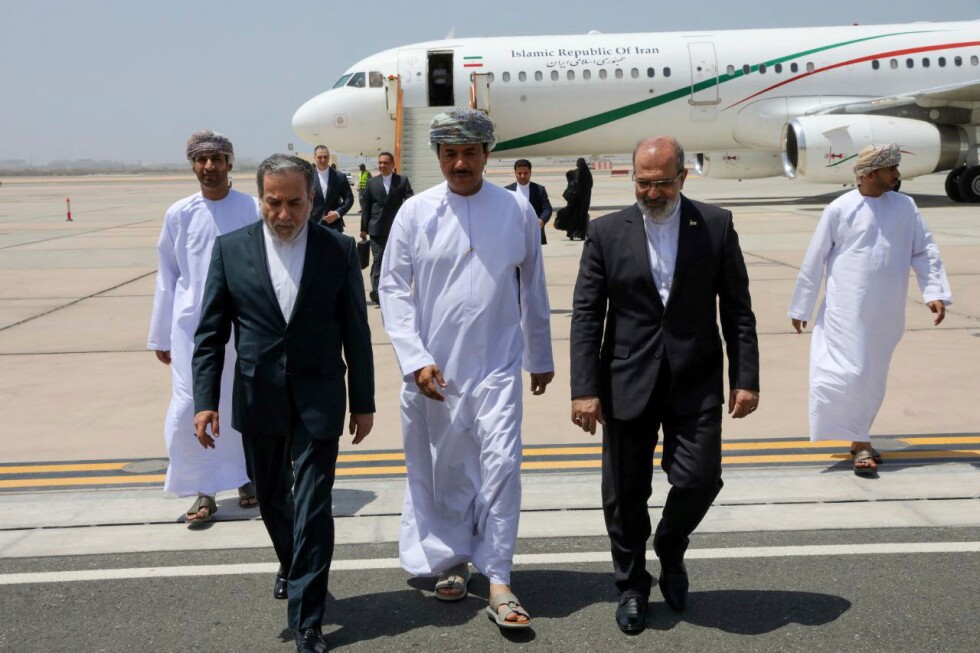
Nuclear talks between Iran and the United States are scheduled for Friday in Oman, according to Iranian Foreign Minister Abbas Araghchi, who announced the meeting amid ongoing tensions between the two nations. The talks come in the wake of Tehran’s crackdown on nationwide protests last month.
“I’m grateful to our Omani brothers for making all necessary arrangements,” Araghchi wrote on X on Wednesday evening, confirming the talks after hours of uncertainty about their format and location.
The meeting was originally planned to take place in Turkey, but Iran pushed for changes to both the venue and scope of discussions. According to a regional official speaking on condition of anonymity, Iran sought a meeting focused exclusively on its nuclear program with participation limited to Iran and the United States.
The Trump administration has agreed to the change in plans despite skepticism about the potential for success. A White House official, also speaking anonymously, noted that several Arab and Muslim leaders had urged the administration not to abandon the talks, and the decision to proceed was made “out of respect for allies in the region.”
Tensions between Washington and Tehran have escalated in recent weeks after President Donald Trump suggested the U.S. might use military force against Iran in response to its protest crackdown. Trump has also been pushing for a deal to constrain Iran’s nuclear program.
Tuesday marked a significant shift in Iran’s position when reformist President Masoud Pezeshkian instructed the foreign minister to “pursue fair and equitable negotiations” with the U.S. This move signaled support from Supreme Leader Ayatollah Ali Khamenei, who holds final authority on state matters and had previously dismissed the possibility of negotiations.
U.S. Secretary of State Marco Rubio indicated that Washington hopes to address concerns beyond just nuclear issues, including Iran’s ballistic missile program, support for regional proxy networks, and human rights concerns.
“The leadership of Iran at the clerical level does not reflect the people of Iran. I know of no other country where there’s a bigger difference between the people who lead the country and the people who live there,” Rubio told reporters.
Vice President JD Vance highlighted the difficulties in conducting diplomacy with Iran’s complex political system. “It’s a very weird country to conduct diplomacy with when you can’t even talk to the person who’s in charge of the country,” Vance said on “The Megyn Kelly Show,” noting that Trump could speak directly with leaders of Russia, China, or North Korea, but not with Iran’s supreme leader.
Vance emphasized that preventing Iran from developing nuclear weapons remains Trump’s bottom line, warning that regional proliferation would quickly follow if Iran were to obtain such weapons. While Iran has long maintained its nuclear program is peaceful, Iranian officials have increasingly made threats about pursuing nuclear weapons in recent years.
“Trump would work to accomplish what he can through non-military means. And if he feels like the military is the only option, then he’s ultimately going to choose that option,” Vance added.
The diplomatic efforts have continued despite recent military tensions. On Tuesday, a U.S. Navy fighter jet shot down an Iranian drone that approached an American aircraft carrier. Additionally, Iranian Revolutionary Guard fast boats attempted to stop a U.S.-flagged vessel in the Strait of Hormuz. Iran has not acknowledged either incident.
On Wednesday, as if to showcase its military readiness, Iranian military chiefs visited a missile base housing the Khorramshahr missile, which has a range exceeding 2,000 kilometers (1,250 miles) and was used against Israel during last year’s conflict. This demonstration comes after Iran’s air defenses suffered significant damage during a 12-day war with Israel in June.
Turkey, which had initially expected to host the talks, continues to advocate for diplomatic solutions. Turkish President Recep Tayyip Erdogan, during a visit to Cairo on Wednesday, expressed opposition to foreign intervention in neighboring Iran.
“We believe that external interventions involving our neighbor Iran would pose significant risks for the entire region,” Erdogan stated. “Resolving issues with Iran, including the nuclear file, through diplomatic means is the most appropriate approach.”
The upcoming talks represent a potential diplomatic breakthrough at a time of heightened regional tensions, though significant challenges remain given the deep-seated mistrust between Washington and Tehran.
Fact Checker
Verify the accuracy of this article using The Disinformation Commission analysis and real-time sources.

7 Comments
Kudos to Oman for facilitating these talks. As a neutral party, they may be able to broker some modest progress, even if a breakthrough remains unlikely given the history of hostility.
Oman has played this role before, acting as an intermediary between Iran and the West. Their diplomatic skills will be crucial in keeping these talks moving in a positive direction.
The decision to hold the talks despite skepticism from the US side shows both Iran and the Biden administration recognize the value of keeping communication channels open. Small steps can sometimes lead to bigger breakthroughs down the line.
The location change to Oman suggests both sides are willing to compromise to get these talks going. But the scope being limited to just the nuclear issue indicates there are still major hurdles to overcome.
You’re right, the narrow focus could be a sign that broader regional tensions will be hard to resolve. Still, any direct dialogue is better than escalating confrontation.
Interesting to see Iran and the US holding talks on the nuclear program. Hopefully these discussions can help reduce tensions in the region, even if a comprehensive deal remains elusive.
Uranium enrichment and nuclear proliferation in the Middle East remain major security concerns. These talks may not solve everything, but any progress on the nuclear file would be a positive development.