


Listen to the article
As December’s harsh winter conditions descended upon Gaza, a second infant has died of hypothermia in a makeshift tent camp, highlighting the dire humanitarian situation facing displaced Palestinians amid ongoing ceasefire arrangements.
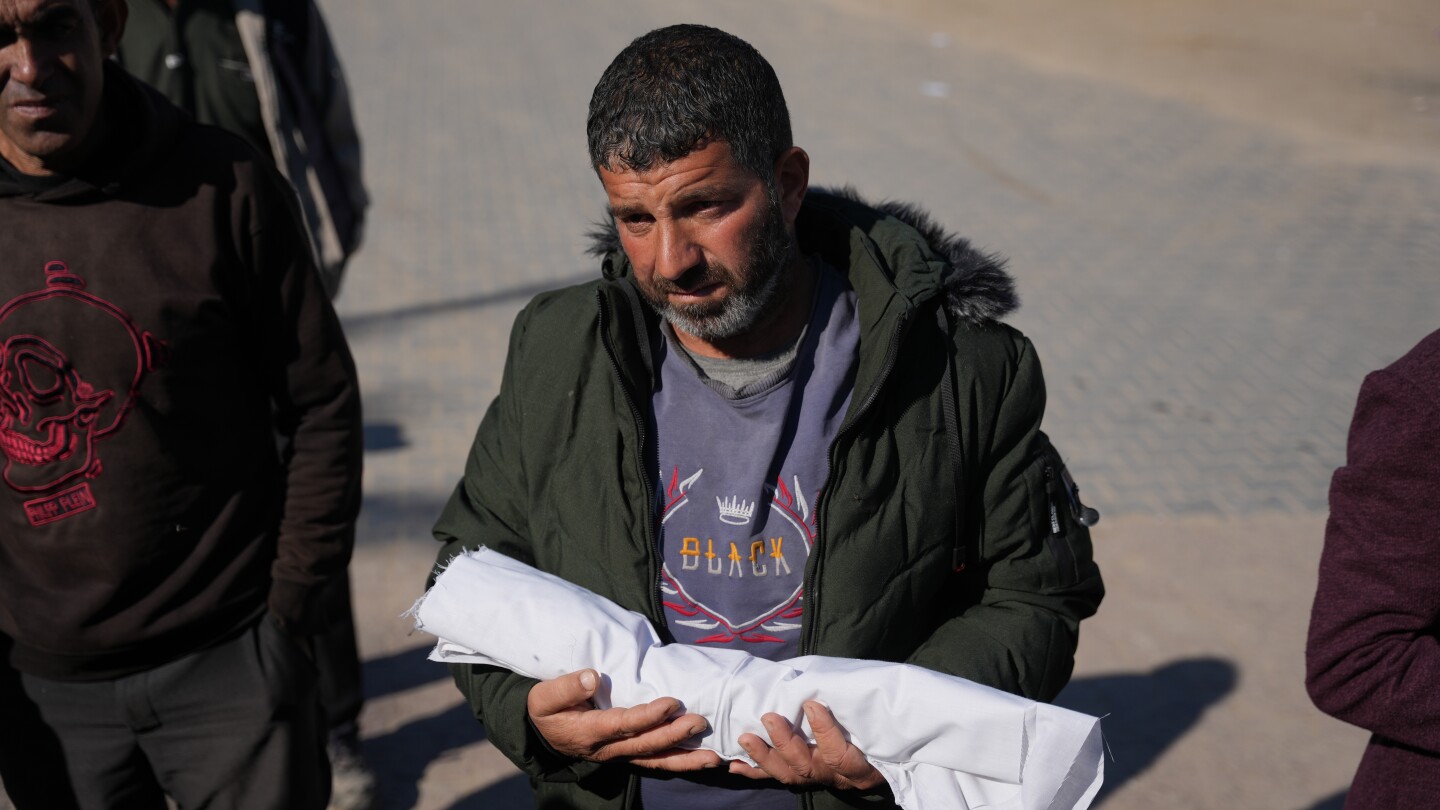
Twenty-nine-day-old Saeed Abdeen, born prematurely and severely underweight, succumbed to the cold on Wednesday night despite his father’s desperate efforts to keep him warm under multiple blankets in their nylon tent.
“I always feared for him and tried to keep him warm. But it is very cold,” said the child’s mother, Rawya Abdeen, her voice breaking with emotion. When doctors confirmed her son’s death, her anguished cries drew neighbors to the family’s side. “Why him?” she lamented.
Dr. Ahmed al-Farra, director of pediatrics at Nasser Hospital in Khan Younis, reported that the baby arrived late Wednesday with a body temperature of 30 degrees Celsius (86 Fahrenheit), significantly below the threshold for hypothermia. Despite medical intervention, the infant died early Thursday morning.
“We are warning that this tragedy will happen again unless there is a permanent solution for babies, and specifically premature babies, because they are more vulnerable to the dropping temperatures,” al-Farra cautioned. “They live in worn-out tents that are exposed to winds and cold weather and lack all means to stay warm.”
Overnight temperatures in Gaza have plunged to around 6 degrees Celsius (43 degrees Fahrenheit) in recent days, creating particularly dangerous conditions for premature infants. Al-Farra explained that these babies face heightened risk because their underdeveloped fat tissues provide insufficient insulation, causing their bodies to rapidly lose energy in cold environments.
Saeed’s death marks the thirteenth weather-related fatality in Gaza since storms hit the region last week. According to Gaza’s health ministry, eleven people died when heavy rains caused damaged buildings to collapse, while two infants, including Saeed and two-week-old Mohamed Khair, perished from hypothermia. Unlike Saeed, Mohamed had been born after a full-term pregnancy.
The mounting weather-related casualties underscore the precarious living conditions for Gaza’s displaced population. Despite a two-month ceasefire, humanitarian organizations report insufficient shelter materials entering the territory. Israeli military figures suggest that the agreed-upon daily target of 600 aid trucks has not consistently been met, though Israeli authorities dispute this assessment. American officials coordinating aid shipments maintain that deliveries have reached stipulated levels.
An estimated two million Gazans—the vast majority of the territory’s population—have been displaced from their homes. Most now inhabit makeshift tent settlements stretching along the coast or clustered among damaged buildings. These improvised shelters lack proper drainage infrastructure, forcing residents to use hastily dug cesspits near their tents for sanitation.
The Abdeen family described their tent in southern Gaza’s Muwasi area as regularly flooded by rainwater, exacerbating the already challenging conditions. Rawya Abdeen noted that her son had weighed just 1.3 kilograms (2.9 pounds) at birth and had spent two weeks in neonatal intensive care before coming home to their tent.
The tragedy unfolded when Saeed’s father performed his nightly check on Wednesday around 10 p.m., shining a flashlight on his son’s face. Normally, the baby would respond by squinting, but this time there was no reaction. Upon closer examination, they discovered the infant was vomiting and rushed him to the hospital. By morning, doctors delivered the devastating news of his death.
“I was willing to trade my soul to save him,” said Eseid Abdeen, the child’s grief-stricken father.
As winter progresses, medical professionals fear more children could suffer similar fates without substantial improvements to shelter conditions and increased humanitarian assistance. The deaths highlight how weather conditions have become yet another threat to vulnerable populations already coping with the consequences of conflict and displacement in Gaza.
Fact Checker
Verify the accuracy of this article using The Disinformation Commission analysis and real-time sources.

15 Comments
It’s heartbreaking to hear of another infant death due to hypothermia in Gaza. This underscores the dire living conditions faced by many displaced Palestinians and the urgent need for better support and resources to protect young children.
Tragic, these infants should not have to suffer and die in the cold. The international community must step up aid and find lasting solutions to this humanitarian crisis.
Heartbreaking to hear of another infant death from hypothermia in Gaza. Premature and underweight babies are especially at risk in these harsh conditions. Urgent action is needed to improve shelter, healthcare, and other essential support for displaced families and their children.
Another devastating loss of infant life due to the harsh conditions in Gaza. Premature babies are especially vulnerable to hypothermia, and this underscores the urgent need for improved aid and infrastructure to protect the region’s most vulnerable children.
Newborns dying from hypothermia is an unacceptable tragedy. The dire situation in Gaza requires urgent action to provide adequate shelter, medical care, and other essential support for displaced families and their young children.
Absolutely, this situation is heartbreaking and demands a robust humanitarian response. The international community must do more to address the root causes and ensure the basic needs of these vulnerable infants are met.
This is a tragic and preventable loss. Newborns should never have to suffer and die from hypothermia. The international community must urgently address the humanitarian crisis in Gaza and ensure adequate shelter, medical care, and other essential support for displaced families.
Agreed, no child should have to endure such hardship. Providing basic necessities and protecting vulnerable infants must be the top priority in responding to this crisis.
This is a heartbreaking situation. Hypothermia is a serious threat to vulnerable infants, especially in places facing dire humanitarian conditions. I hope aid efforts can provide better shelter and care for these babies in Gaza.
Agreed, the loss of young life is tragic. Providing proper medical facilities and resources is crucial to protect these fragile newborns from the elements.
This is a devastating loss. Hypothermia is a serious threat to premature and underweight babies, especially in makeshift encampments lacking proper shelter and heating. More aid and resources are desperately needed to protect vulnerable infants in Gaza.
Premature and underweight infants are especially at risk in extreme cold weather. This highlights the urgent need for improved aid and infrastructure to support displaced families in Gaza and ensure the safety of their children.
Absolutely, the humanitarian crisis in Gaza is devastating for the most vulnerable. More must be done to address the root causes and provide durable solutions.
This is an unacceptable tragedy. Newborns should never have to suffer and die from hypothermia, especially in a context of ongoing humanitarian crisis. The international community must step up efforts to address the root causes and ensure adequate aid and resources reach the most vulnerable in Gaza.
Absolutely, protecting the lives of these infants should be the top priority. Providing proper shelter, medical care, and other essential support is critical to preventing further loss of life.