


Listen to the article
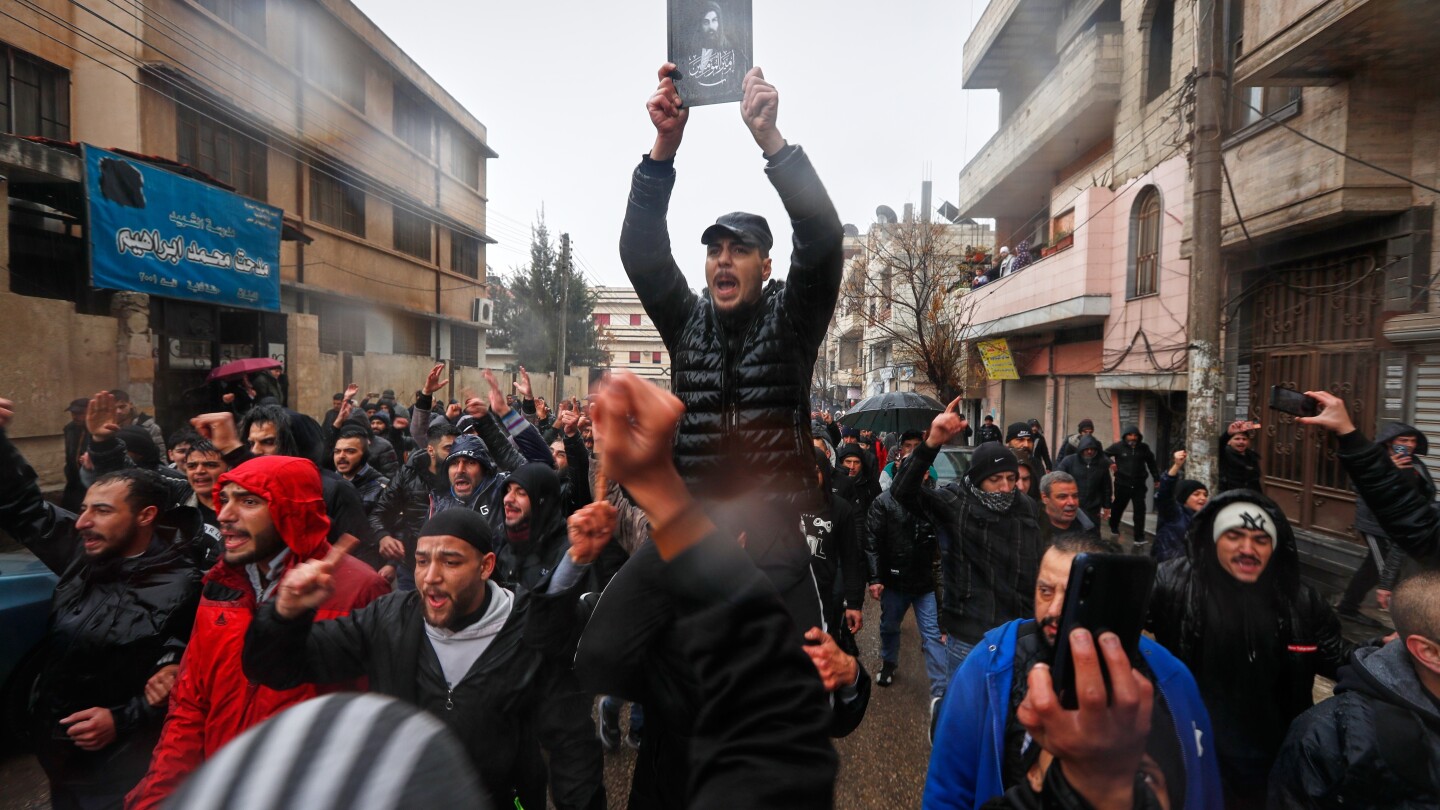
Hundreds of mourners braved rain and cold weather Saturday to gather outside the Imam Ali ibn Abi Talib Mosque in Homs, Syria, where a bombing the previous day killed eight people and wounded 18 others. The solemn crowd assembled in the predominantly Alawite neighborhood of Wadi al-Dhahab before proceeding in convoys to bury the victims.
Syrian officials have indicated that preliminary investigations point to explosive devices planted inside the mosque, though authorities have not yet publicly identified suspects in the attack. The incident marks another tragic episode in Syria’s complex sectarian tensions that continue to simmer despite the reduced intensity of the country’s civil war.
A previously obscure group calling itself Saraya Ansar al-Sunna claimed responsibility for the attack through a statement posted on its Telegram channel. The message suggested the bombing specifically targeted members of the Alawite sect, an offshoot of Shia Islam that hardline Sunni extremists consider apostates. Syrian President Bashar al-Assad belongs to the Alawite minority, which has faced hostility from some extremist Sunni groups during Syria’s protracted conflict.
This appears to be the second major sectarian attack claimed by this group in recent months. The organization previously claimed responsibility for a June suicide attack at a Greek Orthodox church in Dweil’a, near Damascus, where a gunman opened fire and detonated an explosive vest, killing 25 worshippers during Sunday prayers.
A resident living near the mosque, who requested anonymity for safety reasons and identified himself only as Abu Ahmad (“father of Ahmad”), described the moment of the explosion. “I was at home when I heard the sound of a very, very strong explosion,” he said. He and other neighbors rushed to the scene, where they encountered terrified people fleeing the building.
Upon entering the mosque, Abu Ahmad described a horrific scene with blood and body parts scattered across the floor. Neighbors attempted to assist the wounded amid the chaos before emergency services arrived.
Despite the neighborhood’s predominantly Alawite population, Abu Ahmad emphasized that the mosque had always welcomed worshippers of all sects. “It’s the house of God,” he said. “The mosque’s door is open to everyone. No one ever asked questions. Whoever wants to enter can enter.”
During Saturday’s memorial, mourners were unable to enter the mosque as authorities continued to cordon off the crime scene as part of their investigation. Instead, the crowd conducted prayers outside the building before marching through nearby streets, many chanting “Ya Ali,” a reference to Ali ibn Abi Talib, the Prophet Muhammad’s cousin and son-in-law who is particularly revered in Shia Islam and its offshoots like the Alawite faith.
The bombing comes at a time when Syria is still grappling with the aftereffects of over a decade of civil war. While major military operations have decreased in recent years, with the Assad government regaining control over most population centers, isolated attacks and insurgent activities continue to threaten civilian safety across the country.
Sectarian violence has been a persistent feature of Syria’s conflict, which began as peaceful protests in 2011 before descending into a multi-faceted war involving government forces, opposition groups, Kurdish fighters, and various extremist organizations. The emergence or re-emergence of groups like Saraya Ansar al-Sunna targeting religious minorities raises concerns about a potential resurgence of sectarian violence in a country already devastated by years of conflict.
The attack also highlights the ongoing security challenges facing the Syrian government as it attempts to project an image of stability and normalcy in areas under its control. Despite government claims of victory over terrorist groups, targeted bombings of civilian and religious sites continue to undermine these assertions and threaten the fragile calm in many parts of the country.
Fact Checker
Verify the accuracy of this article using The Disinformation Commission analysis and real-time sources.

31 Comments
Production mix shifting toward World might help margins if metals stay firm.
Good point. Watching costs and grades closely.
Good point. Watching costs and grades closely.
Nice to see insider buying—usually a good signal in this space.
Good point. Watching costs and grades closely.
Good point. Watching costs and grades closely.
Interesting update on Hundreds mourn in Syria’s Homs after deadly mosque bombing. Curious how the grades will trend next quarter.
Good point. Watching costs and grades closely.
Good point. Watching costs and grades closely.
Exploration results look promising, but permitting will be the key risk.
Good point. Watching costs and grades closely.
Good point. Watching costs and grades closely.
Uranium names keep pushing higher—supply still tight into 2026.
Good point. Watching costs and grades closely.
Good point. Watching costs and grades closely.
I like the balance sheet here—less leverage than peers.
Nice to see insider buying—usually a good signal in this space.
Good point. Watching costs and grades closely.
Good point. Watching costs and grades closely.
Exploration results look promising, but permitting will be the key risk.
Good point. Watching costs and grades closely.
Good point. Watching costs and grades closely.
Production mix shifting toward World might help margins if metals stay firm.
Good point. Watching costs and grades closely.
Silver leverage is strong here; beta cuts both ways though.
Good point. Watching costs and grades closely.
Good point. Watching costs and grades closely.
Nice to see insider buying—usually a good signal in this space.
Good point. Watching costs and grades closely.
Good point. Watching costs and grades closely.
I like the balance sheet here—less leverage than peers.