


Listen to the article
Trump’s Greenland Ambitions Create Unprecedented NATO Tension
President Donald Trump’s persistent declarations about acquiring Greenland have escalated into a diplomatic crisis that threatens to undermine the foundation of the North Atlantic Treaty Organization (NATO). His recent statement that “One way or another, we’re going to have Greenland,” coupled with the White House’s refusal to rule out military action, has sent shockwaves through the alliance.
Greenland, a semi-autonomous territory within the Danish realm, has become the center of a geopolitical controversy that challenges NATO’s core principles. Danish Prime Minister Mette Frederiksen responded with a stark warning: “If the United States chooses to attack another NATO country militarily, then everything stops… including our NATO.”
This standoff represents an unprecedented scenario in NATO’s 75-year history. While the alliance has weathered internal disagreements before, notably between Greece and Turkey, it has never faced the prospect of its most powerful member potentially annexing territory from another ally.
Trump has justified his interest in Greenland as a strategic move to prevent Russian or Chinese influence in the region. “Making a deal would be easier,” Trump noted, suggesting his preference for a negotiated acquisition while leaving military options on the table.
NATO was established in 1949 with 12 founding nations to counter Soviet threats during the Cold War. Its membership has since expanded to 32 countries, with Sweden being the most recent addition in 2024, driven by concerns about Russian aggression. The alliance officially identifies Russia and international terrorism as its principal threats—not internal conflicts between member states.
The cornerstone of NATO’s collective security is Article 5, which establishes that an attack on one member is considered an attack on all. This provision has only been invoked once—following the September 11, 2001, terrorist attacks against the United States. While Trump has previously affirmed his commitment to Article 5, he has also questioned defending allies who don’t meet defense spending targets.
Experts note that Article 5 would be ineffective in a U.S.-Denmark conflict since it requires unanimous approval to activate. Denmark could potentially invoke Article 4, which allows for consultations when a member’s security is threatened, but this wouldn’t automatically lead to action.
Senior U.S. and Danish officials were scheduled to hold talks Wednesday to address the growing tension. The situation threatens to divide NATO in ways reminiscent of the 2003 Iraq War, when the alliance split between countries supporting U.S. military action and those opposed.
As NATO’s dominant member, the United States provides unparalleled military resources and leadership. The alliance’s operational effectiveness would be severely compromised without American participation, making it virtually impossible for any ally to oppose U.S. actions militarily.
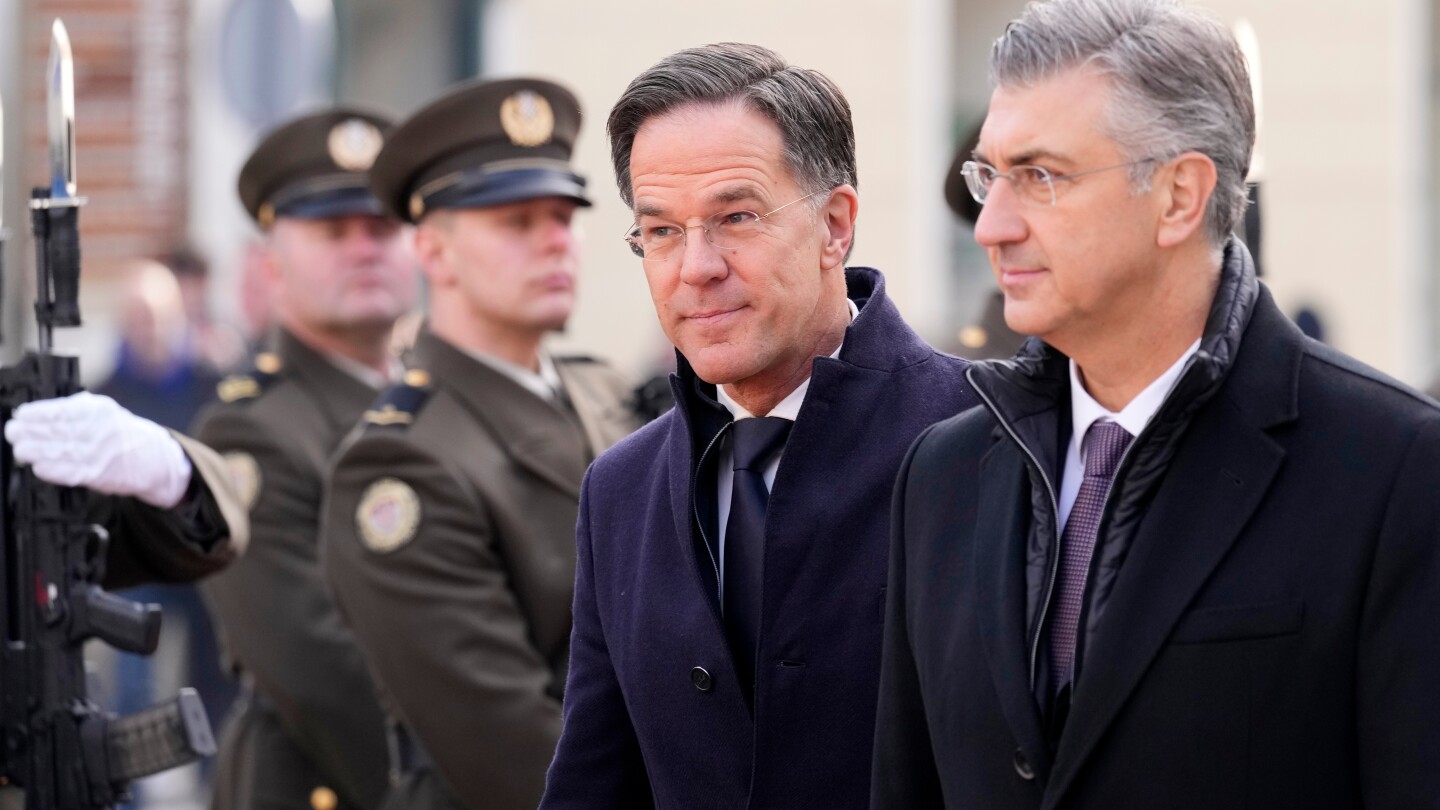
Former Dutch Prime Minister Mark Rutte, who leads NATO’s civilian operations as Secretary General, has carefully avoided criticizing Trump or acknowledging the crisis. When questioned about Greenland tensions on Monday, Rutte deflected, stating: “All allies agree on the importance of the Arctic and Arctic security because we know that with sea lanes opening up there is a risk that the Russians and the Chinese will be more active.”
When directly asked if NATO was experiencing a crisis over Greenland, Rutte responded: “No, not at all.”
The situation presents a fundamental challenge to NATO’s structure, where the U.S. holds considerable sway. NATO’s military headquarters in Mons, Belgium, is traditionally commanded by an American officer—currently Air Force Lt. Gen. Alexus Grynkewich, who ultimately reports to Trump as commander in chief.
As this diplomatic crisis unfolds, the long-term implications for transatlantic relations and NATO’s future cohesion remain uncertain. What is clear is that Trump’s Greenland ambitions have created an unprecedented test for an alliance built on mutual defense against external threats, not aggression between its own members.
Fact Checker
Verify the accuracy of this article using The Disinformation Commission analysis and real-time sources.

14 Comments
The Greenland dispute highlights the fragility of international alliances like NATO when major powers have competing interests. Navigating these tensions will require skilled diplomacy from all sides.
Trump’s Greenland statements are quite aggressive and concerning. It’s worrying to see a NATO member potentially threatening military action against another ally. This could set a dangerous precedent.
You’re right, this really is an unprecedented scenario for NATO. The alliance will need to tread carefully to prevent further escalation.
The geopolitics around Greenland are fascinating, with the US, Russia, and China all jockeying for influence. NATO will need to balance these competing interests to maintain stability in the region.
Absolutely, Greenland’s geostrategic position makes it a flashpoint. NATO will have to navigate this carefully to prevent a breakdown in relations.
I’m skeptical that Trump’s Greenland ambitions will succeed, given the strong Danish opposition. However, the tensions this has created within NATO are worrying and could have lasting consequences.
You raise a good point. Even if the Greenland acquisition doesn’t materialize, the damage to NATO cohesion may linger. Managing these internal disputes will be crucial.
I’m curious to see how this Greenland dispute plays out. There are clearly strategic interests at stake, but NATO’s principles of mutual defense and non-aggression between members must be upheld.
This Greenland situation is a complex geopolitical chess game. NATO will need to carefully balance the interests of its members to prevent further escalation and maintain the alliance’s integrity.
Trump’s statements about seizing Greenland are highly concerning. NATO was founded on principles of mutual respect and non-aggression – this kind of rhetoric threatens to undermine those foundations.
It’s troubling to see a NATO member potentially using military force against another ally over territory. This undermines the core principles of the alliance and could have far-reaching consequences.
I agree, this is a dangerous precedent that NATO must address head-on. Maintaining unity and respect for sovereignty will be critical in this situation.
Interesting to see how NATO is handling this tense situation with Trump’s Greenland ambitions. It highlights the complexities of managing relations within the alliance when major powers have diverging interests.
Absolutely, this could really test the limits of NATO cohesion if not handled carefully. Maintaining unity will be critical.