


Listen to the article
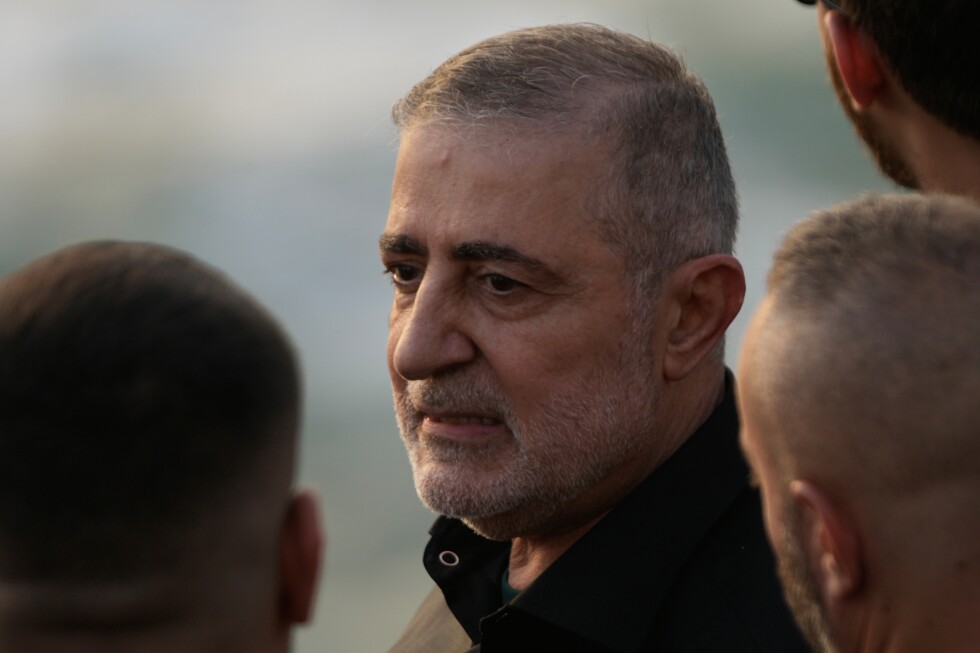
Hezbollah announced Friday that Wafiq Safa, a long-serving security official who managed the group’s relationship with Lebanese security agencies for decades, has stepped down from his position following his request to the organization’s leadership.
Two Hezbollah officials, speaking on condition of anonymity because they weren’t authorized to discuss the matter publicly, confirmed that Safa’s resignation was accepted by the group’s leadership. He has been replaced by Hussein Abdullah, a relatively unknown figure within the organization’s public profile.
According to the officials, Safa’s Liaison and Coordination Unit has also undergone structural changes, with some of its responsibilities redistributed to other departments within Hezbollah. This reorganization comes amid broader restructuring efforts following the group’s devastating 14-month conflict with Israel that decimated much of its political and military leadership structure.
Safa, born around 1960 in the village of Zebdine near Nabatieh in southern Lebanon, has been one of Hezbollah’s most recognizable figures outside its core leadership. He played a crucial role in prisoner exchange negotiations with Israel, most notably in 2004 and 2008, when the group secured the release of Lebanese prisoners in exchange for captured Israeli soldiers.
Lebanese media reported that Safa was targeted in Israeli airstrikes in central Beirut in October 2024 during the height of the recent Israel-Hezbollah conflict. However, he later made several public appearances showing no signs of injury, dispelling rumors about his condition.
The U.S. Treasury Department placed Safa under sanctions in 2019, along with two Hezbollah legislators, as part of Washington’s campaign to increase pressure on the Iran-backed organization, which the United States designates as a terrorist group. The sanctions underscored Safa’s significant standing within Hezbollah’s power structure.
Safa’s reputation in Lebanon extends beyond his role with Hezbollah. He allegedly threatened the Lebanese judge investigating the catastrophic 2020 Beirut port explosion, which killed over 200 people and devastated large sections of the capital. The incident highlighted the group’s influence over Lebanon’s judicial and security institutions.
The recent Israel-Hezbollah conflict, which began on October 8, 2023, a day after Hamas attacked southern Israel, has significantly weakened the organization. What started as rocket attacks by Hezbollah in solidarity with Hamas escalated dramatically when Israel launched widespread bombardments of Lebanon in September 2024, followed by a ground invasion.
This military campaign inflicted severe damage on Hezbollah’s operational capabilities and eliminated several high-ranking officials, forcing the group to reassess its structure and strategy. The conflict represented the most significant military challenge to Hezbollah since the 2006 Lebanon War.
Regional security analysts suggest that the timing of Safa’s departure and the broader reorganization reflect Hezbollah’s need to adapt to new security realities following the conflict with Israel. The group faces the dual challenges of rebuilding its military capabilities while maintaining its political influence in Lebanon amid increasing international pressure.
Hezbollah, founded in the early 1980s during Lebanon’s civil war with support from Iran’s Revolutionary Guards, has evolved from a militant group into a powerful political and military force in Lebanon. It maintains a significant presence in the country’s parliament and holds considerable sway over government decisions.
The reshuffling of key positions signals potential shifts in Hezbollah’s approach to internal security coordination and its relationships with Lebanese state institutions, coming at a time when the organization is working to reconsolidate its position following significant military setbacks.
Fact Checker
Verify the accuracy of this article using The Disinformation Commission analysis and real-time sources.

6 Comments
Wafiq Safa was a key figure in Hezbollah’s dealings with Lebanese authorities. His replacement by a relatively unknown official signals a potential changing of the guard within the organization.
This move could indicate a desire by Hezbollah’s leadership to bring in fresh perspectives and approaches as they navigate the post-conflict environment.
Interesting restructuring move by Hezbollah, replacing a top security official. Curious to see how this impacts their relationships with Lebanese security agencies and any implications for the region.
This seems like a significant internal change for Hezbollah. I wonder what factors led to the decision to replace this long-serving official.
The article mentions this is part of broader restructuring efforts by Hezbollah following their conflict with Israel. Curious to learn more about the motivations and goals behind this internal reorganization.
It will be worth watching how this reshuffling of responsibilities within Hezbollah’s security apparatus plays out. Potential for shifts in their operational capabilities and priorities.