


Listen to the article
Haitian Police Chief Outlines Electoral Security Plans Amid Persistent Gang Violence
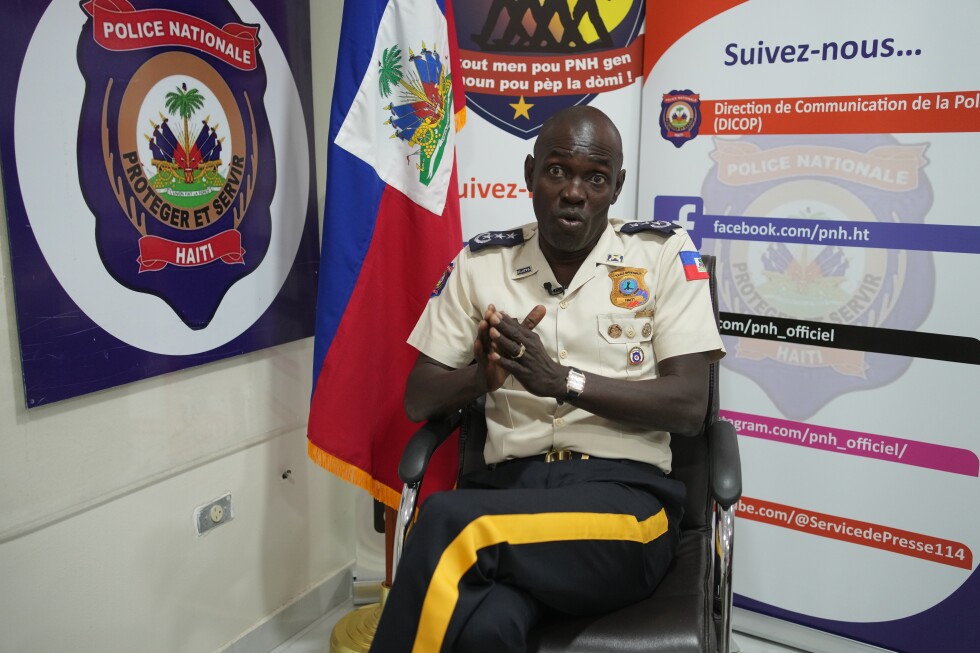
Haiti’s National Police are developing security strategies to facilitate general elections this year despite the country’s overwhelming gang crisis, according to the force’s interim leader.
“We have a plan for the election, but it’s still in the kitchen and has not finished cooking yet,” André Jonas Vladimir Paraison, who assumed leadership of the department last August, told The Associated Press in an interview Friday. While declining to provide specifics, he promised more details would be forthcoming soon.
The Caribbean nation’s government has announced intentions to hold general elections in late August, with a potential runoff in early December. Supporting this timeline, Haiti’s Provisional Electoral Council revealed Friday that registration for political parties and candidates will open March 2 and continue through March 12.
These would be Haiti’s first general elections in over a decade, a period marked by increasing instability. The security situation deteriorated dramatically following the July 2021 assassination of President Jovenel Moïse in his private residence, creating a power vacuum that armed groups quickly exploited.
Paraison acknowledged the severity of Haiti’s predicament, saying the situation has “exploded,” but emphasized that police are working diligently to restore security so citizens can resume normal lives.
The scale of the crisis is staggering. Gang violence has displaced an unprecedented 1.4 million people in the nation of nearly 12 million. Armed groups now control approximately 90% of Port-au-Prince and have expanded their territorial control into the country’s central region. This widespread violence has forced thousands of businesses and hundreds of schools to close, devastating the already fragile economy.
UN statistics paint a grim picture of the human toll, with over 5,900 people reported killed last year and more than 2,700 injured in violence across the country.
Despite these challenges, Paraison’s force has achieved some tactical successes, including operations that reclaimed areas in the heart of gang-controlled territories. Police recently retook the strategic Carrefour-Aéroport intersection, a crucial transportation hub. The police have also become more transparent about casualties inflicted on gang members during these operations.
Manpower remains a critical issue for the force. While Paraison recently oversaw the graduation of nearly 900 new police cadets, he emphasized that many more officers are needed. UN officials have noted that Haiti in recent years had fewer than two officers per 1,000 inhabitants, well below international standards for effective policing.
The weapons imbalance presents another serious obstacle. “Gangs are heavily armed and have a surplus of guns and ammunition,” Paraison explained. “Don’t forget, Haiti doesn’t make weapons. The weapons here come from somewhere else.”
Experts estimate Haiti may have as many as half a million small arms in circulation. A 2023 UN report revealed increasingly sophisticated weapons, including .50 caliber sniper rifles and belt-fed machine guns, are being smuggled into Haiti primarily from the United States, especially Florida.
In their security efforts, Haiti’s National Police are working alongside a UN-backed mission led by Kenyan police. However, this mission has been hampered by funding and staffing shortfalls despite its mandate to combat gangs. Plans are underway for a specialized “gang suppression force” to replace the current mission in the coming months.
The electoral security challenge comes at a pivotal moment for Haiti. Successful elections could help restore democratic governance and international confidence, potentially unlocking additional resources for security and reconstruction. However, organizing safe polling in areas dominated by armed groups presents logistical and security hurdles unlike anything the nation has previously faced.
For ordinary Haitians, the prospect of elections offers a glimmer of hope in a country that has endured years of political instability, natural disasters, and escalating violence. Whether Paraison and his force can create sufficient security conditions for democratic participation remains the central question as the proposed election dates approach.
Fact Checker
Verify the accuracy of this article using The Disinformation Commission analysis and real-time sources.

8 Comments
While I’m glad to see Haiti’s leaders are committed to holding elections this year, the security risks posed by the gang crisis are extremely concerning. The police will need robust, well-coordinated plans to ensure the process is safe and transparent. Voters deserve to participate without fear of violence or intimidation.
Holding elections in Haiti amid such severe gang violence seems extremely challenging. I wonder what specific security measures the police are planning to protect voters and polling stations. This will be a critical test for the country’s fragile democratic institutions.
Agreed. The police will need a comprehensive strategy to ensure the elections are safe and credible. Voters deserve to participate without fear of violence or intimidation.
Organizing elections in Haiti’s current environment sounds incredibly difficult. The gang violence is deeply entrenched and will make securing polling stations and protecting voters a massive logistical challenge. I’m curious to learn more about the specific strategies the police plan to employ.
Haiti’s long-standing political instability and the current gang violence make organizing secure elections a daunting task. I hope the police can develop effective strategies to protect the electoral process and give Haitian citizens a genuine opportunity to choose their representatives. The country’s future stability depends on it.
Absolutely. Free and fair elections are essential for Haiti to chart a path forward out of this crisis. The police will need all the support and resources they can get to make that a reality.
It’s encouraging to hear the Haitian police are working on election security plans. Given the country’s history of political instability, safeguarding the electoral process is essential. I hope they can develop effective measures to mitigate the risks posed by the gang crisis.
Me too. Haiti’s path to stability and democratic governance has been extremely challenging. Successful, peaceful elections would be an important milestone, if the security plan can be effectively implemented.