


Listen to the article
Trump Orders Strike on Iran After Stalled Nuclear Talks
President Donald Trump ordered a large-scale military operation against Iran just hours after expressing dissatisfaction with nuclear negotiations, a decision that led to the death of Supreme Leader Ayatollah Ali Khamenei and dozens of senior Iranian officials.
The operation, code-named “Epic Fury,” unfolded rapidly after Trump’s public comments on February 27, 2026, when he told reporters at the White House that he was “not happy” with how nuclear talks with Iran were progressing.
“No, I haven’t,” Trump responded when asked if he had made a final decision on next steps.
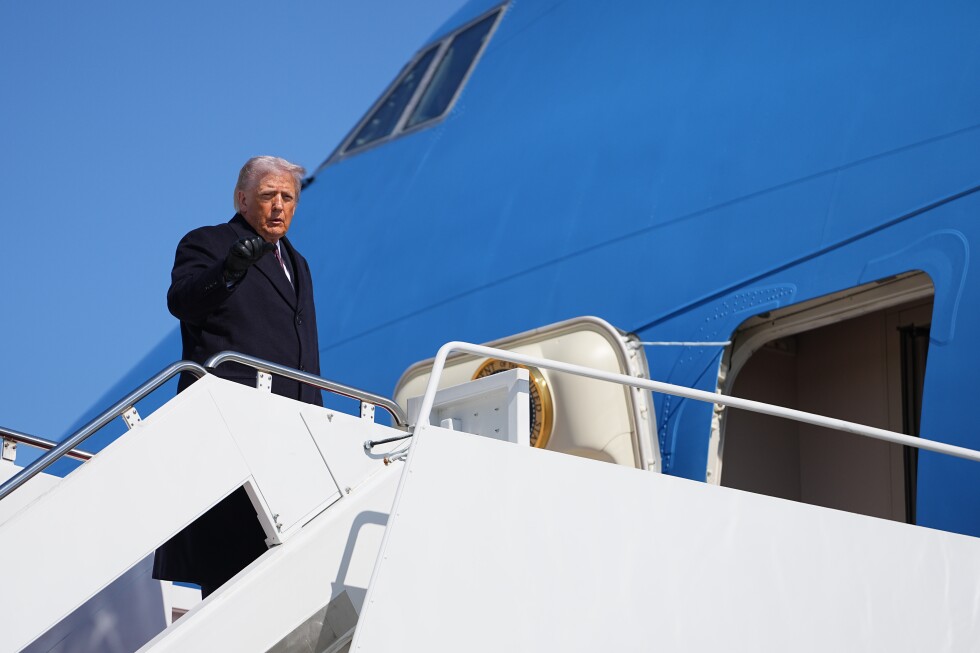
Just over three hours later, as he flew aboard Air Force One to Texas, the president gave the order to launch the strike. According to General Dan Caine, chairman of the Joint Chiefs of Staff, Trump’s directive was succinct: “Operation Epic Fury approved… Good luck.”
The order mobilized U.S. forces across multiple domains, with air defense batteries preparing, pilots rehearsing strike packages, and two carrier strike groups moving into position. During his flight to Corpus Christi, Trump consulted with Republican lawmakers on board about the potential strike, with several expressing the view that Iran was using negotiations merely as a delay tactic.
The actual military operation began in the early hours of February 28, involving what General Caine described as “thousands of service members from all branches, hundreds of advanced fourth- and fifth-generation fighters, dozens of refueling tankers, the Lincoln and Ford carrier strike groups and their embarked air wings.”
The strikes were meticulously coordinated based on intelligence gathered by the CIA, which had been tracking the movements of Iran’s senior leadership, including Khamenei. This intelligence was shared with Israel, and the timing of the strikes was adjusted accordingly.
The offensive resulted in the deaths of approximately 40 senior Iranian officials, including Khamenei, the head of the Revolutionary Guard, and the country’s defense minister. According to an Israeli military official, the attack involved “a barrage of three strikes in three locations” that hit “within a single minute.”
By late afternoon on February 28, Trump confirmed Khamenei’s death on his Truth Social platform, stating the supreme leader was “unable to avoid our Intelligence and Highly Sophisticated Tracking Systems.”
As the operation continued into the following days, Trump announced on March 1 that U.S. forces had “destroyed and sunk 9 Iranian Naval Ships” and “largely destroyed their Naval Headquarters.” In a video message that afternoon, he indicated strikes would continue until “all of our objectives are achieved,” though he did not specifically define these objectives.
Meanwhile, Pentagon officials revealed in congressional briefings that U.S. intelligence had not suggested Iran was preparing to launch a preemptive strike against the United States, though they acknowledged general threats from Iran’s missiles and proxy forces in the region. A senior White House official also indicated that Iran’s “new potential leadership” had suggested openness to talks.
Defense Secretary Pete Hegseth clarified on March 2 that the U.S. was not engaged in a nation-building effort or planning a prolonged conflict. “This is not Iraq. This is not endless,” he said. “This is not a so-called regime change war, but the regime sure did change, and the world is better off for it.”
Trump later told the New York Post he expected the operation to last four to five weeks but that “we have the capability to go far longer than that.” Unlike previous administrations, he did not rule out deploying ground forces, stating, “I don’t have the yips with respect to boots on the ground.”
The strikes prompted defensive measures from other nations in the region, with the United Arab Emirates reporting it had intercepted multiple missiles and drones, while Qatar said its air force shot down two Iranian warplanes.
Global markets reacted strongly to the conflict, with oil prices spiking due to concerns about supply disruptions near the Strait of Hormuz, while stock markets in the U.S., Europe, and Asia all trended downward amid the escalating tensions.
Fact Checker
Verify the accuracy of this article using The Disinformation Commission analysis and real-time sources.

7 Comments
The details around Trump’s decision-making process here are quite intriguing. Consultations with lawmakers during the flight to Texas suggest a degree of coordination, but the rapidity of the strike order is concerning. I wonder what intelligence and advice the president was acting on in that moment.
An interesting set of events leading up to this major military operation. It’s important to understand the full context and decision-making process, not just the final outcome. While decisive action is sometimes necessary, de-escalation and diplomacy should always be the priority when possible.
While I understand the need for decisive action in certain situations, the rapid sequence of events here is quite alarming. I hope the administration has carefully weighed all possible consequences and is prepared to handle the fallout, both geopolitically and in terms of potential retaliation.
This event highlights the delicate balance between military might and diplomatic solutions when it comes to geopolitics. While strength is sometimes needed, the tragic loss of life is always regrettable. I hope both sides can find a way to deescalate tensions and work toward a peaceful resolution.
The news of this strike is certainly concerning. I’m curious to learn more about the specific circumstances that led the president to greenlight such a significant military operation. Were there clear indications that diplomatic efforts had been exhausted? The stakes in this situation are extremely high.
This news raises a lot of questions. Was the strike truly necessary, or could tensions have been resolved through continued negotiations? The loss of so many senior Iranian officials is a major development with potentially far-reaching consequences. I hope all parties can work to restore stability and avoid further conflict.
This news raises a lot of complex issues around the use of military force, the role of diplomacy, and the balance of power in the Middle East. I’m curious to see how this situation develops and what the long-term implications will be for regional stability and global security.