


Listen to the article
British Identity Battle: Flag Displays Deepen Political Divide
A heated cultural battle over flag displays has emerged as the latest flashpoint in the United Kingdom’s increasingly polarized political landscape. The controversy centers on which flags should be flown from public buildings, with tensions mounting between those supporting traditional British symbols and those advocating for displays of international solidarity, particularly Palestinian flags.
The dispute intensified following Hamas’ October 2023 attack on Israel, after which Palestinian flag displays proliferated across Britain. Several city councils with significant immigrant populations—including Sheffield, Preston, and Bradford—raised Palestinian flags on public buildings in November to mark the United Nations International Day of Solidarity with the Palestinian People.
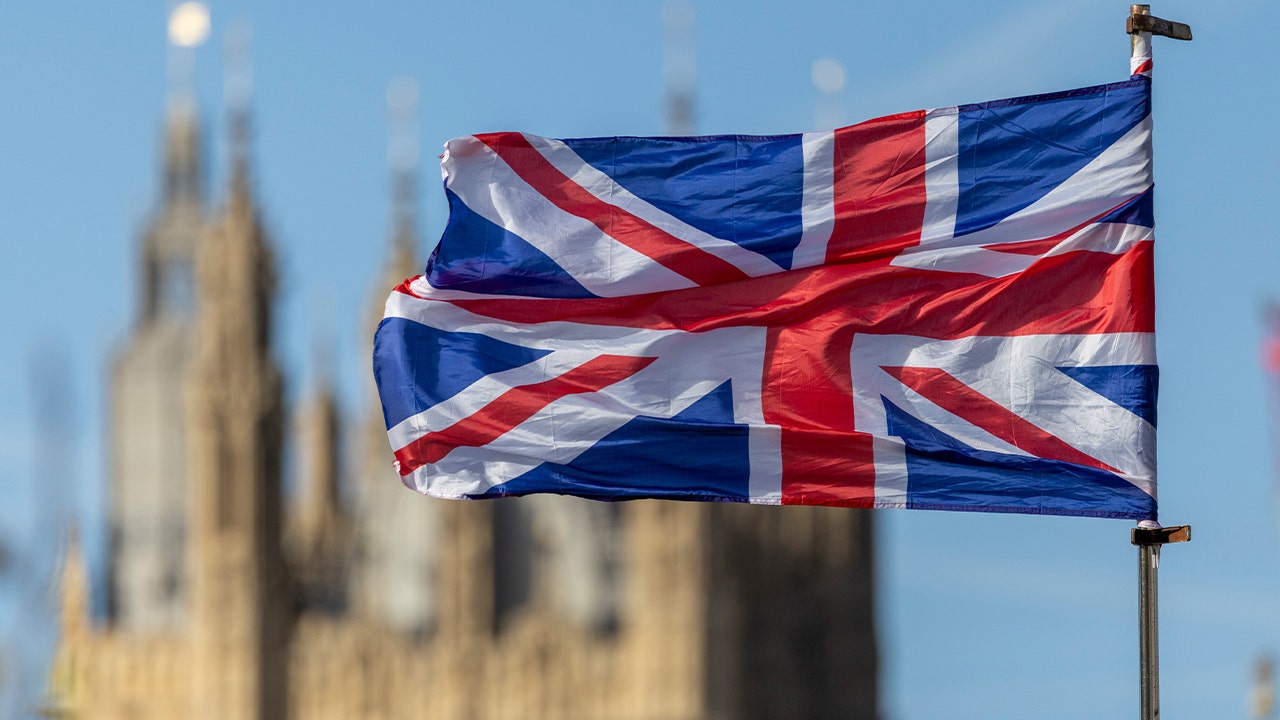
This trend has alarmed critics who view it as undermining British national identity. Colin Brazier, a British cultural commentator, told Fox News Digital, “There’s only one flag that should be flying on public buildings in the U.K., and I include the home nations of England, Scotland, Wales, and Northern Ireland, and that’s the Union flag.” Brazier advocates for a “strategy of national cohesion” that would ban foreign flags on taxpayer-funded buildings.
In response to these concerns, a grassroots movement called “Operation Raise the Colours” launched in August, encouraging citizens to display the Union Jack and St. George’s Cross flags in their homes and communities. The campaign aims to reassert British identity amid what supporters see as its erosion.
However, this resurgence of British flag displays has drawn criticism from the political left, with many viewing it as representing anti-immigration or far-right sentiment. The division reflects deeper tensions in British society around national identity, immigration, and multiculturalism.
Prime Minister Keir Starmer attempted to address the controversy in September, shortly after his government formally recognized a Palestinian state. Speaking at the Labour Party’s annual conference, Starmer made an impassioned plea for national unity: “Let’s fly all our flags, conference, because they are our flags, they belong to all of us and we will never surrender them… And with resolve, with respect, with the flag in our hands, we will renew this country.” He emphasized that the flag represents all citizens, “flying proudly, as we celebrate differences and oppose racism.”
Opposition politicians quickly dismissed Starmer’s remarks. Lee Anderson, Reform Party’s chief whip, told the Daily Telegraph: “You’re more likely to see a Labour member fly the flag of Palestine than a St. George’s flag. That tells you all you need to know.”
The flag controversy intersects with broader concerns about immigration and demographic change. According to the Muslim Council of Britain, the country’s Muslim population increased by 1.2 million between 2011 and 2021, now accounting for about 6% of the UK population. Brazier expressed concern about what he described as the government’s “indifferent attitude toward immigration,” claiming that “importing 10 million people in 25 years has a ruinous impact.”
A recent YouGov study highlighted the political and ethnic dimensions of these tensions. It found that 58% of 2024 Labour voters perceive the English flag as a racist symbol, compared to just 19% of Conservative voters and 8% of Reform voters. Among ethnic minority adults, 55% believe those displaying St. George’s flags do so “mostly as a way of expressing anti-migrant and/or anti-ethnic minority sentiment,” with 41% saying the same about the Union flag.
The study also revealed significant variations in perception among different ethnic groups. British adults of Pakistani or Bangladeshi heritage were most likely to view flag displays as racially motivated, with 68% believing the England flag has become a racist symbol, compared to 54% of those of mixed ethnicity, 51% of those with Indian heritage, and 43% of Black adults.
As Britain grapples with its evolving national identity in an increasingly diverse society, the seemingly simple question of which flags should fly over public buildings has become a powerful symbol of the country’s cultural and political divisions. With both sides becoming more entrenched, the flag debate appears unlikely to be resolved soon.
Fact Checker
Verify the accuracy of this article using The Disinformation Commission analysis and real-time sources.

13 Comments
The display of Palestinian flags on public buildings is a complex issue. While freedom of expression should be protected, I can understand concerns about potentially undermining British national identity. A thoughtful, inclusive dialogue seems necessary to find a sensible compromise.
Agreed. Avoiding further polarization and focusing on mutual understanding will be crucial in navigating this cultural clash productively.
The display of Palestinian flags on public buildings is a sensitive and complex issue. While freedom of expression is important, there are also valid concerns about maintaining a cohesive national identity. A balanced and inclusive approach will be crucial.
This flag dispute highlights the challenges of balancing national identity, cultural diversity, and freedom of expression in the UK. While I can understand the desire to uphold traditional British symbols, allowing some room for international solidarity displays could be a way to promote greater inclusivity.
As an investor in the mining and commodities sectors, I’ll be closely monitoring how this flag controversy evolves and potentially impacts the broader political and economic climate in the UK. Geopolitical factors can sometimes create both risks and opportunities for these industries.
Absolutely. Navigating these types of cultural and political tensions will require nuance and foresight from both policymakers and industry stakeholders. Maintaining stability and fostering constructive dialogue will be key.
This flag dispute seems to reflect the ongoing struggle to define British national identity in an increasingly diverse society. While the Union Jack holds deep symbolic meaning, allowing some room for other cultural expressions may be a pragmatic way forward.
As someone who follows the mining and energy sectors, I’m interested to see how this flag controversy could potentially impact relevant industries and investments. Geopolitical tensions can sometimes create challenges or opportunities, depending on the context.
That’s a fair observation. Keeping an eye on how these cultural and political dynamics unfold will be important for assessing potential business implications in the mining and energy spaces.
This flag controversy seems to highlight deeper tensions around national identity and cultural diversity in the UK. While supporting traditional British symbols is understandable, I wonder if allowing some displays of international solidarity could help foster greater unity and understanding.
Reasonable points on both sides. Finding the right balance between national pride and inclusivity will be key to resolving this sensitive issue constructively.
As a mining and commodities investor, I’m curious to see how this flag controversy may impact the broader political and economic landscape in the UK. Geopolitical tensions can sometimes spill over and affect business sentiment and investment decisions.
That’s an insightful point. Prolonged cultural and political divisions can create uncertainty and instability, which could have ripple effects on the economy and industries like mining. Maintaining stability should be a priority.