


Listen to the article
European Union Adopts Stricter Migration Policies Amid Rising Political Pressure
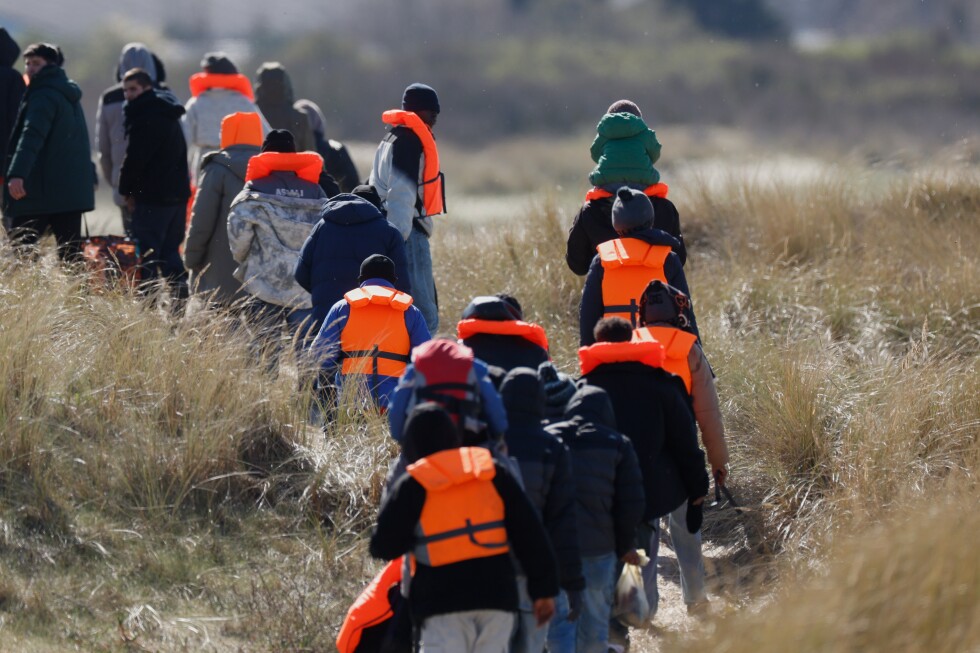
The European Union is quietly expanding its powers to track, raid, and deport migrants to “return hubs” in third countries across Africa and elsewhere, implementing tactics reminiscent of those used during the Trump administration in the United States—approaches that have previously drawn widespread criticism across the 27-nation bloc.
This policy shift comes as the EU continues to tighten its stance on migration following right-wing electoral gains in several member states in 2024. European Commission President Ursula von der Leyen, who represents the center-right European People’s Party coalition, has defended the new measures as necessary safeguards against another crisis similar to the one triggered by Syria’s civil war in 2015, when approximately one million people arrived seeking asylum.
“We have learnt the lessons of the past. And today, we are better equipped,” von der Leyen stated. The new framework, formally known as the Pact on Migration and Asylum, will take effect on June 12, marking a significant shift in the bloc’s approach to migration management.
Far-right parties across Europe have openly praised the deportation policies implemented by former U.S. President Donald Trump and advocated for similar approaches within the EU. Meanwhile, human rights organizations warn that authorities are already conducting illegal pushbacks at EU borders and systematically eroding legal protections for asylum seekers.
Italy has emerged as a model for this hardline approach under Prime Minister Giorgia Meloni’s “tough on migration” platform. The country now operates two migrant detention centers in Albania specifically for rejected asylum-seekers. According to Italian lawmaker Rachele Scarpa, who recently visited one facility, it currently holds at least 90 migrants who appeared “confused and scared.”
Meloni’s government has also approved an aggressive anti-immigration package that grants the Italian navy authority to intercept vessels in international waters for up to six months if deemed threats to public order. The measures also facilitate expedited deportation of foreign nationals convicted of crimes and establish mechanisms to return intercepted migrants to their countries of origin or to third countries.
An “informal group” of EU nations—including Germany, Austria, the Netherlands, Denmark, and Greece—is actively pursuing agreements to establish deportation centers outside Europe’s borders. Bernd Parusel, a researcher at the Swedish Institute for European Policy Studies, confirmed these developments, while Tineke Strik, a Dutch member of the European Parliament, revealed that Kenya is among the countries being approached for such arrangements.
“Whether consciously or not, the plan is similar to Trump’s deals with nations like El Salvador to take in deported migrants,” Strik noted. Sweden’s migration minister has also expressed support for establishing processing hubs outside Europe, particularly for Afghan and Syrian asylum-seekers.
The expansion of enforcement capabilities has sparked concerns among human rights advocates. In 2024, Belgium passed legislation allowing the EU border service Frontex to operate within its territory, raising fears that the agency might participate in immigration raids. However, Frontex spokesperson Chris Borowski clarified that the agency’s mandate is limited to border control, and its role in returns involves “coordinating flights, helping with travel documents and making sure fundamental rights are respected throughout the process.”
Human rights violations at European borders are becoming increasingly documented. According to a February report by a coalition of humanitarian organizations, European authorities carry out an average of 221 pushbacks daily, with more than 80,000 such incidents recorded in 2023—mostly in Italy, Poland, Bulgaria, and Latvia.
“Men, women and children—including individuals in critical medical condition—are routinely subjected to beatings, attacks by police dogs, forced stripping, forced river crossings and theft of personal belongings,” the report stated.
Flor Didden, a migration policy expert at the Belgian human rights organization 11.11.11, drew parallels between border enforcement tactics in Europe and the United States: “European agents are brutalizing migrants just like in the U.S. The images are shocking and the outrage is justified. But where is that same moral clarity when European border authorities abuse, rob and let people die?”
Rights groups have also noted an expansion of surveillance technology—including drones, thermal cameras, and satellites—being deployed to monitor migrants. The EU’s new migration regulations permit increased police raids in private homes and public spaces, along with greater use of surveillance and racial profiling, according to a February letter to EU institutions signed by 88 nonprofit organizations.
“We cannot be outraged by ICE in the United States while also supporting these practices in Europe,” said Michele LeVoy, director of the Brussels-based Platform for International Cooperation on Undocumented Migrants.
Despite the hardening stance, Olivia Sundberg Diez, an EU migration advocate for Amnesty International, notes that Europe still maintains more protections for vulnerable migrants than the United States, though she expressed concern about the trajectory of policies: “There’s a level of institutions’ and courts’ independence and human rights compliance in Europe that you can’t disregard. But the fundamental political impulse is the same, and I worry that the human consequences will be the same.”
Fact Checker
Verify the accuracy of this article using The Disinformation Commission analysis and real-time sources.

14 Comments
This new migration framework is a complex issue with valid concerns on both sides. I hope the EU can find a nuanced solution that upholds human rights while also addressing legitimate security needs.
Agreed. A balanced, evidence-based approach is needed, rather than knee-jerk reactions driven by political expediency.
It’s troubling to see the EU emulating the Trump administration’s hardline approach to immigration. I hope this doesn’t signal a broader shift towards more nationalist, xenophobic policies across Europe.
I share your concern. Any erosion of the EU’s values of openness and tolerance would be deeply worrying.
The parallels to Trump-era tactics are concerning. I hope the EU can find a more humane approach that respects human rights and the dignity of migrants, while also addressing valid security concerns.
Well said. A nuanced, rights-based approach is essential, rather than simply echoing past hardline policies.
Interesting to see the EU adopting stricter immigration policies. While the 2015 migrant crisis was certainly challenging, I hope this new framework is implemented with care and compassion for those seeking refuge.
I agree, balancing security concerns with humanitarian needs is a delicate task. It will be important to monitor how these new policies are applied in practice.
The EU’s stated aim of being ‘better equipped’ this time around is concerning. I hope this doesn’t translate to even more aggressive and inhumane treatment of vulnerable migrants and asylum seekers.
Exactly. The language of being ‘better equipped’ has ominous undertones that merit close scrutiny.
I’m curious to see how this new framework will be received across the EU. With rising right-wing populism, there could be significant political pressure to take a tougher stance on immigration.
That’s a good point. The political landscape will likely play a major role in how these policies are shaped and implemented.
While addressing the challenges of the 2015 migrant crisis is understandable, I worry that these new policies could erode hard-won human rights protections. Careful implementation will be crucial.
Well put. Balancing security and humanitarian concerns is no easy task, but upholding fundamental rights should be a non-negotiable priority.