


Listen to the article
Egypt’s parliament approved a major Cabinet reshuffle on Tuesday as the North African nation grapples with economic challenges and mounting regional tensions. The reorganization, which affected 13 ministerial portfolios, aims to address the country’s financial struggles while maintaining stability in key positions.
The shuffle primarily targeted economic portfolios, with President Abdel Fattah el-Sissi nominating World Bank senior economist Ahmed Rostom as the new minister of planning. Mohamed Farid Saleh, who previously chaired the Financial Regulatory Authority, will now lead the Ministry of Investment. These appointments signal a focused attempt to strengthen economic leadership during a critical period.
While the reshuffle brought new faces to ministries including housing, higher education, communications, youth and sports, crucial portfolios such as foreign affairs and defense remained unchanged, suggesting continuity in Egypt’s security and diplomatic approaches during turbulent regional times.
The revised Cabinet also includes two women ministers. Randa al-Menshawi has been appointed to head the Housing Ministry, while Gihane Zaki will serve as the minister of culture. Additionally, the State Ministry of Information, which had been dissolved in 2021, has been restored with Diaa Rashwan, chairman of the State Information Service, named as its minister.
Egypt’s economy has faced a perfect storm of challenges in recent years. The implementation of austerity measures following an International Monetary Fund program in 2016 had already created economic strain when the COVID-19 pandemic struck. This was followed by economic repercussions from Russia’s invasion of Ukraine, which disrupted global food supplies and energy markets—particularly significant for Egypt, the world’s largest wheat importer.
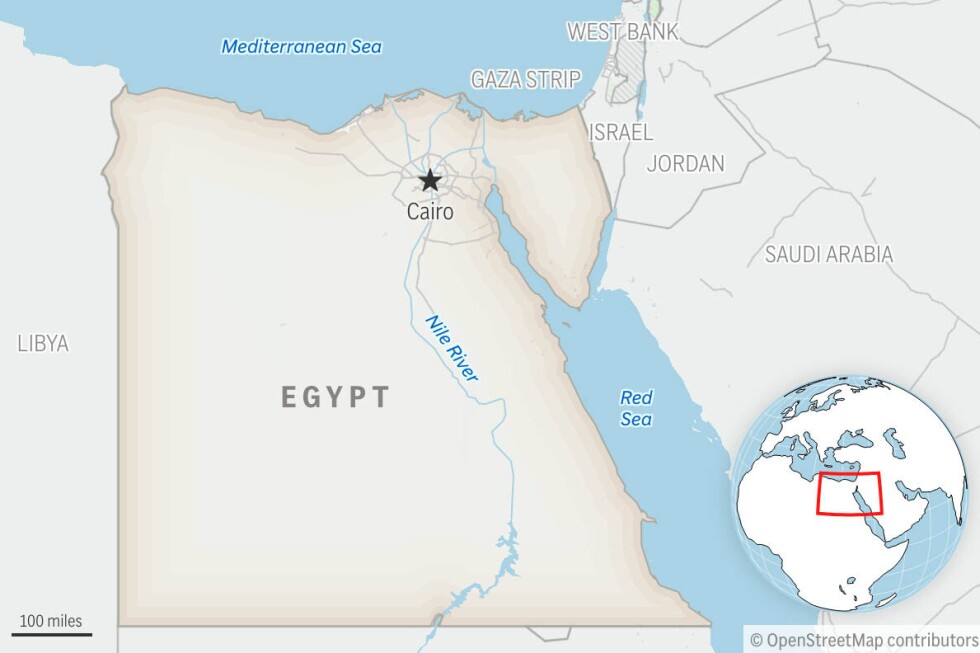
More recently, the Israel-Hamas conflict in Gaza and Houthi attacks on Red Sea shipping routes have further destabilized the region and directly impacted Egypt’s economy. The Suez Canal, which typically generates approximately $8 billion annually for Egypt, has seen significant revenue declines as shipping companies reroute vessels around Africa to avoid attacks, cutting off a vital source of foreign currency for the struggling economy.
Despite these challenges, IMF Managing Director Kristalina Georgieva recently expressed confidence in Egypt’s reform efforts, noting the country’s “strong commitment to achieving the economic reform program’s objectives” and implementing difficult but necessary measures. She indicated that a final review of Egypt’s economic reform program was nearing completion, potentially opening the door for additional financial support.
However, the impact of these economic reforms has fallen heavily on ordinary Egyptians. Rising costs for essentials, higher fuel prices, and increased subway fares have coincided with a significant devaluation of the Egyptian pound against foreign currencies. According to government figures, approximately 30% of Egypt’s 105 million people now live below the poverty line.
There are some positive indicators amid the challenges. Recent data from the Central Agency for Public Mobilization and Statistics showed the annual inflation rate at 10.1% in January, a slight improvement from December’s 10.3%. The government has also attempted to ease financial pressure on workers by raising the minimum monthly wage for both public and private sectors to 7,000 pounds ($138), up from 6,000 pounds ($118.58).
This Cabinet reshuffle, the first since July 2023, comes at a pivotal moment as Egypt attempts to navigate economic recovery while maintaining stability amid regional conflicts. The focus on economic portfolios suggests that addressing financial challenges remains the administration’s top priority as it works to stabilize the currency, control inflation, and create sustainable growth opportunities.
The success of this restructured Cabinet will likely depend on its ability to balance necessary economic reforms with the urgent social needs of Egypt’s growing population, all while managing the complex impacts of ongoing regional conflicts on its borders.
Fact Checker
Verify the accuracy of this article using The Disinformation Commission analysis and real-time sources.

9 Comments
It’s interesting to see two women ministers appointed, including the housing and culture portfolios. This could indicate a shift towards greater gender representation in the Egyptian government.
Increased female representation in leadership roles is an important step towards more inclusive policymaking. Curious to see how these new ministers perform and what impact they have.
The inclusion of two women ministers is a positive step, but it remains to be seen whether this signals a broader commitment to gender equality in the Egyptian government. Representation alone is not enough – real change requires substantive policy shifts.
While the economic portfolios saw significant changes, the foreign affairs and defense ministries remained untouched. This suggests Egypt is maintaining continuity in its security and diplomatic approach during these turbulent regional times.
Preserving stability in key foreign policy and defense positions is likely a priority for the government as it navigates regional tensions. Curious to see how this plays out.
Maintaining stability in the defense and foreign affairs ministries while overhauling economic portfolios suggests the government is taking a balanced approach to address both security and economic concerns. A prudent strategy during these turbulent times.
Egypt is facing significant economic headwinds, so the focus on appointing experienced financial and economic experts to key ministries makes sense. Curious to see if these changes translate to tangible improvements for the country.
This cabinet reshuffle in Egypt seems to be focused on addressing the country’s economic challenges. Appointing a World Bank economist as the new planning minister and a former financial regulator as the investment minister signals a push for economic reform and stability.
The cabinet reshuffle seems to be a pragmatic move by the Egyptian government to address economic challenges while keeping a steady hand on national security and diplomacy. It will be interesting to see how these changes unfold.