


Listen to the article
Egypt’s President Calls for UN Security Council Reform at Russia-Africa Conference
Egypt’s President Abdel-Fattah el-Sissi called for significant reforms to the United Nations Security Council during a Russia-Africa partnership conference in Cairo on Saturday, emphasizing the need for greater African representation in global decision-making bodies.
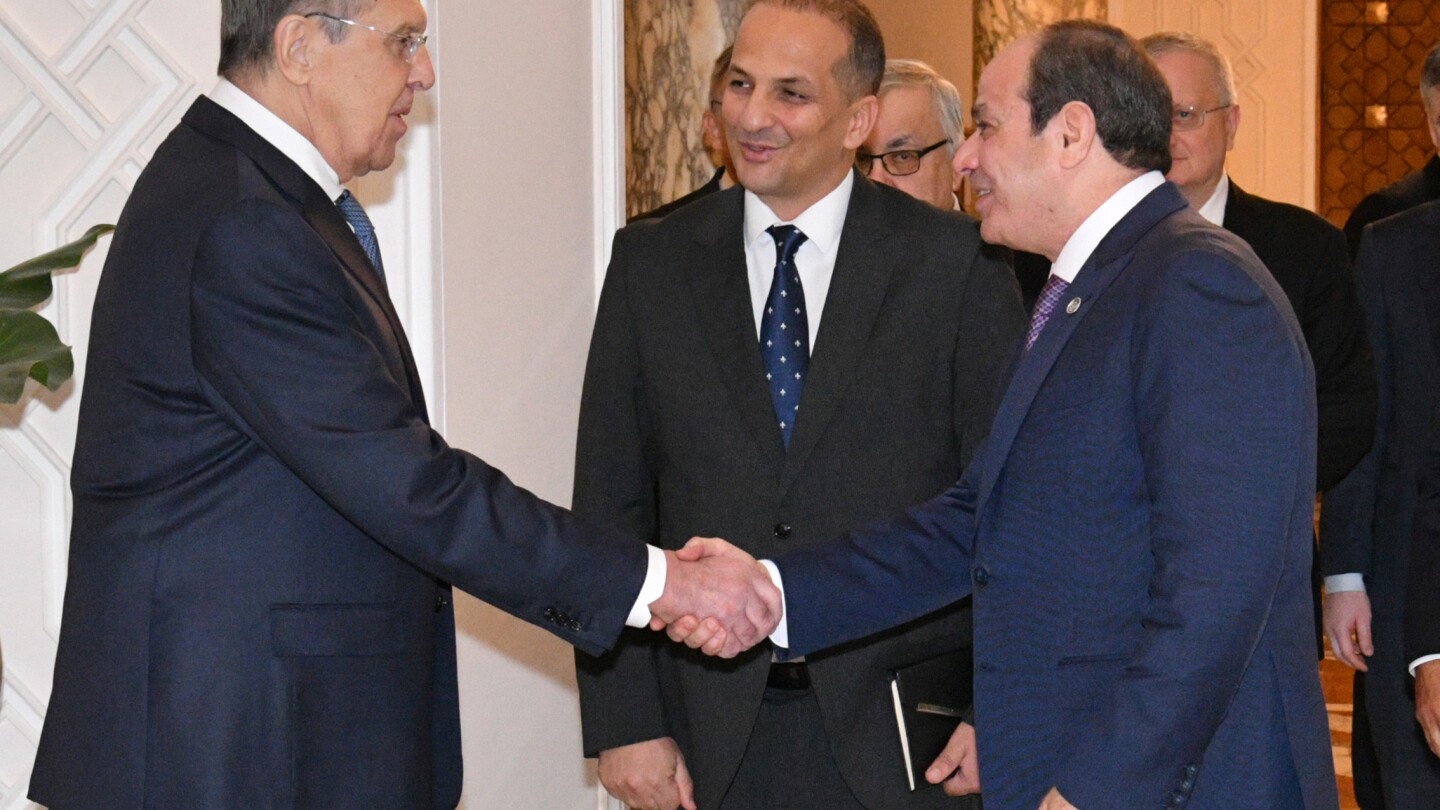
The high-profile meeting, attended by Russian Foreign Minister Sergey Lavrov and ministers from over 50 African countries, provided a platform for el-Sissi to advocate for what he described as a “more pluralistic” world order that better reflects Africa’s growing influence.
“The voice of Africa should be present and influential in making global decisions given the continent’s human, economic, political and demographic weight,” el-Sissi stated in remarks delivered by his foreign minister during the plenary session. He extended his call for reform to international financial institutions, arguing that they should ensure equitable representation for African nations.
The push for Security Council reform is not new. Since 2005, the African Union has consistently demanded at least two permanent seats with veto powers and five non-permanent seats for African nations. The continent’s leaders have maintained that such reforms would help address longstanding peace and security challenges across Africa, where numerous regions have experienced protracted conflicts.
Despite this unified position on the need for representation, African countries have struggled to establish a consensus on how potential permanent representatives would be selected, complicating their reform efforts.
Lavrov expressed support for Africa’s aspirations, telling reporters at a joint news conference with his Egyptian counterpart, “We have decided to continue coordinating our efforts in various multilateral forums, including with the aim of promoting reform of the U.N. Security Council, taking into account the legitimate interests of African states.”
The Security Council has remained unchanged in its core structure since its formation in 1945, consisting of five permanent members with veto power—the United States, Russia, China, Britain, and France—alongside ten non-permanent members elected for two-year terms without veto privileges.
The conference in Cairo represented more than a discussion forum, as Lavrov announced it had initiated talks to develop a comprehensive action plan for Russia-Africa cooperation from 2026 to 2029. This plan will be presented to heads of state at next year’s Russia-Africa summit.
“We remain a reliable partner for African states in strengthening their national sovereignty, both politically and in matters of security, as well as in other dimensions,” Lavrov said. “We’re committed to further unlocking the existing enormous potential of our practical cooperation.”
Russia’s engagement with Africa has intensified significantly in recent years, particularly following its 2022 invasion of Ukraine. The Russia-Africa forum gained considerable momentum after the 2023 summit in St. Petersburg, where President Vladimir Putin actively sought support from African leaders while attempting to counter the political and economic isolation imposed by Western nations.
Beyond diplomatic ties, Russia has steadily expanded its military presence across the continent, supplying advanced weaponry to conflict zones in sub-Saharan Africa. This military engagement previously operated largely through the Wagner Group, a private military company with close Kremlin ties, which has since been replaced by official Russian military units following the death of Wagner’s founder, Yevgeny Prigozhin.
Russia’s growing influence in Africa comes amid intensifying global competition for partnerships on the continent, as China, the European Union, the United States, and Turkey have all ramped up their diplomatic, economic, and security engagements. For many African nations, these partnerships offer opportunities to diversify their international relations and potentially leverage competition among global powers to secure better terms for development assistance, trade, and security cooperation.
The conference underscores the continuing evolution of the Africa-Russia relationship at a time when the global geopolitical landscape is being reshaped by increasing multipolarity and the effects of Russia’s ongoing war in Ukraine.
Fact Checker
Verify the accuracy of this article using The Disinformation Commission analysis and real-time sources.

8 Comments
Reforms to the UN Security Council and other global bodies to boost African representation seem overdue. Will be interesting to see if this Russia-Africa conference can generate any tangible progress on that front.
Interesting to see Egypt advocating for a more equitable global governance structure that better reflects Africa’s growing influence. The demand for permanent UNSC seats with veto power is certainly ambitious but could help rebalance power dynamics.
Africa’s voice needs to be heard more strongly in international decision-making. Reforms to the UNSC and global institutions are long overdue.
The demand for permanent African seats on the UN Security Council is ambitious, but potentially an important step towards rebalancing global power structures. Curious to see if this conference can build momentum for concrete reforms.
Egypt is right to call for a more pluralistic global order that better reflects Africa’s demographic and economic weight. However, achieving real UNSC reform will be an uphill battle given entrenched power dynamics.
Agreed, meaningful UNSC reform faces significant political obstacles. But the push for greater African representation in global decision-making is an important long-term goal.
This push for UN Security Council reform is not new, but it’s an important issue. Giving Africa a stronger institutional presence could help address global imbalances and power dynamics. Curious to see if any concrete changes come out of this conference.
Agreed. Meaningful UNSC reform is easier said than done, but Africa deserves a more prominent role. Will be interesting to monitor if this generates any momentum for change.