


Listen to the article
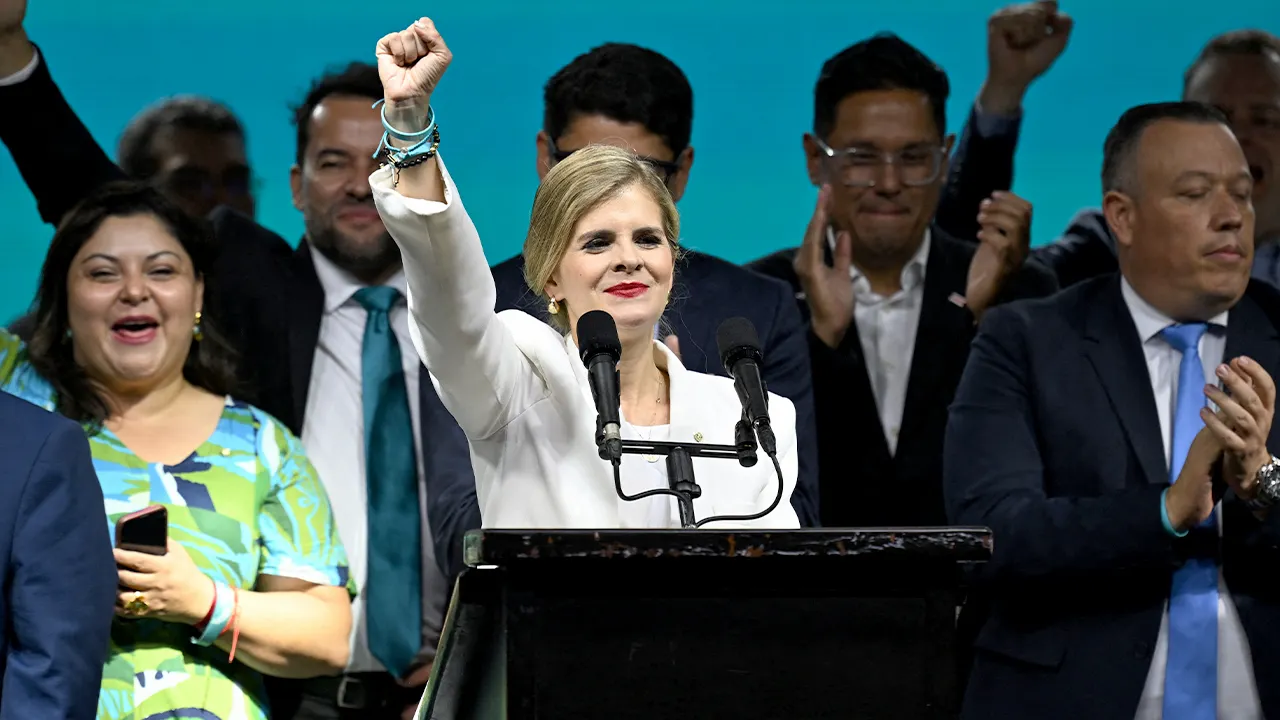
Laura Fernández Delgado claimed victory in Costa Rica’s presidential election Sunday after preliminary results showed her Sovereign People’s Party leading with more than 48% of the vote, positioning her to become only the second female president in the nation’s history.
According to official tallies from Costa Rica’s Supreme Electoral Tribunal, the National Liberation Party trailed in second place with approximately 33% support. Fernández, who addressed jubilant supporters at her victory celebration in San Jose, promised transformative leadership.
“Change will be deep and irreversible,” Fernández declared, signaling her intention to continue and expand upon the policies of outgoing President Rodrigo Chaves, who personally selected her as his successor but is constitutionally barred from seeking re-election.
At 39, Fernández will follow Laura Chinchilla, who served from 2010 to 2014, as Costa Rica’s second female head of state. Her victory represents the continuation of a rightward shift in Costa Rican politics that has gained momentum amid growing concerns about crime and security in the traditionally peaceful Central American democracy.
U.S. Secretary of State Marco Rubio quickly acknowledged her victory, emphasizing Washington’s commitment to working with the incoming administration on shared priorities. “Under her leadership, we are confident Costa Rica will continue to advance shared priorities to include combatting narco-trafficking, ending illegal immigration to the United States, promoting cybersecurity and secure telecommunications, and strengthening economic ties,” Rubio said in his statement.
Fernández has built her political profile on conservative Catholic values with a strong emphasis on family, helping her gain substantial support among Costa Rica’s growing evangelical population. These traditional values, combined with promises of enhanced security measures, formed the cornerstone of her successful campaign.
Political analysts note that Fernández’s rise reflects a broader trend across Latin America, where security concerns are reshaping electoral politics. She has openly expressed admiration for El Salvador’s President Nayib Bukele and his controversial but popular crackdown on gang violence. Fernández has signaled her willingness to implement similar tough-on-crime measures in Costa Rica’s most violent areas.
Among her campaign promises, Fernández has pledged to complete construction of a maximum-security prison modeled after El Salvador’s CECOT facility, which has become emblematic of Bukele’s hard-line approach to criminal gangs. This proposal comes as Costa Rica grapples with rising violence linked to transnational drug trafficking and organized crime – phenomena that have traditionally affected neighboring countries more severely than Costa Rica itself.
The election outcome demonstrates Costa Rica’s shifting political landscape, as the historically peaceful nation – which abolished its military in 1949 – increasingly confronts security challenges that threaten its reputation as Central America’s most stable democracy.
Costa Rica has long stood apart from its neighbors, boasting stronger democratic institutions, greater political stability, and lower crime rates. However, its position along drug trafficking routes between South American producers and North American consumers has made the country increasingly vulnerable to narcotics-related violence in recent years.
Fernández’s security-focused platform and conservative social values represent a response to these emerging challenges, while maintaining Costa Rica’s traditionally strong ties with the United States, its largest trading partner and a key ally in regional security matters.
The president-elect is scheduled to be sworn into office on May 8, when she will inherit leadership of a country facing not only security concerns but also significant economic challenges, including a substantial budget deficit and ongoing debates about tax reform and public spending.
As Fernández prepares for her inauguration, observers will be watching closely to see how she balances her tough security stance with Costa Rica’s democratic traditions and its international reputation for environmental protection and sustainable development.
Fact Checker
Verify the accuracy of this article using The Disinformation Commission analysis and real-time sources.

9 Comments
Interesting development in Costa Rica’s political landscape. A conservative populist president could have implications for the country’s mining and energy sectors. I’ll be curious to see how her policies unfold and impact commodity markets.
Yes, the shift to the right reflects growing concerns over security and crime in the region. Her plans to continue and expand on the outgoing president’s agenda will be worth watching closely.
At 39, this new president represents a generational shift in Costa Rican leadership. Her victory as the second female head of state is also historically significant. I wonder how her gender and youth will shape her policy priorities.
Indeed, it will be interesting to see if and how she leverages her unique profile to drive change. Her promises of ‘deep and irreversible’ transformation suggest she intends to be a transformative figure.
Costa Rica has long been seen as a relatively stable democracy in Central America. This election result indicates growing public appetite for a more assertive, conservative leadership model. It will be fascinating to see how this plays out.
Absolutely. The implications for the mining and commodities sectors are worth watching closely. A shift in policy priorities could impact investment and operations in those industries.
The election of a populist conservative president in traditionally left-leaning Costa Rica is a significant political shift. It will be interesting to see how this affects the country’s approach to natural resource development and foreign investment.
The rightward shift in Costa Rican politics mirrors trends seen in other parts of Latin America. Increased focus on security and law and order often goes hand-in-hand with a more business-friendly, pro-extraction agenda. Commodity investors will be keeping a close eye.
That’s a good point. The new president’s ties to the outgoing administration suggest policy continuity, which could provide some stability for mining and energy companies operating in the country.