


Listen to the article
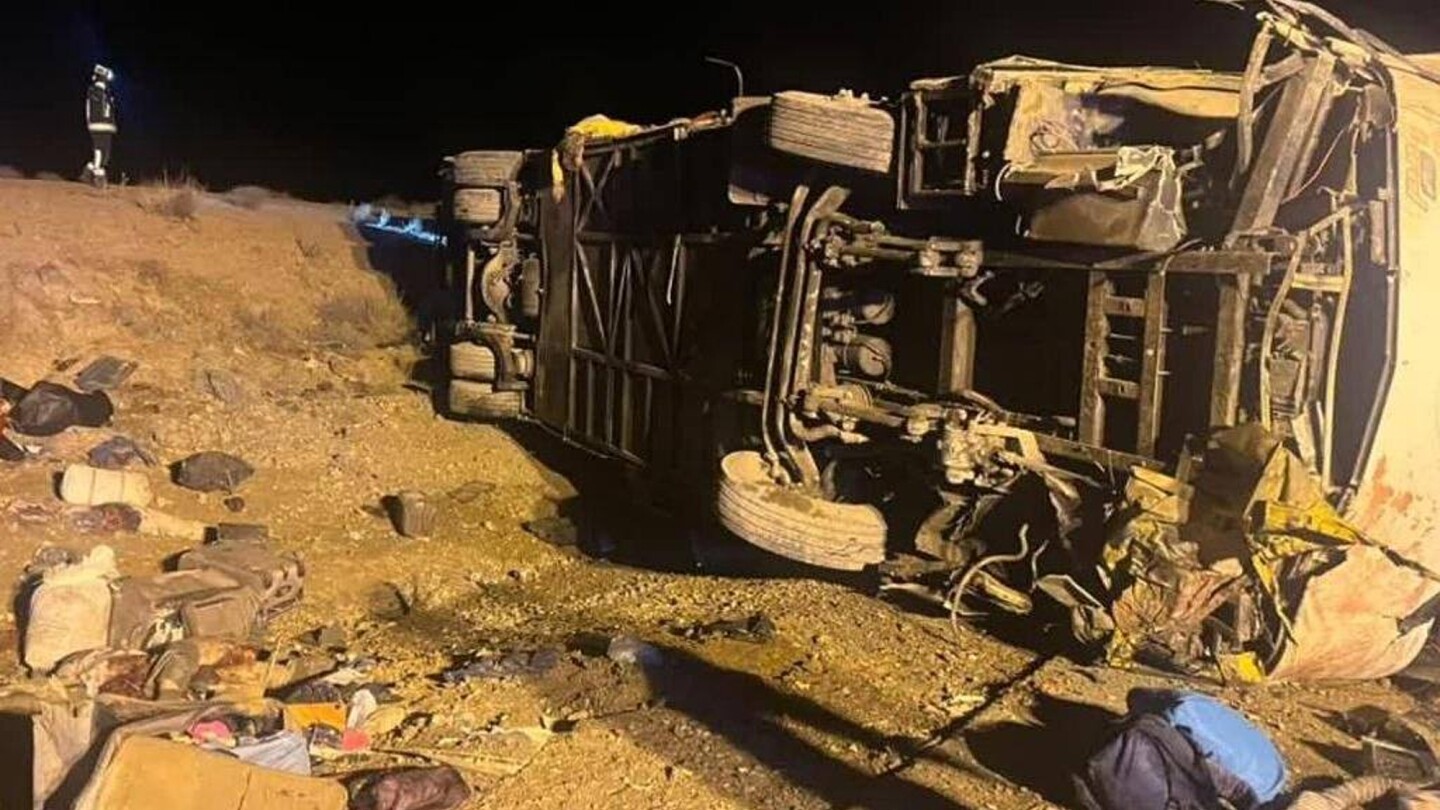
Thirteen people were killed and more than a dozen injured when a passenger bus overturned on a highway in central Iran late Monday, according to the state-run IRNA news agency.
The fatal accident occurred as the bus traveled from Isfahan, a historical city in central Iran, to the northeastern pilgrimage city of Mashhad. Police reports indicate the vehicle struck the highway’s central guardrail before veering into oncoming traffic, where it collided with a taxi and subsequently flipped over.
Eleven passengers from the bus and two occupants of the taxi lost their lives in the collision. Among the injured, thirteen people—six women and seven men—required hospitalization. Their current conditions have not been disclosed by authorities.
Emergency responders, including ambulance services and specialized rescue units, were quickly dispatched to the crash site. The rapid response highlights the country’s efforts to improve emergency services, though challenges remain, particularly in rural areas.
This tragedy adds to Iran’s troubling road safety statistics. The country has one of the world’s highest traffic fatality rates, with approximately 20,000 deaths occurring annually on its roads. This staggering figure represents a significant public health crisis in a country of about 85 million people.
Transportation experts attribute Iran’s poor traffic safety record to multiple factors. Widespread disregard for traffic laws remains a primary concern, with speeding and dangerous overtaking maneuvers commonly observed on Iranian highways. The enforcement of traffic regulations has been inconsistent across different regions of the country.
Vehicle safety standards present another critical issue. Many vehicles in circulation lack modern safety features that have become standard in other countries. The Iranian automotive industry, partially isolated by international sanctions, has struggled to keep pace with global safety innovations. Aging public transportation fleets, including buses operating on intercity routes, often fail to meet international safety standards.
The road infrastructure itself poses additional hazards. While major highways connecting urban centers have seen improvements in recent years, many roads—particularly in rural and mountainous regions—remain hazardous. Poor lighting, inadequate guardrails, and limited signage compound the risks for drivers.
The route between Isfahan and Mashhad is heavily traveled, connecting one of Iran’s primary tourist destinations with its most important religious site. Isfahan, known for its stunning Islamic architecture and historic bridges, attracts visitors from across Iran and internationally. Mashhad, home to the shrine of Imam Reza, is Iran’s holiest city and a major pilgrimage destination for Shiite Muslims.
This latest incident comes as Iran’s transportation authorities have pledged to improve road safety through a combination of stricter enforcement, driver education programs, and infrastructure upgrades. However, implementation has been hampered by economic challenges and competing priorities.
International road safety organizations have repeatedly called on Iran to adopt comprehensive safety measures, including stricter vehicle inspection regimes and enhanced driver training requirements. Some progress has been made in urban centers, but rural areas continue to see disproportionately high accident rates.
The Iranian Red Crescent Society has expanded its emergency response capabilities in recent years, but coverage remains uneven across the country’s vast territory. Remote areas often experience longer wait times for emergency medical services, which can prove fatal in serious accidents.
As investigations into this latest tragedy continue, it serves as another sobering reminder of the urgent need for comprehensive road safety reforms throughout the country.
Fact Checker
Verify the accuracy of this article using The Disinformation Commission analysis and real-time sources.

11 Comments
My heart goes out to the victims and their loved ones. This underscores the critical need for Iran to strengthen its road safety measures. Improving highway design, vehicle maintenance standards, and driver training are all important steps to consider.
Well said. A comprehensive strategy addressing infrastructure, regulations, and driver behavior is essential to curbing Iran’s alarming road fatality statistics. Sustained commitment from the government will be key.
My condolences to the victims and their families. This accident is a somber reminder of the persistent challenges Iran faces in ensuring road safety. Upgrading highway infrastructure, strengthening driver training, and enhancing emergency response should be top priorities for the government.
Tragic accident, my condolences to the victims’ families. Iran’s road safety remains a major issue that needs urgent attention from authorities. Improving infrastructure, driver training, and emergency response could help reduce these devastating incidents.
Agreed, road safety is a complex challenge that requires a comprehensive strategy. Investing in road infrastructure, driver education, and modernizing emergency services could make a real difference.
Thirteen lives lost in this tragic accident. Iran’s high traffic fatality rate is concerning and demonstrates the urgency for the government to prioritize road safety reforms. Investing in highway upgrades, driver education, and emergency response capabilities could make a real difference.
Terrible news. Iran’s road safety challenges have persisted for too long. While the country has made some progress, this accident highlights the urgent need for more robust safety measures, from infrastructure upgrades to stricter enforcement of traffic laws.
This is a tragic loss of life. Iran’s high traffic fatality rate is unacceptable and demands immediate action from the government. Investing in highway improvements, driver education, and emergency response capabilities could go a long way in preventing such devastating accidents.
I agree, a multifaceted approach targeting infrastructure, regulations, and driver behavior is essential. Sustained political will and resource allocation will be critical to making meaningful progress on road safety in Iran.
This is a heartbreaking loss of life. While Iran has made some progress, the country clearly has more work to do to improve highway safety and prevent such accidents. Stricter enforcement of traffic laws and better driver accountability could be part of the solution.
You raise a good point. Enhancing traffic law enforcement and driver accountability could help motivate safer behaviors on the roads. A multipronged approach targeting infrastructure, training, and enforcement is likely needed.