


Listen to the article
A staggering 280 political parties have registered to participate in Haiti’s upcoming general election, the first in a decade, as Thursday’s registration deadline passed. While not all will ultimately qualify for the ballot, the massive turnout signals a population desperate for leadership amid the country’s ongoing crises.
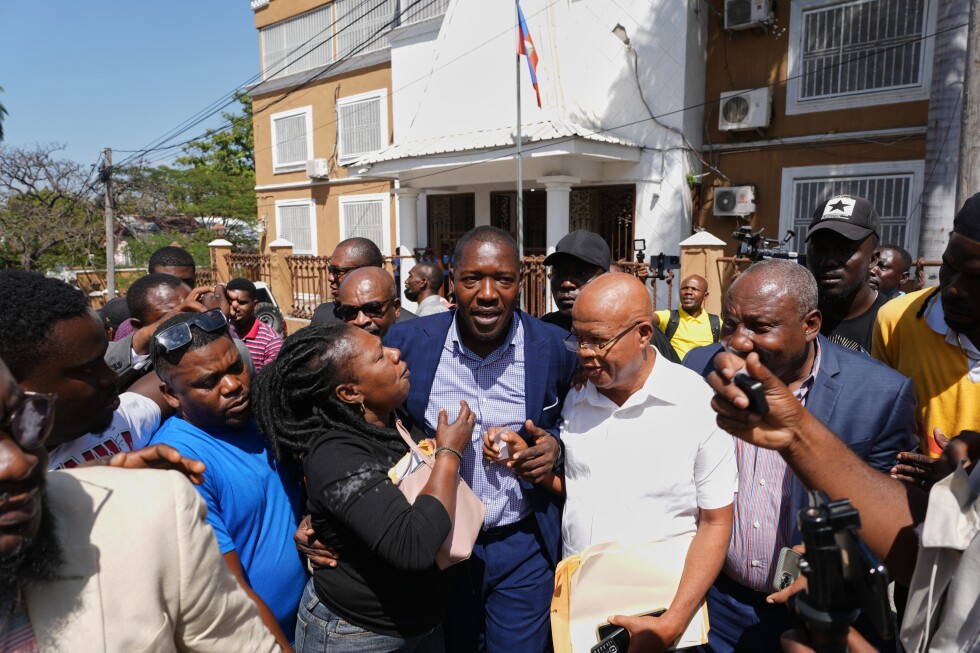
The scene at the headquarters of Haiti’s Provisional Electoral Council was one of cautious celebration as political hopefuls arrived to register their parties. Members of CAHDOA, the Collective of Haitian Actors for Development and Alternative Organization, approached the building accompanied by a marching band. The one-year-old party’s supporters blew vuvuzelas while clapping and chanting, “We are on board!”
“Today the country needs a new leader to allow the population to breathe,” said Abel Decollines, a CAHDOA party member who expressed hope that the general population would be able to participate in the election despite security concerns.
Among the more prominent registrants was the EDE party (Committed to Development), led by Claude Joseph, who served as prime minister during the July 2021 assassination of President Jovenel Moïse. Joseph and his supporters, dressed in their party’s green and white colors, marched solemnly to register. On social media platform X, Joseph stated that his party advocates for an end to “political hegemony in Haiti characterized by the failure of eternal political transitions.”
Haiti currently operates under the leadership of Prime Minister Alix Didier Fils-Aimé, who stands as the country’s lone ruler after being appointed by a transitional presidential council that stepped down in early February as mandated by law.
The electoral timeline remains uncertain. Government officials initially projected a late August election with a possible runoff in early December, but the prime minister has since revised this forecast, stating only that a first round would be held by year’s end. Many Haitians and international observers doubt even this timeline given the country’s security situation.
“The people in charge need to provide security so campaigning can take place and people can choose who will govern them,” Decollines noted, highlighting the central challenge to democratic processes in the country.
Haiti’s security crisis cannot be overstated. According to United Nations statistics, more than 5,900 people were reported killed across Haiti last year, with over 2,700 injured. Armed gangs now control an estimated 90% of Port-au-Prince, the capital city, forcing a record 1.4 million people—more than 10% of Haiti’s population of nearly 12 million—to flee their homes.
Despite these dire circumstances, many Haitians remain committed to the democratic process. “It’s a fact that the country is insecure, no one can deny that, but no matter what, there must be an election,” said Dalouce Désir, a member of the EDE party, which was founded four years ago. “We believe in the election, and we believe in democracy.”
The Provisional Electoral Council has announced it will publish a final list of authorized political parties by March 26, though it has not yet clarified the criteria for qualification. This vetting process will likely significantly reduce the number of parties that ultimately appear on the ballot.
Haiti’s upcoming election represents a critical juncture for a nation that has faced compounding crises of political instability, natural disasters, and escalating violence in recent years. The international community, particularly through the United Nations and a Kenya-led multinational security mission, has attempted to support security efforts, but progress has been limited.
For ordinary Haitians, the election offers a glimmer of hope amid devastating circumstances—a chance, however uncertain, to reclaim democratic governance and begin addressing the profound challenges facing their nation.
Fact Checker
Verify the accuracy of this article using The Disinformation Commission analysis and real-time sources.

8 Comments
The registration of 280 political parties signals a population eager for change and new leadership. However, the logistics of managing such a crowded field will be a major undertaking for Haiti’s electoral authorities.
Haiti’s upcoming election represents an important opportunity, but also significant challenges. I hope the country can navigate this transition in a way that empowers the Haitian people and sets the stage for long-term stability and development.
The diverse range of parties registering suggests Haiti’s voters have many options to choose from. However, concerns over security and past electoral irregularities will need to be addressed to ensure a credible and transparent process.
This election presents an opportunity for Haiti to chart a new course, but security concerns remain a significant challenge. I hope the general population is able to participate freely and safely in choosing their next leaders.
Agreed. Ensuring a secure and inclusive electoral process will be crucial for Haiti’s path forward.
The political landscape in Haiti is certainly dynamic, with a record number of parties registering for the upcoming election. It will be interesting to see how this level of participation impacts the electoral process and the country’s future leadership.
It’s encouraging to see the enthusiasm for political participation in Haiti, but the country’s ongoing crises will require strong, effective leadership to address. I hope this election can be a step towards stability and progress.
Absolutely. Rebuilding trust in government and institutions will be key for whichever party or coalition emerges victorious.