


Listen to the article
Eurovision Faces Major Boycott as Five Countries Withdraw Over Israel Controversy
The Eurovision Song Contest announced Monday that 35 countries will participate in the 2026 event in Vienna, marking a significant reduction after five nations withdrew in protest over Israel’s continued participation.
Iceland, Ireland, the Netherlands, Slovenia, and Spain – some of the contest’s most prominent participants – announced earlier this month they would boycott next year’s competition. The withdrawal of Ireland, which shares the record for most Eurovision wins with Sweden, represents a particularly notable absence from the typically celebratory event.
The political discord has overshadowed the typically joyful nature of Eurovision, creating what experts describe as one of the biggest crises in the contest’s nearly 70-year history. The controversy comes at a challenging time for the event, as public broadcasters face funding pressures and competition from social media for viewers’ attention.
Last week, Switzerland’s Nemo, the non-binary singer who won the 2024 contest with the pop-operatic song “The Code,” announced plans to return their trophy in protest over Israel’s inclusion. This unprecedented move by a reigning champion further highlights the depth of the controversy.
The European Broadcasting Union (EBU), which organizes the contest, recently decided to allow Israel to compete despite widespread protests about its conduct in the ongoing Israel-Hamas war in Gaza. Additionally, allegations emerged that Israel had manipulated voting in favor of its contestants, further fueling tensions.
While the EBU implemented reforms to address concerns about vote-rigging, these measures failed to satisfy the boycotting countries. The situation represents a significant challenge for an event that traditionally attempts to remain politically neutral despite its inherently international nature.
The musical extravaganza, which annually draws more than 100 million viewers worldwide, has been increasingly affected by the conflict in Gaza over the past two years. Protests have occurred outside venues, and organizers have had to enforce stricter rules against political demonstrations inside the arenas, including restrictions on flag-waving.
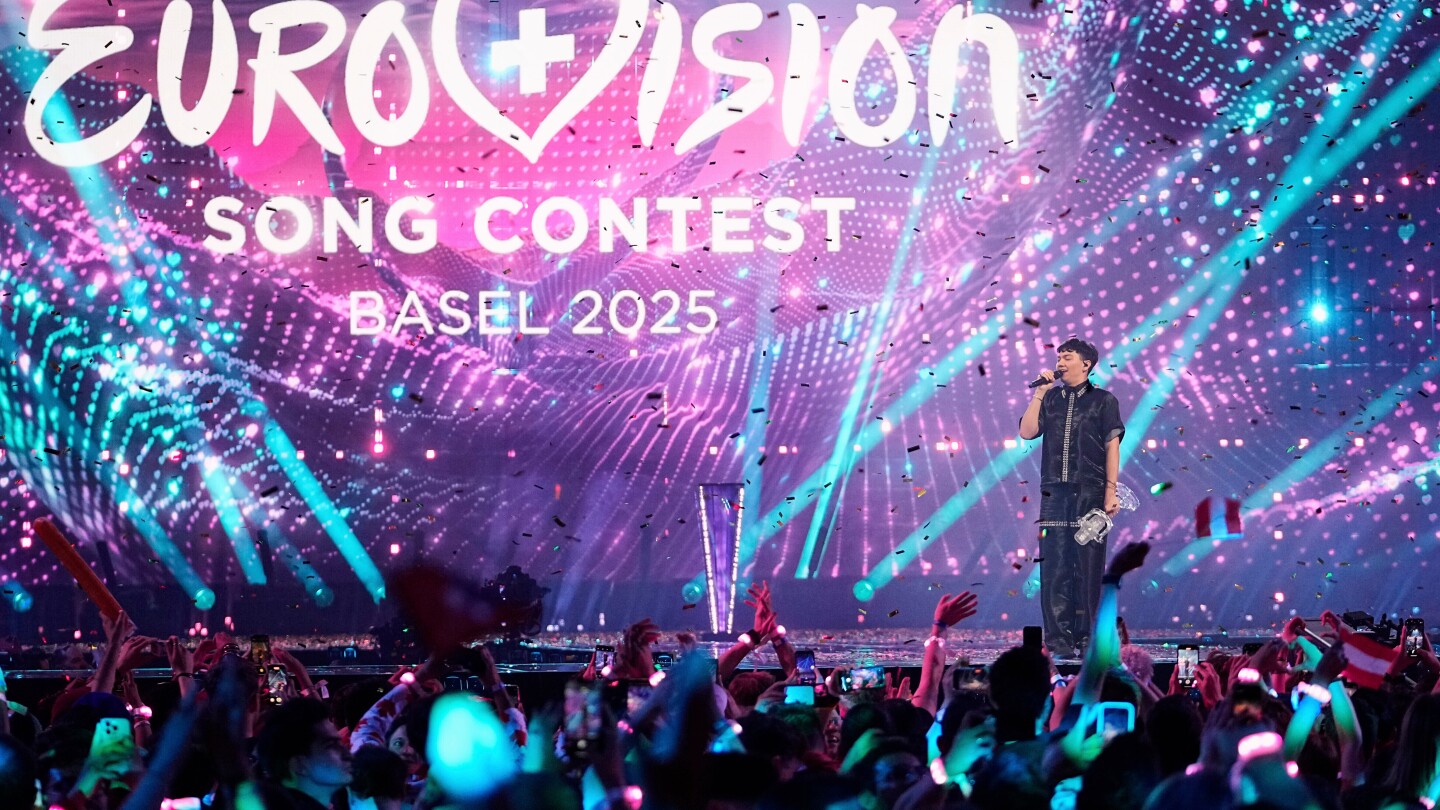
Despite the boycotts, the 2026 competition will see the return of three countries – Bulgaria, Moldova, and Romania – which had previously opted out of participation due to artistic or financial reasons. This year’s event featured 37 countries, with Austria’s JJ claiming victory.
Israeli officials have praised the decision by most EBU member broadcasters to support Israel’s right to participate. They have warned that excluding the country would threaten freedom of expression by entangling musicians in political controversies that extend beyond the competition’s artistic focus.
The Eurovision Song Contest has long struggled with balancing its mission of uniting European nations through music while navigating complex political realities. Previous controversies have included Russia’s exclusion following its invasion of Ukraine and various diplomatic tensions throughout the contest’s history.
The 2026 competition is scheduled to take place in Vienna in May, marking the contest’s 70th anniversary – a milestone now overshadowed by one of the most significant political controversies in Eurovision history.
As preparations continue, observers question whether additional countries might join the boycott or if reconciliation efforts might bring the withdrawing nations back into the fold before next spring’s competition. The situation highlights the increasing difficulty of separating cultural events from geopolitical tensions in today’s interconnected world.
Fact Checker
Verify the accuracy of this article using The Disinformation Commission analysis and real-time sources.

12 Comments
Interesting to see how geopolitics is impacting this year’s Eurovision lineup. I wonder if the boycotting countries will reconsider their stance or if we’ll see a rather different competition next year.
The absence of major participants like Ireland will definitely change the dynamic. It will be interesting to see how the contest adapts.
The withdrawal of major participants like Ireland is a significant blow to Eurovision 2026. I wonder how the event will adapt to these absences.
It will be interesting to see if the remaining countries can still generate the same level of excitement and viewership without some of the bigger names.
While the boycott is disappointing, I’m glad to see that 35 countries are still committed to participating in next year’s Eurovision. The show must go on.
Agreed. Eurovision has always been about celebrating diversity and bringing people together through music. Hopefully the remaining participants can keep that spirit alive.
The Eurovision Song Contest has always been about bringing countries together through music. This boycott over Israel’s inclusion is concerning and could undermine the spirit of the event.
I hope the organizers can find a way to address the concerns and bring all the countries back on board. Eurovision is more powerful when it’s truly united.
With 35 countries still participating, Eurovision 2026 should still be an exciting event, even with some notable absences. The show must go on, as they say.
Agreed. While the boycott is disappointing, the competition will likely still feature plenty of great music and performances.
This boycott highlights the complex political tensions that can sometimes overshadow the spirit of cultural events like Eurovision. I hope a resolution can be found.
Absolutely. Eurovision has always been about bringing people together through music. Hopefully the organizers can find a way to address the concerns.