


Listen to the article
In the aftermath of the devastating earthquake that recently struck Turkey, a concerning trend has emerged: the weaponization of social media. As the nation grapples with recovery efforts, digital platforms have become battlegrounds where disinformation spreads like wildfire, according to a leading Turkish academic.
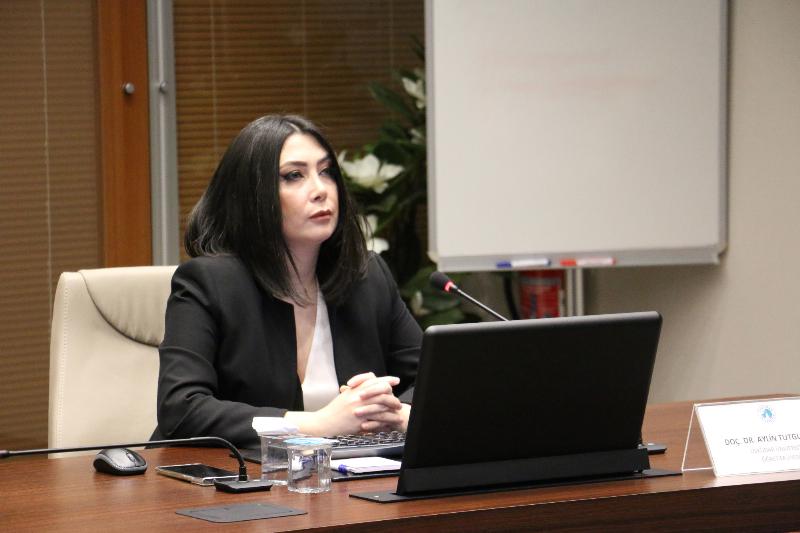
“Tweets are fired instead of bullets,” warns Associate Professor Dr. Aylin Tutgun Ünal from Üsküdar University’s Faculty of Communication. Her stark assessment comes amid growing concern over how social media platforms are being exploited during crisis situations to spread false information and launch coordinated attacks against individuals and institutions.
Dr. Tutgun Ünal describes how social networks have evolved to surround users “like a mafia” with disinformation and fake news, particularly during periods of national crisis. “Mafias, gangs, and bullets that exist in the real world are now surrounding us in digital media. We are seeing disinformation violence and the wounds it opens, moment by moment,” she explains.
The academic highlights the emergence of what she terms “disinformation mafias” on social media platforms, where coordinated campaigns attempt to discredit or “cancel” targeted individuals or institutions. This digital lynching culture, she argues, bears striking similarities to traditional organized crime tactics but operates in virtual spaces.
“When a person is pushed to Trend Topic with collective hashtags for a show of violence, they can be canceled from society and their social status,” Dr. Tutgun Ünal notes. “The lynching culture, also known as cancel culture, is no different from the mafia.”
The problem has been particularly acute following Turkey’s recent earthquake, where misinformation has flourished amid the chaos and uncertainty. Dr. Tutgun Ünal identifies “troll accounts” as key vectors for spreading harmful content, functioning as a de facto “social media mafia” that operates with perceived impunity.
“During periods when the country’s agenda is busy, especially during crises, disinformation and fake news shares increase,” she says. “Individuals or institutions who want to gain attention, harbor malicious intent, or try to opportunize, aim to gain advantage or harm their targets by spreading disinformation extensively.”
The academic defines disinformation as the intentional spread of false information designed to cause harm. This content deliberately misleads, manipulates, and often removes crucial context. The problem is exacerbated by several factors, including many users’ inability to distinguish between accurate and false information, lack of fact-checking habits, and emotional responses that override critical thinking.
According to Dr. Tutgun Ünal, one of the most dangerous aspects of digital disinformation is the creation of perceived intent, where motivations are assigned to posts regardless of their accuracy. “A purpose is assigned to the post, and this purpose gradually materializes,” she explains. “The fuse is lit by spreading a perception of intent.”
These attacks utilize specific social media features as weapons. Trending topics, hashtag campaigns, and coordinated direct messaging are all employed to maximize impact. Dr. Tutgun Ünal notes that some operations are highly organized, involving paid participants and even advertising agencies that research emotional triggers to maximize engagement.
As solutions, the academic emphasizes the critical importance of individual digital media literacy. “The most effective solution is to ensure that a person is a conscious user, and the person must do this themselves with self-control,” she advises. She also points to legal frameworks as a secondary safeguard, noting that social media regulations similar to those in European countries might help address the issue during crisis periods.
Dr. Tutgun Ünal recommends following Turkey’s “Verification Kit for Crisis Situations,” developed by the Directorate of Communications’ Center for Combating Disinformation. This includes approaching unknown sources with skepticism, questioning information origins, following official sources, verifying claims through multiple reliable channels, and maintaining trusted reference sources.
“Assassinations carried out in the virtual world cause serious harm to people and institutions,” Dr. Tutgun Ünal concludes, underscoring that digital attacks, though virtual, create real-world damage with lasting consequences.
Fact Checker
Verify the accuracy of this article using The Disinformation Commission analysis and real-time sources.

7 Comments
The impact of social media disinformation on crisis response is deeply concerning. Policymakers must work with platforms to establish clear guidelines and enforcement mechanisms to curb these harmful activities. Public-private collaboration will be essential.
The comparison to “digital media mafias” is apt. Disinformation can be as damaging as physical violence, eroding public discourse and fueling polarization. Platforms need robust policies to swiftly identify and remove coordinated manipulation efforts.
I agree. Disinformation during crises can have severe consequences, hampering recovery efforts and sowing confusion. Platforms must be proactive in detecting and countering these coordinated influence operations.
This is a concerning trend. Social media platforms must do more to combat coordinated disinformation campaigns, especially during crises when the public needs accurate, reliable information. Fact-checking and transparency are crucial to maintaining trust.
This is a worrying development that threatens public trust and the integrity of important information during crises. Platforms, governments, and civil society need to come together to find solutions that protect online discourse and safeguard democratic norms.
This underscores the need for digital literacy education. The public must learn to critically evaluate online content and spot the hallmarks of disinformation campaigns. Responsible social media use is key to building societal resilience.
Absolutely. Empowering users to identify manipulative tactics is crucial. Platforms should also invest in AI-driven systems to detect and remove coordinated disinformation at scale.