


Listen to the article
The U.S. government has imposed travel bans on several European tech regulators and anti-disinformation advocates, sparking a diplomatic row with the European Union and the UK. The move, announced this week, targets individuals the Trump administration claims are part of a “global censorship-industrial complex” aimed at restricting American tech firms.
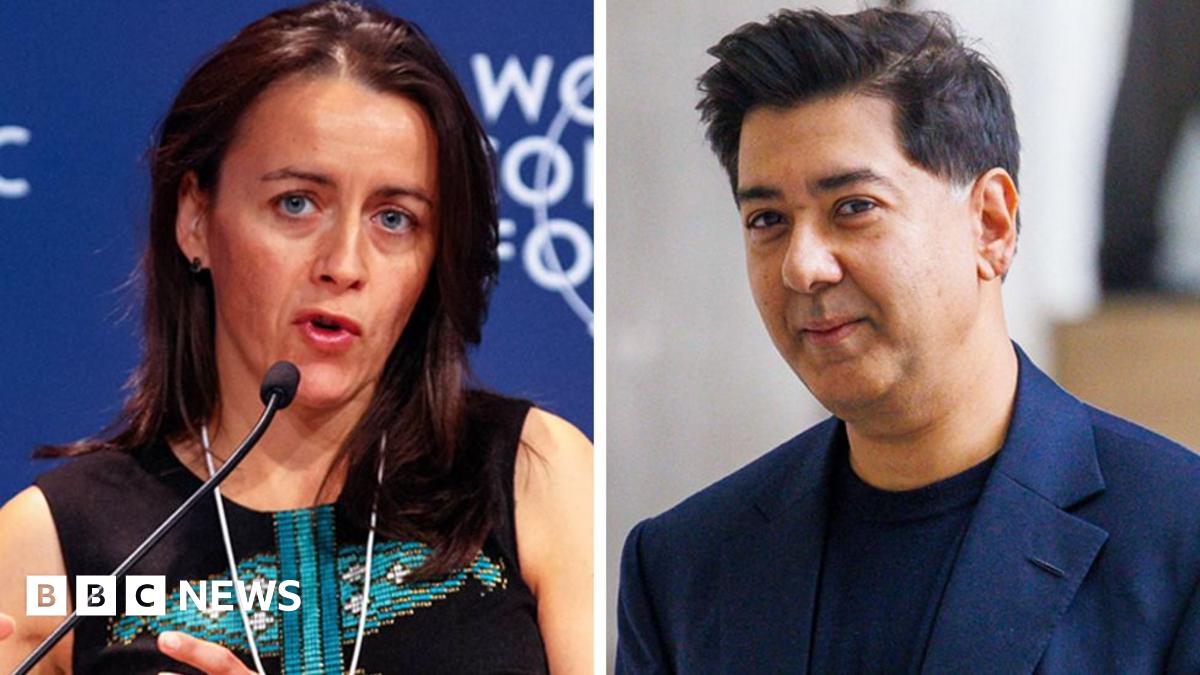
Among those affected are Imran Ahmed, CEO of the Center for Countering Digital Hate (CCDH), Clare Melford of the Global Disinformation Index (GDI), and former EU Commissioner Thierry Breton, who oversaw the implementation of the EU’s Digital Services Act (DSA).
Secretary of State Marco Rubio defended the sanctions, stating: “President Trump has been clear that his America First foreign policy rejects violations of American sovereignty. Extraterritorial overreach by foreign censors targeting American speech is no exception.”
The State Department specifically labeled Breton as the “mastermind” behind the DSA, which requires social media platforms to moderate harmful content. U.S. conservatives have criticized the legislation, arguing it unfairly targets right-wing opinions—a claim Brussels has consistently denied.
Breton, who has previously clashed with X owner Elon Musk over compliance with EU regulations, responded to the visa ban on X, writing: “To our American friends: Censorship isn’t where you think it is.” The European Commission recently fined X €120 million (£105 million) over its verification system, the first penalty issued under the DSA.
European leaders have reacted strongly to the U.S. sanctions. French President Emmanuel Macron characterized the travel ban as “intimidation and coercion aimed at undermining European digital sovereignty,” while EU foreign policy chief Kaja Kallas called it “unacceptable and an attempt to challenge our sovereignty.”
The UK government offered a more measured response, stating: “While every country has the right to set its own visa rules, we support the laws and institutions which are working to keep the internet free from the most harmful content.”
Ahmed, whose organization advocates for government action against online hate speech and disinformation, has connections to senior UK Labour figures. He previously worked as an aide to former Labour minister Hilary Benn, and current Prime Minister Keir Starmer’s chief of staff, Morgan McSweeney, has served as a director of the CCDH.
The State Department described Ahmed as a “collaborator” for the CCDH’s alleged past cooperation with the Biden administration. The BBC has contacted the CCDH for comment.
Melford’s organization, the GDI, a non-profit monitoring disinformation since 2018, was accused by U.S. Undersecretary of State Sarah B. Rogers of using “U.S. taxpayer money to exhort censorship and blacklisting of American speech and press.”
A GDI spokesperson condemned the sanctions as “an authoritarian attack on free speech and an egregious act of government censorship,” adding: “The Trump Administration is, once again, using the full weight of the federal government to intimidate, censor, and silence voices they disagree with. Their actions today are immoral, unlawful, and un-American.”
German anti-hate speech advocates Anna-Lena von Hodenberg and Josephine Ballon of HateAid were also included in the travel ban. The organization, which the State Department claims helped enforce the DSA, called the sanctions “an act of repression by a government that is increasingly disregarding the rule of law.”
The two CEOs stated: “We will not be intimidated by a government that uses accusations of censorship to silence those who stand up for human rights and freedom of expression.”
This diplomatic confrontation highlights growing tensions between U.S. tech interests and European regulatory frameworks. The EU’s Digital Services Act, which came into full effect earlier this year, represents the most comprehensive attempt to regulate online content globally, requiring platforms to assess and mitigate risks related to illegal content, disinformation, and other harmful practices.
The travel ban appears to signal the Trump administration’s intent to push back against foreign regulation of U.S. tech companies, potentially setting the stage for broader conflicts over digital sovereignty and content moderation in the international arena.
Fact Checker
Verify the accuracy of this article using The Disinformation Commission analysis and real-time sources.

12 Comments
Interesting to see the US taking a hard stance against foreign interference in domestic tech regulation. While content moderation is a complex issue, restricting key stakeholders from engaging seems like a heavy-handed approach that could escalate tensions.
You raise a fair point. Diplomacy and open dialogue would likely be more productive than travel bans, even if the US has concerns about overreach. Curious to see how this plays out between the parties involved.
From a factual standpoint, the US is clearly asserting its sovereignty in the face of what it perceives as extraterritorial overreach by foreign regulators. However, the decision to deny visas to key European officials seems more politically charged than substantively justified.
I agree. The US may have legitimate grievances, but this looks more like a political tit-for-tat than a measured response. Constructive dialogue and compromise would serve everyone’s interests better than escalating tensions through unilateral actions.
As someone interested in the intersection of technology, policy, and geopolitics, I’m quite curious to see how this situation evolves. The US is clearly taking a hardline stance, but the implications for international cooperation on digital governance remain to be seen.
Absolutely. This is a complex issue with significant ramifications for the global tech landscape. I hope cooler heads can prevail and the parties involved can find a way to engage productively, rather than resorting to punitive measures that could further inflame tensions.
While I can appreciate the US wanting to defend its sovereignty, denying visas to European officials involved in digital policy strikes me as an overreaction. Constructive dialogue and negotiation would be a more prudent approach than unilateral sanctions, in my opinion.
Well said. This move by the US seems more driven by political posturing than a genuine effort to address the underlying issues. I hope calmer heads can prevail, and the parties can find a way to work together constructively on these critical matters of digital governance.
I’m skeptical of the US government’s rationale here. Denying visas to EU and UK officials involved in digital policy seems more like political retaliation than a principled stand against censorship. The tech landscape is complex, and reasonable people can disagree on the right regulatory approach.
Well said. This move feels more like grandstanding than a genuine attempt to address valid concerns about content moderation. Diplomatic engagement would be a better path forward than unilateral sanctions, in my view.
As someone who follows these technology and policy issues closely, I have to say I’m a bit puzzled by the US government’s decision here. While concerns about foreign interference in domestic affairs are understandable, denying visas to key European regulators feels more like a heavy-handed tactic than a measured response.
I agree. This seems like an overly aggressive move that could backfire and further strain relations between the US and its European allies. Constructive dialogue and negotiation would be a far more productive path forward, in my view.