


Listen to the article
US Blocks Entry for European Digital Rights Activists in Free Speech Dispute
Five prominent European digital rights campaigners have been denied entry to the United States, as the Trump administration accuses them of attempting to “coerce” American tech platforms into suppressing free speech. The move has sparked a diplomatic row with European leaders condemning what they view as an attack on regulatory sovereignty.
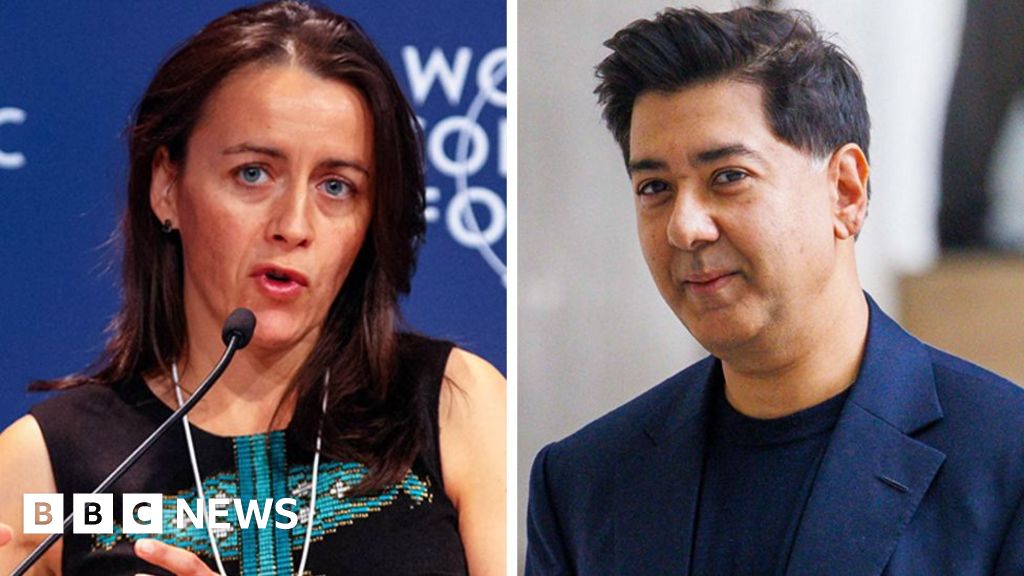
Among those barred are two British social media campaigners: Imran Ahmed, who heads the Centre for Countering Digital Hate (CCDH), and Clare Melford, CEO of the Global Disinformation Index (GDI). The US State Department labeled them “radical activists” in its announcement of the visa restrictions.
Secretary of State Marco Rubio framed the decision as a defense of American sovereignty, stating that the individuals are part of a “global censorship-industrial complex” working against US interests. “President Trump has been clear that his America First foreign policy rejects violations of American sovereignty. Extraterritorial overreach by foreign censors targeting American speech is no exception,” Rubio said.
Ahmed, who previously served as an aide to Labour minister Hilary Benn and maintains connections to senior figures in the current UK government, was characterized as a “collaborator” for the CCDH’s alleged work with the Biden administration. Sir Keir Starmer’s chief of staff Morgan McSweeney has previously served as a director of Ahmed’s organization.
Melford, who founded the GDI in 2018 to monitor disinformation, faces accusations from US Undersecretary of State Sarah B Rogers of using “US taxpayer money to exhort censorship and blacklisting of American speech and press.”
A GDI spokesperson responded forcefully to the BBC, calling the sanctions “an authoritarian attack on free speech and an egregious act of government censorship.” The organization further stated that “the Trump Administration is, once again, using the full weight of the federal government to intimidate, censor, and silence voices they disagree with. Their actions today are immoral, unlawful, and un-American.”
Perhaps the most high-profile target is Thierry Breton, the former top tech regulator at the European Commission, who the State Department described as the “mastermind” of the EU’s Digital Services Act (DSA). The DSA imposes content moderation requirements on social media platforms operating in Europe, legislation that has drawn criticism from US conservatives who view it as censorship of right-wing opinions.
Breton has had notable public conflicts with Elon Musk, the owner of X (formerly Twitter), over compliance with EU regulations. The European Commission recently fined X €120 million (£105 million) for issues with its verification system – the first penalty imposed under the DSA. In response to the visa ban, Breton posted on X: “To our American friends: Censorship isn’t where you think it is.”
The visa restrictions also target Anna-Lena von Hodenberg and Josephine Ballon of HateAid, a German organization that supports DSA enforcement. The two CEOs called the ban “an act of repression by a government that is increasingly disregarding the rule of law and trying to silence its critics by any means necessary.”
European leaders have united in condemnation of the US actions. French President Emmanuel Macron described the measures as “intimidation and coercion aimed at undermining European digital sovereignty,” emphasizing that EU digital regulations were adopted through democratic processes by the European Parliament and Council.
The European Commission stated it had “requested clarifications” from the US and promised to “respond swiftly and decisively to defend our regulatory autonomy against unjustified measures.”
This diplomatic standoff highlights growing tensions between US and European approaches to regulating digital platforms. While European authorities have increasingly pursued strict content moderation requirements and data protection measures, the current US administration appears to be adopting a more hands-off approach, framing European regulation as an infringement on American free speech principles.
The dispute also underscores the increasingly polarized nature of digital governance and content moderation debates, which have become entangled with broader political and ideological divides on both sides of the Atlantic.
Fact Checker
Verify the accuracy of this article using The Disinformation Commission analysis and real-time sources.

12 Comments
This situation highlights the growing tension between national sovereignty and the global nature of the internet and digital platforms. Finding the right balance will be an ongoing challenge for policymakers on both sides of the Atlantic.
Absolutely. These issues don’t have easy solutions, and reasonable people can disagree on the appropriate boundaries. Open and respectful dialogue will be key going forward.
Interesting development regarding the US blocking entry for these EU digital rights activists. Seems like a complex diplomatic issue involving free speech and sovereignty. I’m curious to learn more about the reasoning behind the decision and any potential implications.
This move does appear to be a rather heavy-handed response by the US government. Denying entry to these activists could be seen as an attempt to limit outside influence on domestic tech policy.
I’m curious to learn more about the specific activities and advocacy work of the individuals denied entry. Were there legitimate national security concerns, or is this more about a clash of regulatory philosophies?
That’s a good point. The stated rationale of defending American sovereignty seems rather broad. More transparency around the decision-making process would be helpful to assess the merits.
The characterization of these activists as part of a “global censorship-industrial complex” seems highly politicized. While their work may challenge certain US policies, resorting to such rhetoric is unlikely to foster productive discussions.
Well said. Inflammatory language and accusations of “radical” activity are unlikely to lead to meaningful progress on these complex, multi-faceted issues.
This dispute raises important questions about the role of international organizations and NGOs in shaping digital policies within sovereign states. Where should the lines be drawn between legitimate advocacy and undue foreign influence?
Absolutely. These are nuanced issues without easy answers. Constructive dialogue and mutual understanding will be crucial as countries navigate the evolving digital landscape.
The US labeling these individuals as “radical activists” raises concerns about how the Trump administration is framing this issue. Digital rights and content moderation policies deserve a nuanced, balanced approach, not political rhetoric.
I agree. Resorting to such charged language doesn’t seem constructive for addressing complex, multi-faceted problems around free speech and digital governance.