


Listen to the article
Mexican cartel leader’s death triggers both physical violence and digital disinformation
As gunmen loyal to Nemesio “El Mencho” Oseguera set fires and blockaded roads across Mexico following their leader’s death, a parallel war was being waged in the digital realm through widespread disinformation campaigns.
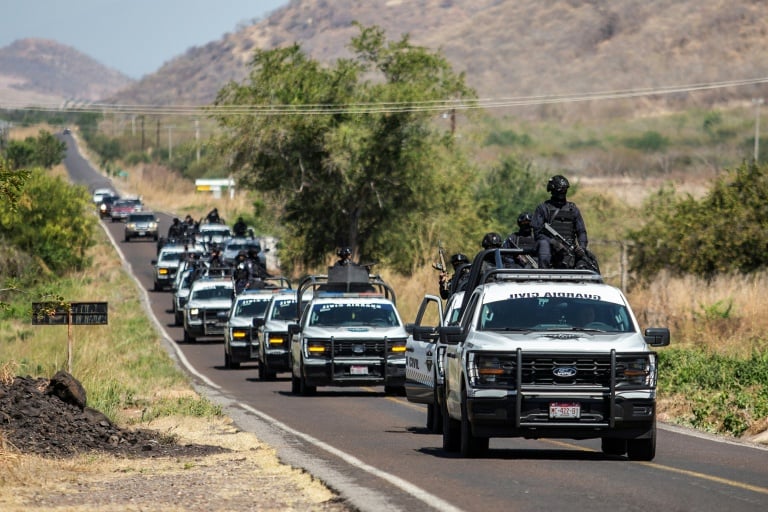
The killing of Oseguera, leader of the Jalisco New Generation Cartel (CJNG) and Mexico’s most wanted narcotrafficker, during a military operation on Sunday sparked criminal violence across 20 of Mexico’s 32 states. Simultaneously, social media platforms were flooded with AI-generated images depicting exaggerated scenes of destruction.
AFP’s fact-checking team in Mexico analyzed a dozen fake images and videos related to the operation that collectively garnered over 38,500 shares on social media platforms. One widely circulated AI-created aerial image showed Puerto Vallarta, the popular tourist destination on Jalisco’s Pacific coast, with numerous buildings engulfed in flames.
While CJNG members did burn vehicles and vandalize businesses in the resort town, the actual damage was significantly less severe than portrayed in the fabricated images.
Security analysts have identified three distinct groups behind the spread of false information following Oseguera’s death. “One was the Jalisco Cartel, magnifying the chaos,” explained Alberto Escorcia, a journalist specializing in social media analysis, in comments to AFP.
“Opportunistic” accounts also joined the disinformation campaign, using the situation to advance political narratives both domestically and internationally. Many of these accounts had previously been flagged by AFP for spreading disinformation across Latin America.
After publishing a video demonstrating the spread of disinformation on X (formerly Twitter), Escorcia himself became a target, receiving threats on social media.
Omar Garcia Harfuch, Mexico’s security secretary, confirmed that authorities have identified “multiple accounts” promoting disinformation related to the military operation. “We’re going to do a deeper job to find out what relationship they have to the criminal organization,” he stated during a press conference, noting that some accounts appear dedicated solely to spreading false information.
Beyond disinformation, researchers observed a significant expression of sympathy for Oseguera, who had been the most wanted drug lord in the United States, with a $15 million reward offered for information leading to his capture.
“There was a notable and sustained volume of publications and comments with expressions of admiration, mourning,” and “aspirational identification” with the drug lord, according to Valeria Almaguer, subdirector of the Seminar on Violence and Peace at the College of Mexico.
Her research team, examining content across Instagram, TikTok, and X, found numerous messages lamenting “El Mencho’s” death, often accompanied by CJNG-related emojis and “narco-corridos” – popular songs glorifying criminal organizations.
These findings align with the seminar’s previous research documenting over 100 TikTok accounts dedicated to criminal recruitment and propaganda. “The CJNG leads the use of TikTok as a channel of recruitment and propaganda,” the group noted in an April 2025 report.
The cartel’s social media recruitment tactics have been on authorities’ radar for months. In March 2025, following the discovery of a CJNG training facility in Jalisco, Mexico’s Security Secretary’s Office identified 39 TikTok profiles dedicated to recruiting young people. These accounts were subsequently removed at the request of Mexican authorities.
The dual strategy of physical violence and digital manipulation demonstrates the evolving tactics of Mexico’s powerful drug cartels, which increasingly leverage social media both to sow confusion during periods of unrest and to continually replenish their ranks with new recruits.
Fact Checker
Verify the accuracy of this article using The Disinformation Commission analysis and real-time sources.

10 Comments
It’s concerning to see criminal elements leveraging social media to amplify their agenda. Fact-checking efforts will be crucial to counter the flood of fabricated visuals and restore public trust.
Agreed. Proactive fact-checking by reputable media is essential to combating disinformation campaigns that aim to sow confusion and discord.
The use of AI-generated imagery to create a false narrative is a disturbing development. Responsible social media platforms need to invest in advanced detection methods to stay ahead of these sophisticated tactics.
The blending of physical violence and digital disinformation is a worrying trend. Social media platforms must step up to curb the spread of these manipulative tactics that can escalate real-world conflicts.
This highlights the complex interplay between physical violence and the digital realm. Addressing the root causes of these conflicts, while also improving content moderation, will be crucial moving forward.
You make a good point. A multifaceted approach is needed to tackle this challenge, combining efforts to address the underlying drivers of violence and the proliferation of misinformation online.
This is a prime example of how social media can be weaponized to exacerbate existing tensions and sow panic. Rigorous verification of online content is crucial to maintaining public safety and order.
Absolutely. Fact-checking and debunking false narratives are key to limiting the impact of these coordinated disinformation campaigns.
This is a troubling development. The use of disinformation and fake imagery to sow chaos and fear is a dangerous tactic. Social media platforms need to be vigilant in identifying and removing this kind of manipulative content.
You’re right, this highlights the need for better content moderation on social media to limit the spread of misinformation, especially around sensitive events like this.