


Listen to the article
Spain has announced plans to ban children under the age of 16 from accessing social media platforms, joining a growing wave of European nations implementing similar restrictions to protect young users from online harms.
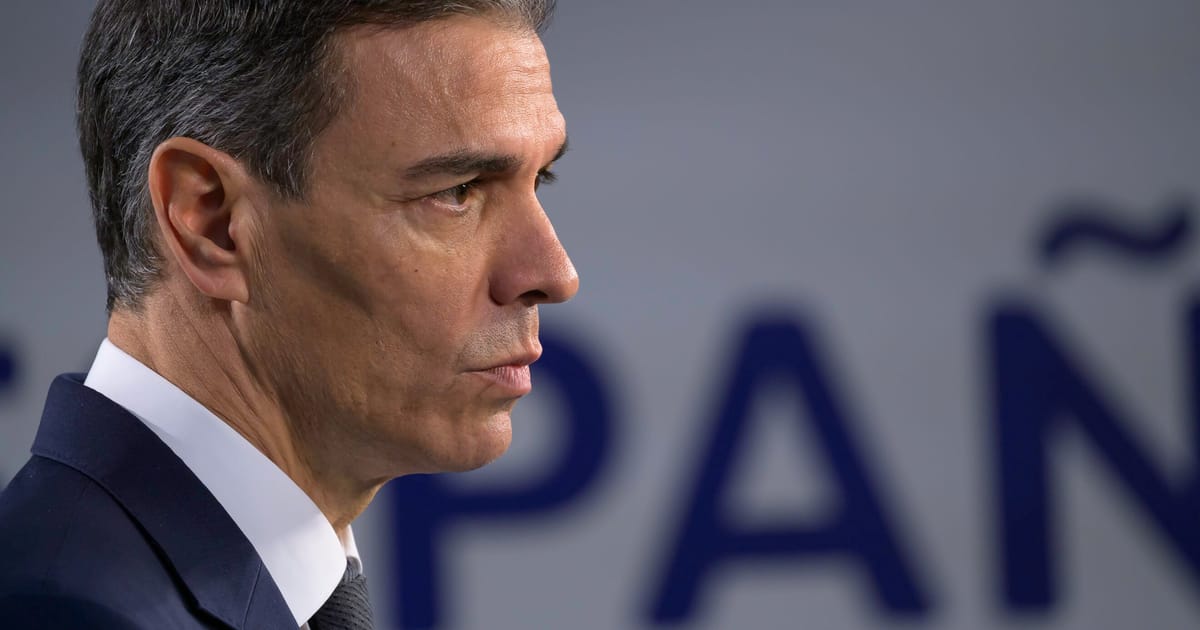
The measure, unveiled by Prime Minister Pedro Sánchez, represents a significant shift in Spain’s approach to regulating digital spaces for minors. The new policy is part of a broader legislative package aimed at curbing harmful content and increasing platform accountability.
“We must regain control of the digital space,” Sánchez declared. “Governments must stop turning a blind eye to the toxic content being shared.”
Spain’s move follows similar initiatives across Europe. Denmark announced plans last fall to prohibit social media use for children under 15, while France is working to implement its own ban by September. Just this Monday, Portugal’s center-right Social Democratic Party submitted draft legislation that would require parental consent for social media access by users under 16.
The Spanish proposal extends beyond age restrictions. It includes provisions to hold social media executives legally accountable for illegal content on their platforms and introduces new tools to track the spread of disinformation, hate speech, and child pornography across digital networks.
In a direct challenge to platform business models, the legislation also proposes criminalizing algorithmic manipulation and the amplification of illegal content. “We will investigate platforms whose algorithms amplify disinformation in exchange for profit,” Sánchez emphasized. “Spreading hate must come at a cost — a legal cost, as well as an economic and ethical cost — that platforms can no longer afford to ignore.”
These national measures complement the European Union’s Digital Services Act (DSA), which already requires platforms to implement risk mitigation measures for online content. When asked about Spain’s announcement, European Commission spokesperson Thomas Regnier noted that the Commission works “hand in hand” with EU member states on protections for children online.
While enforcement against smaller platforms falls to individual countries, the Commission directly oversees compliance by very large platforms. In December, the EU executive demonstrated its willingness to enforce these regulations by imposing a €120 million fine on Elon Musk’s X (formerly Twitter) for failing to meet transparency obligations. A separate investigation into X’s efforts to counter illegal content and disinformation remains ongoing.
The trend toward stricter regulation reflects growing concerns across Europe about the impact of social media on younger users. Research has linked excessive platform use to mental health issues, while lawmakers worry about children’s exposure to inappropriate content, online harassment, and data privacy concerns.
Critics of these measures argue that age verification systems can be easily circumvented and may create privacy issues of their own. Industry representatives have called for collaborative approaches rather than outright bans, suggesting that improved parental controls and digital literacy education could better address these concerns.
However, with public sentiment increasingly favoring stronger protections for minors online, the momentum behind regulatory action appears unlikely to slow. The Spanish proposal signals that European governments are no longer content to rely solely on platform self-regulation when it comes to protecting their youngest citizens in digital spaces.
As these national initiatives progress alongside EU-wide enforcement, tech companies operating in Europe face a complex regulatory landscape that will require significant adjustments to their policies, particularly regarding how they serve and protect younger users.
Fact Checker
Verify the accuracy of this article using The Disinformation Commission analysis and real-time sources.

10 Comments
While I understand the intent behind Spain’s proposal, I’m skeptical about how effectively it can be implemented and enforced. Social media access is so ubiquitous for today’s youth.
That’s a fair point. Policing social media use for minors will be hugely challenging, especially with the prevalence of smartphones. Broader digital literacy education may be a more sustainable approach.
This is a complex issue without easy solutions. On one hand, protecting young users is crucial. On the other, banning social media access could have unintended consequences for their social development and learning.
Agreed, there needs to be a balanced approach. Complete bans may not be the answer, but increased regulation and parental controls are important to mitigate the risks.
While I applaud Spain’s effort to address the harms of social media for minors, I wonder how this will impact their ability to access educational resources and connect with peers online.
That’s a good point. Social media has become an integral part of young people’s lives, both socially and academically. Any restrictions need to be carefully considered to avoid negatively impacting their development.
This is an interesting move by Spain to protect young users from the potential harms of social media. While it may be challenging to enforce, the focus on platform accountability is encouraging.
I agree, social media platforms need to do more to moderate content and safeguard minors. Parental consent and age restrictions are a step in the right direction.
Banning under-16s from social media is a bold but necessary step. The toxic content and risks for young users are well-documented. Let’s hope other countries follow Spain’s lead on this issue.
Absolutely. Social media has become a minefield for vulnerable young people. Increased regulation and parental control are critical to protect this demographic.