


Listen to the article
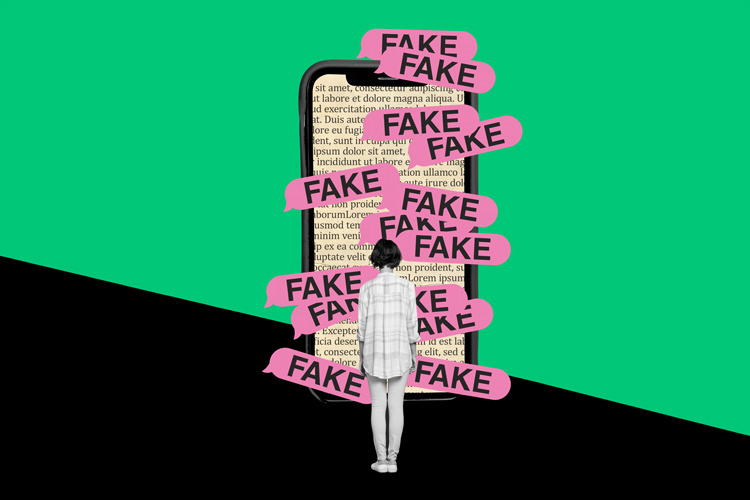
Disinformation has emerged as a critical threat to public health and safety worldwide, requiring coordinated efforts in media literacy, platform regulation, and renewed accountability from information distributors.
Defined as deliberately false or misleading information spread for economic or political gain, disinformation has moved beyond being merely problematic to become potentially lethal in certain contexts.
“Disinformation during the COVID-19 pandemic is a clear example, and, close to that, we are seeing outbreaks of diseases that had been eradicated for years,” explains Ana Laura Maltos, a research professor at Tecnológico de Monterrey’s School of Humanities and Education and the Digital Media Observatory.
The real-world consequences have been devastating. In Iran, more than 800 people died after consuming methanol based on circulated rumors about alternative COVID treatments. In Mexico, numerous people were poisoned after ingesting chlorine dioxide. Earlier, when former South African President Thabo Mbeki denied the connection between HIV and AIDS while promoting alternative treatments, the result was over 300,000 preventable deaths.
Social media platforms have dramatically accelerated the spread of false information. With Facebook alone hosting three billion monthly active users globally, these platforms have become the primary channels for disinformation campaigns.
“Disinformation has always existed, but in the last five years, the landscape has drastically changed,” notes Maltos. “Right now we are seeing a reality where these spaces are being moderated by interests that are not necessarily those of the users.”
Unlike traditional media outlets that employ fact-checkers and adhere to ethical codes, social media companies establish their own policies with limited oversight. Mark Zuckerberg’s recent announcement that Meta would stop using professional fact-checkers on Facebook and Instagram, replacing them with community notes, has raised serious concerns.
“This is worrying because it distracts us from the platforms’ responsibility for disinformation,” Maltos observes. “Giving users the task of debunking information or verifying its accuracy can, in a way, wash their hands of it.”
The sophistication of disinformation tactics has also evolved. Current strategies include mixing verifiable facts with misleading information or impersonating credible sources to give false claims an appearance of legitimacy.
“The way it operates has become more sophisticated. It’s no longer simply a lie; it’s often inaccurate information accompanied by elements that seem very, very reliable, but aren’t,” Maltos explains.
Influencers with large follower bases further complicate the landscape. These figures, intentionally or not, can become powerful vectors for spreading false information. “In general, they don’t have the same goal or commitment to information as a journalist,” says Maltos.
To combat disinformation, experts recommend several practical steps. First, pause before reacting to or sharing content that provokes strong emotional responses. This emotional component is precisely what helps disinformation spread virally.
“There’s something about it that causes you to back in your seat and need to send it to someone to share the emotional burden,” Maltos describes. She advises approaching information with healthy skepticism and verifying sources before sharing.
The Digital Media Observatory has developed freely available tools to help detect disinformation, available on their website. These resources aim to empower users to make more informed decisions about the content they consume and share.
Understanding the role of algorithms is also essential. “There’s this perception that we have control over the algorithm, but no, it’s the other way around,” Maltos points out. “It’s fueled by a series of policies and rules determined by who owns the platform; the network isn’t neutral; it’s determined by a series of commercial and political factors.”
The consequences of unchecked disinformation extend beyond individual health risks to include misinformed public decision-making, eroded trust in institutions, and increased social polarization and conflict.
Maltos and her colleagues are focused on promoting media and digital literacy through educational programs that equip people with the skills to navigate digital spaces critically. “Sometimes it’s disheartening to think that there won’t be a way back, that discourses where insults and hate speech are allowed will dominate, hiding behind freedom of speech,” she reflects.
By developing stronger media literacy across all educational levels and creating tools that help distinguish between reliable and malicious information, Maltos believes we can build resistance against the growing tide of disinformation in our increasingly digital world.
Fact Checker
Verify the accuracy of this article using The Disinformation Commission analysis and real-time sources.

19 Comments
This article highlights the grave dangers of disinformation, particularly when it comes to public health. Decisive action is needed to improve media literacy and platform accountability.
Social media has become a hotbed for the spread of disinformation, with potentially lethal consequences. Platforms, governments, and the public must work together to address this growing threat.
Absolutely. The case studies highlighted show the grave real-world impacts of unchecked disinformation, underscoring the need for comprehensive solutions.
Disinformation on social media is a complex challenge that requires a multifaceted response. Improving media literacy, strengthening platform policies, and enhancing accountability will all be crucial.
Agreed. Coordinated efforts on multiple fronts are needed to combat the spread of deliberately false information and mitigate its real-world harms.
This article shines a light on the serious dangers of disinformation, particularly when it comes to public health. Tackling this challenge will require coordinated efforts on multiple fronts.
Agreed. The examples provided illustrate the devastating human toll that can result from the unchecked spread of deliberately false information. Decisive action is clearly needed.
Disinformation is a serious threat that requires a multi-pronged approach – from media literacy education to platform accountability and government regulation. This is a complex issue with high stakes.
Well said. Addressing disinformation will take coordinated efforts on many fronts to protect the public from the real-world harms it can cause.
The spread of disinformation on social media is a worrying trend with potentially deadly outcomes. Stronger safeguards and enforcement are clearly needed to curb this problem.
Social media has become a breeding ground for disinformation, with serious public health consequences. Platforms must take more responsibility for content moderation and fact-checking.
The examples provided illustrate the devastating impact that disinformation can have, especially when it comes to public health. This is a serious issue that demands urgent attention.
Disinformation on social media is a growing public health crisis. Platforms, governments, and the public all have a role to play in combating the spread of deliberately false information.
Absolutely. The consequences of unchecked disinformation, as seen in the examples cited, demonstrate the urgency of addressing this issue head-on.
Disinformation through social media is a serious problem with real consequences. We need better media literacy and platform accountability to address this threat to public health and safety.
Absolutely. The COVID-19 misinformation that led to deaths in Iran and Mexico is a chilling example of the dangers of unchecked disinformation.
It’s concerning how quickly disinformation can spread on social media and have devastating real-world impacts. Stronger regulations and enforcement are clearly needed to curb this issue.
Agreed. The case of South Africa’s HIV/AIDS denialism is a tragic illustration of how dangerous unchecked misinformation can be.
Disinformation on social media is a critical issue with far-reaching implications. Improving media literacy, strengthening platform policies, and promoting accountability are all essential to addressing this problem.