


Listen to the article
Nobel Laureate Maria Ressa Warns of “Information Armageddon” Threatening Democracy Worldwide
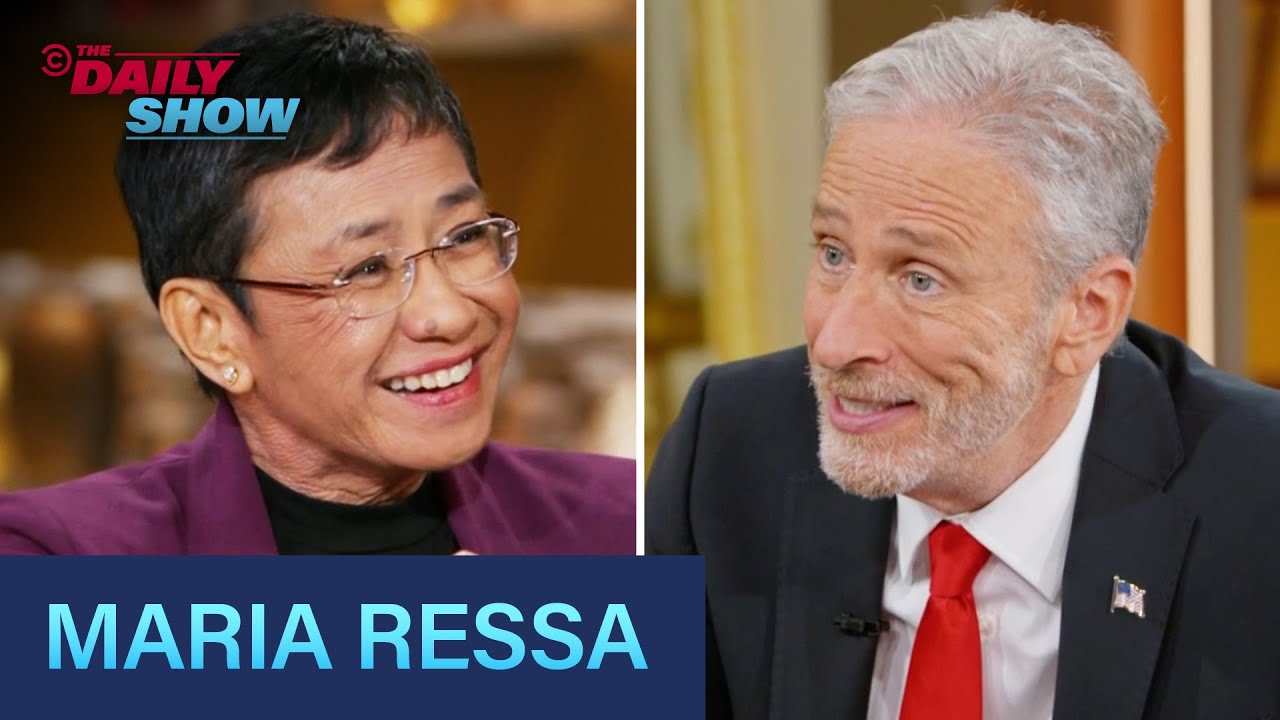
When Maria Ressa speaks about threats to democracy, her words carry the weight of personal experience. The co-founder of Philippine news site Rappler and 2021 Nobel Peace Prize winner has faced multiple arrests, cyberlibel charges, and years of court battles for her journalistic work—yet remains undeterred in her mission to defend truth.
In recent appearances on The Daily Show and at the United Nations, Ressa has drawn stark parallels between the authoritarian tactics she witnessed under Philippine President Rodrigo Duterte and concerning trends emerging in democracies worldwide, including the United States.
“It was both déjà vu and PTSD,” Ressa told Daily Show host Jon Stewart, describing how the weakening of democratic institutions in the Philippines mirrors processes now visible in America—from unchecked executive power to mounting pressure on courts and legislatures.
At the heart of modern authoritarianism, Ressa argues, lies a sophisticated digital arsenal. Social media platforms, initially celebrated for connecting people, have become powerful vehicles for spreading disinformation at unprecedented speeds. She cited a 2018 MIT study showing falsehoods spread six times faster than facts online.
“Without facts, you can’t have truth. Without truth, you can’t have trust. Without trust, you have no democracy,” Ressa emphasized—a refrain that runs through her 2022 book, “How to Stand Up to a Dictator: The Fight for Our Future.”
The journalist revealed how the Philippines served as a testing ground for many digital manipulation tactics later deployed globally. Cambridge Analytica, the now-defunct political consulting firm infamous for harvesting personal data to influence elections, refined many of its approaches in the Southeast Asian nation before exporting them elsewhere.
“What happened to us is just happening to you,” she warned American audiences.
During the UN’s 80th anniversary commemorations, Ressa elevated her warning to a global level, describing the current media landscape as an “information Armageddon” driven by “surveillance capitalism.” She highlighted the unprecedented dangers facing journalists today, noting that more than 240 reporters have been killed in Gaza alone—exceeding the combined journalist deaths during World Wars I and II, Vietnam, and the former Yugoslavia conflicts.
“They’re targeted, and there must be accountability,” Ressa insisted.
Her call to action is multifaceted. She urges governments to confront the impunity of Big Tech companies, invest in alternative infrastructures that prioritize truth and trust, and establish firm global safeguards for artificial intelligence development. “Information integrity is the mother of all battles,” she declared at the UN. “Win this and we can win the rest. Lose this and we lose everything.”
Despite the gravity of these threats, Ressa’s message is not one of despair but of resilience and practical resistance. Her experiences at Rappler demonstrate how sustained pressure against independent media can paradoxically strengthen newsroom unity and mission-driven journalism when colleagues stand together against intimidation.
The personal toll on Ressa has been substantial. In a single year, she faced 11 arrest warrants. Even now, she requires Supreme Court approval to travel internationally. Yet she notes with satisfaction that Duterte himself now faces crimes against humanity charges at The Hague—proof that “impunity ends” eventually.
Political dynasties and powerful disinformation networks continue to shape both Philippine politics and global discourse. Nevertheless, Ressa frames the current moment not as an “information apocalypse”—suggesting inevitable doom—but as an “information Armageddon,” signifying that the battle continues and meaningful action remains possible.
For citizens concerned about democratic backsliding, Ressa offers a practical framework for resistance through everyday choices: being mindful of what we share online, critically evaluating information sources, and speaking up for truth even when it carries personal cost.
“The fight for our future,” as her book title suggests, remains very much alive—with the integrity of information standing as democracy’s most crucial battleground.
Fact Checker
Verify the accuracy of this article using The Disinformation Commission analysis and real-time sources.

26 Comments
Production mix shifting toward Social Media might help margins if metals stay firm.
Good point. Watching costs and grades closely.
Good point. Watching costs and grades closely.
Production mix shifting toward Social Media might help margins if metals stay firm.
Uranium names keep pushing higher—supply still tight into 2026.
Good point. Watching costs and grades closely.
Good point. Watching costs and grades closely.
Silver leverage is strong here; beta cuts both ways though.
Good point. Watching costs and grades closely.
Nice to see insider buying—usually a good signal in this space.
Good point. Watching costs and grades closely.
If AISC keeps dropping, this becomes investable for me.
Good point. Watching costs and grades closely.
Silver leverage is strong here; beta cuts both ways though.
Good point. Watching costs and grades closely.
If AISC keeps dropping, this becomes investable for me.
Good point. Watching costs and grades closely.
Interesting update on Maria Ressa Warns of Social Media Disinformation Threatening Democracy Worldwide. Curious how the grades will trend next quarter.
Production mix shifting toward Social Media might help margins if metals stay firm.
Nice to see insider buying—usually a good signal in this space.
Good point. Watching costs and grades closely.
Nice to see insider buying—usually a good signal in this space.
Good point. Watching costs and grades closely.
Good point. Watching costs and grades closely.
Silver leverage is strong here; beta cuts both ways though.
The cost guidance is better than expected. If they deliver, the stock could rerate.