


Listen to the article
India to Tighten AI Regulations on Social Media, Considers Youth Ban
The Modi government is set to implement stringent regulations on artificial intelligence use across social media platforms starting Friday, drastically reducing content takedown times from 36 hours to just three hours. The move comes as India confronts a growing wave of AI-generated disinformation spreading rapidly among its more than one billion internet users.
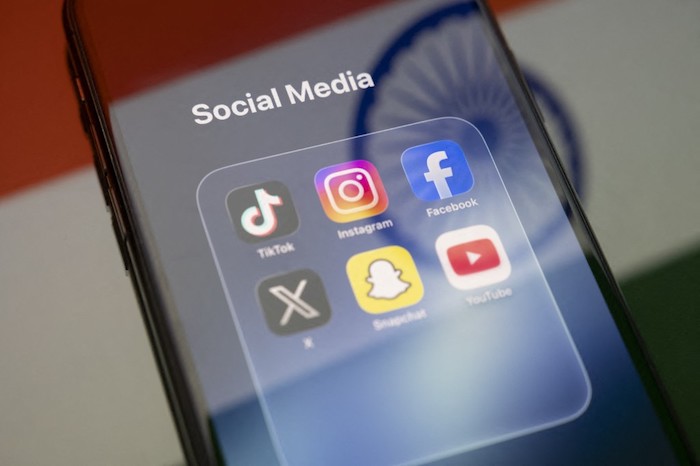
The new rules coincide with the conclusion of a major international AI summit in New Delhi that has attracted global tech leaders. Under these regulations, platforms like Instagram, Facebook, and X will be required to respond almost immediately to government takedown orders for content deemed problematic.
Companies must now permanently label all synthetic or AI-manipulated media with markings that cannot be removed. The regulations have been expanded to cover any content “created, generated, modified or altered through any computer resource,” with exceptions only for routine editing done in good faith.
The Internet Freedom Foundation (IFF) has expressed concerns that these compressed timeframes will turn platforms into “rapid-fire censors.” IFF chief Apar Gupta noted that the timelines are “so tight that meaningful human review becomes structurally impossible at scale,” effectively shifting control “decisively away from users.”
Digital rights activist Nikhil Pahwa characterized the system as “automated censorship,” highlighting that most internet users aren’t even notified when authorities order their content deleted. The rules also mandate that platforms deploy automated tools to prevent the spread of illegal materials, including forged documents and sexually abusive content.
Critics question the technical feasibility of these requirements. Pahwa argued that “unique identifiers are un-enforceable” given the “infinite synthetic content being generated.” Gupta added that detection methods are error-prone since “metadata is routinely stripped when content is edited, compressed, screen-recorded, or cross-posted.”
A report from the US-based Center for the Study of Organized Hate (CSOH), in collaboration with the IFF, warned that the laws “may encourage proactive monitoring of content which may lead to collateral censorship,” with platforms likely taking an overly cautious approach to avoid penalties. The broad parameters for takedowns could sweep up legitimate content like “satire, parody, and political commentary using realistic synthetic media,” especially under “risk-averse enforcement.”
This regulatory tightening comes as India under Prime Minister Narendra Modi faces accusations from rights groups of curbing freedom of expression—allegations his government denies. The country has slipped in global press freedom rankings during his tenure.
However, the widespread availability of AI tools has enabled “a new wave of online hate facilitated by photorealistic images, videos, and caricatures that reinforce harmful stereotypes,” according to the CSOH report. Recent incidents have underscored these concerns, including Elon Musk’s AI chatbot Grok being used to create millions of sexualized images of women and children by manipulating online photos of real people.
“The government had to act because platforms are not behaving responsibly,” Pahwa acknowledged, while adding that “the rules are without thought.”
Meanwhile, India is also discussing age-based restrictions with social media companies, IT Minister Ashwini Vaishnaw confirmed on Tuesday. Speaking at the AI conference, Vaishnaw indicated the country is considering following Australia and France in banning young teens from popular platforms.
“This is something which has now been accepted by many countries that age-based regulation has to be there,” Vaishnaw told reporters. “Right now we are in a conversation regarding deepfakes, regarding age-based restrictions with the various social media platforms and… what is the right way to go about this.”
Since December, Australia has required platforms like TikTok, YouTube, and Snapchat to remove accounts held by users under 16 or face substantial fines. Last month, French lawmakers passed a bill banning social media use for those under 15, which now awaits Senate approval.
While expressing concerns about AI’s potential harms, Vaishnaw also highlighted positive economic prospects, noting an expected $200 billion in AI investment over the next two years. “We need much stronger regulation on deepfakes,” he emphasized. “It’s a problem which is growing day by day. And certainly there is a need for protecting our children, protecting our society from these harms.”
Fact Checker
Verify the accuracy of this article using The Disinformation Commission analysis and real-time sources.

9 Comments
While curbing the spread of disinformation is important, overly restrictive regulations could inadvertently stifle innovation and free expression. A balanced approach is needed.
The rapid rise of AI-generated content is a significant challenge for social media platforms and regulators. I’m curious to see how India’s new rules evolve to address this issue effectively.
Labeling synthetic media is a sensible step, but the enforcement details will be critical. Platforms will need robust systems to identify AI-manipulated content.
This is an important issue at the intersection of technology, free speech, and public safety. I hope India can find solutions that protect users while respecting fundamental rights.
Agreed. Careful consideration of stakeholder interests and international best practices will be key to developing effective yet fair social media regulations.
The concerns raised by the Internet Freedom Foundation about rapid-fire censorship are understandable. Maintaining transparency and due process will be crucial as these rules are implemented.
This is a complex issue with valid concerns around censorship and misinformation. It will be important to find the right balance between content moderation and protecting free speech online.
Agreed, the compressed takedown timeframes do seem concerning and could lead to overzealous content removal. Oversight and transparency will be crucial.
The global rise of AI-powered disinformation is a serious challenge that will require multilateral cooperation to address effectively. India’s approach bears watching for lessons that can be applied elsewhere.