


Listen to the article
Greece’s Prime Minister Kyriakos Mitsotakis announced that his government will soon introduce restrictions on social media access for children under 15 years old, with final decisions expected within the next month.
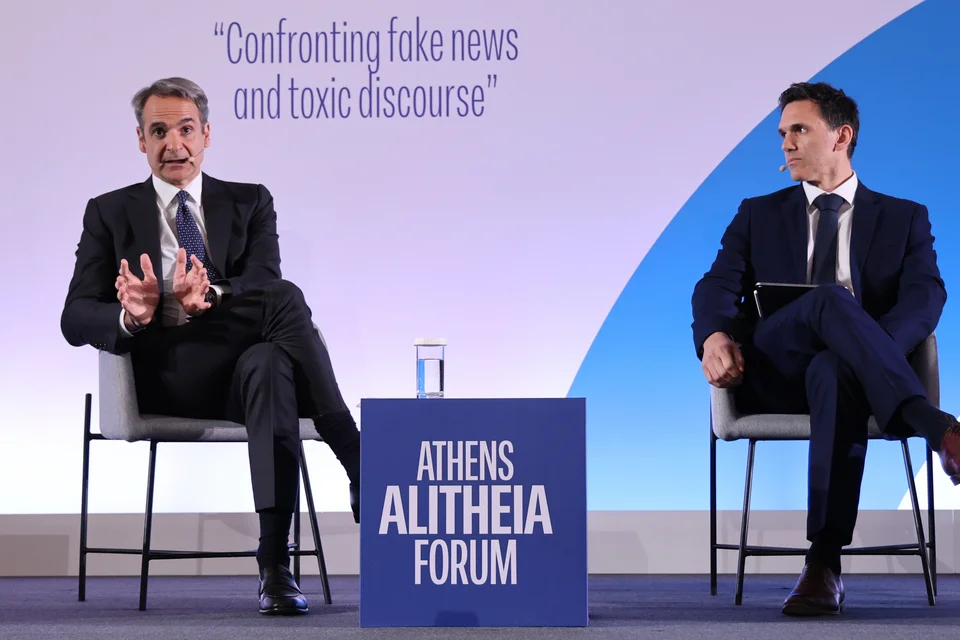
Speaking at the Athens Alitheia Forum, Mitsotakis emphasized that the new measures will comply with European regulations, particularly the Digital Services Act. “We will soon announce our final decisions regarding restrictions on access to specific social media platforms for children under 15,” the prime minister said, adding that the government is focused on implementing practical measures that align with EU law.
The announcement comes amid growing concerns about the impact of social media on young people’s mental health and development, a trend that has prompted similar actions in other countries. Australia recently implemented restrictions on children’s social media access, a move that Greece has publicly welcomed.
During his address, Mitsotakis highlighted the broader challenges posed by digital misinformation in today’s media landscape. “Fake news has always existed, but what has changed is the speed with which it spreads,” he observed, noting that emotionally charged content typically gains more traction online and can be further amplified by artificial intelligence technologies.
The prime minister stressed that independent media and responsible information sources remain crucial safeguards against the rising tide of online misinformation. He shared personal experiences with fake news, recalling a 1985 incident involving his father, former Greek Prime Minister Konstantinos Mitsotakis, who was falsely labeled a “Nazi collaborator” by a newspaper during a political campaign. “The photo was real, but the headline and the story were fake,” Mitsotakis explained.
He also mentioned recent false claims targeting his daughter, highlighting the difficulties in taking legal action against websites that spread misinformation, particularly when they operate using anonymous accounts or servers located outside Greece.
Internet anonymity represents a significant obstacle in combating misinformation, according to Mitsotakis. He emphasized the need for governments to differentiate between legitimate anonymous speech and coordinated networks of fake accounts designed to manipulate public discourse. “We need tools to identify organized disinformation campaigns, especially when they originate from abroad,” he said, classifying such activities as potential national security concerns.
The prime minister pointed to public debate surrounding the Tempi train disaster as an example where misleading information spread widely across social media platforms, complicating public understanding of the event.
Looking ahead, Mitsotakis warned that artificial intelligence could further complicate efforts to combat misinformation. He noted that AI technology can now generate convincing fake videos, potentially reaching a point where “we may not know whether what we are seeing is real or a product of artificial intelligence.”
Despite these concerns, the prime minister acknowledged AI’s potential benefits in education, such as reducing administrative burdens for teachers and providing innovative digital learning tools. However, he cautioned against overreliance on AI, suggesting it might discourage students from developing essential skills like writing and critical thinking.
Mitsotakis concluded by emphasizing the importance of digital literacy and critical consumption of online information. “If something seems extreme or strange, it is worth checking it twice,” he advised, while noting that younger generations might actually possess better skills for identifying fake content due to their familiarity with digital tools.
The forthcoming proposals on social media restrictions for minors are expected to form part of Greece’s broader strategy to address challenges in the digital information environment, balancing innovation with protection for vulnerable users.
Fact Checker
Verify the accuracy of this article using The Disinformation Commission analysis and real-time sources.

6 Comments
Social media’s influence on youth is a complex issue without easy solutions. Greece’s proposed measures seem well-intentioned, but the effectiveness will depend on the details. I’m interested to see how this unfolds.
The Prime Minister’s comments on the rapid spread of misinformation are concerning. Tackling digital disinformation is a global priority, and I hope Greece’s approach can offer lessons for other countries.
While the mental health of young people is paramount, I wonder how these restrictions will impact their digital literacy and ability to navigate the online world safely and responsibly. Careful implementation will be key.
This is an interesting move by Greece to address the growing concerns around the mental health impacts of social media on young people. It will be important to see how the final regulations align with the EU’s Digital Services Act.
Restricting access to social media for under-15s is a bold step, but it speaks to the seriousness of the issue. I’m curious to see how Greece plans to implement and enforce these new measures.
Agreed. Balancing child protection with digital rights will be a key challenge. Clear, enforceable guidelines will be crucial.