


Listen to the article
Meta Shifts Course on Content Moderation, Raising Alarm Over Misinformation Risks
Meta CEO Mark Zuckerberg announced a major policy shift on January 7, 2025, declaring that the company will significantly reduce its intervention in content moderation across its platforms, including Facebook, Instagram, and Threads. The tech giant plans to abandon independent fact-checking initially in the US, citing overly complex guidelines and error-prone algorithms for detecting harmful content.
The move represents a fundamental change in Meta’s approach to content governance. Zuckerberg justified the decision by emphasizing free speech principles, stating that “we are going to catch less bad stuff” in the name of promoting debate on contentious issues. Joel Kaplan, Meta’s Global Affairs Chief, went further, characterizing existing practices as “censorship.”
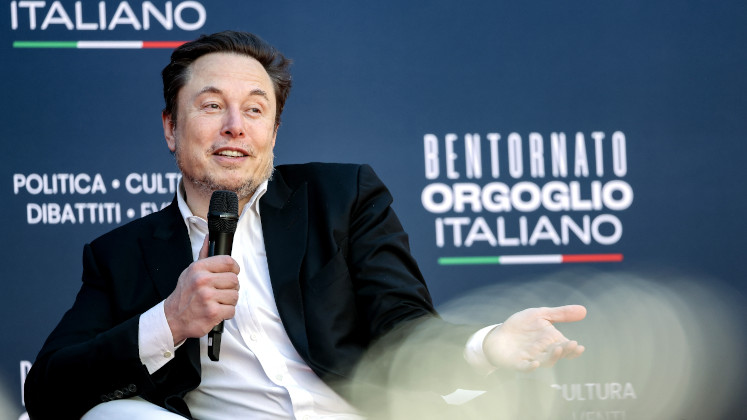
Independent fact-checking organizations have pushed back against this characterization, noting they “never censored or removed posts” but rather provided context and verification. Meta’s new approach appears to mirror Elon Musk’s strategy at X (formerly Twitter), which relies on Community Notes for user-generated context. Critics point out that on X, such notes only appear when majority agreement is reached on disputed content—a relatively rare occurrence.
The debate touches on fundamental questions about free expression in digital spaces. While the Universal Declaration of Human Rights’ Article 19 affirms that “everyone has the right to freedom of opinion and expression… without interference,” it also acknowledges limitations “for the purpose of securing due recognition and respect for the rights and freedoms of others.” This nuance appears absent from the tech platforms’ current framing of content moderation as censorship.
The United Nations has called for “an inclusive, open, safe and secure digital space that respects, protects and promotes human rights” alongside “access to relevant, reliable and accurate information.” This balanced approach recognizes both the value of diverse content and the need to protect users from harmful material.
In the European Union, the Digital Services Act holds social media companies accountable for illegal content on their platforms, with substantial fines for non-compliance. X is currently under investigation for alleged violations of these rules. Similarly, the UK’s Online Safety Act introduces regulations targeting illegal and harmful content. Meta’s Zuckerberg has described the EU’s approach as “institutionalising censorship.”
Global approaches to content moderation vary widely. While some countries implement regulations aimed at protecting democratic values and human rights, others, like Russia, employ state-sponsored “fact-checking” that adheres to government-approved narratives—widely considered censorship in Western democracies.
The impact of misinformation varies significantly across regions and demographics. According to the International Observatory on Information and Democracy’s report “Information Ecosystems and Troubled Democracy,” waiting for absolute certainty about harmful effects means that “online and offline violence are amplified and normalised.” Researcher Shakulanta Banaji’s work demonstrates this connection, while Siva Vaidhayanathan suggests that tech companies’ pivot to AI revenue models may reduce their concern about harmful content.
The observatory’s report highlights how data monetization drives information ecosystem operations “without respect for the fundamental rights of content producers and the rights of others.” With the US tech giants and the anticipated Trump administration poised to advocate for a free speech absolutist position, implementation of EU and other regulations may become increasingly difficult, particularly if countries fear US economic retaliation.
Alternative approaches are emerging. The report identifies commons-based initiatives with decentralized frameworks for governing data and determining harmful content, often led by civil society organizations or countries like Brazil. These models prioritize human rights and collective governance over corporate interests.
Experts like Lee Edwards, Sonia Livingstone, and Emma Goodman argue that protecting users from harmful content requires more than media literacy training—it demands alternative legal structures and financing models to promote inclusive and safe information ecosystems.
As this conflict over content moderation principles intensifies, the stakes for democratic discourse and public safety grow higher. If the approaches championed by Zuckerberg and Musk prevail, critics fear that inclusive online spaces for accurate information and public debate may be compromised, potentially threatening societal cohesion and democratic norms.
Fact Checker
Verify the accuracy of this article using The Disinformation Commission analysis and real-time sources.

9 Comments
Meta’s new policy seems to prioritize principles over pragmatism. While I appreciate the free speech angle, the risks of unchecked misinformation are significant. I hope they can find a way to empower users while maintaining some safeguards.
I appreciate the emphasis on free speech, but it has to be balanced with user safety. Reducing content moderation could open the door to more extremism and false narratives. Hope Meta has a solid plan to monitor and respond to emerging issues.
Meta’s new approach seems to be a step backwards. Fact-checking may not be perfect, but it’s a valuable tool to combat misinformation. I worry this could lead to a proliferation of harmful content and conspiracy theories on their platforms.
Meta’s shift raises valid concerns about the potential for increased misinformation and harmful content. While free speech is important, social media platforms have a responsibility to their users. I hope they can find a balanced approach that protects both expression and safety.
This is a bold move by Meta, but I’m concerned about the potential for increased misinformation and harmful content. Fact-checking is crucial, even if it’s not perfect. I hope they find a way to maintain some guardrails.
This is a risky move by Meta. While free speech is important, social media platforms have a responsibility to their users. Reducing content moderation could undermine trust and create an environment ripe for abuse. I hope they tread carefully.
This is a concerning development. Social media’s influence is immense, and platforms have a duty to moderate content responsibly. Abandoning fact-checking could lead to a surge in misinformation that undermines public discourse. I hope Meta reconsiders this approach.
While I understand the desire to promote free expression, this seems like a risky move by Meta. Misinformation can spread rapidly on social media and have real-world consequences. I hope they find a way to balance user freedom with some guardrails against abuse.
Interesting shift in content moderation policy. While free speech is important, misinformation risks can’t be ignored. Curious to see how this new approach balances user expression and responsibility.